
 Search Articles


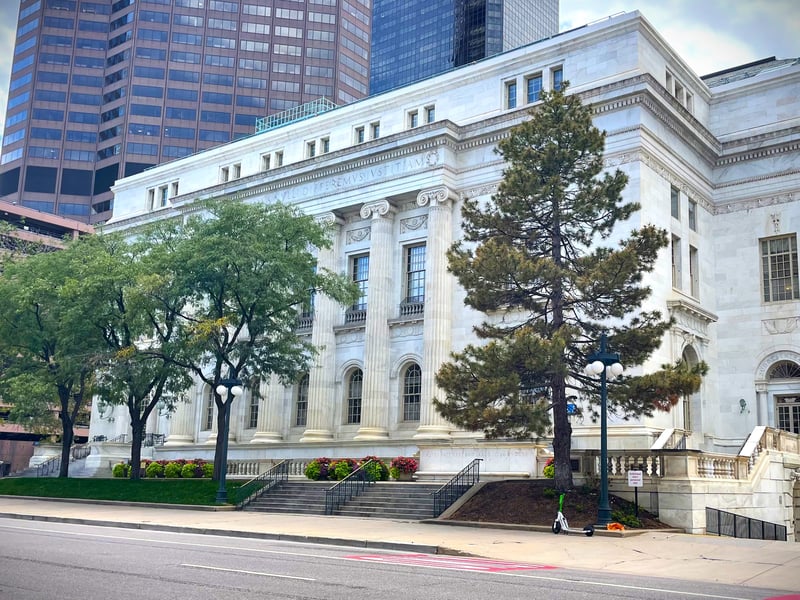
DENVER (CN) — The 10th Circuit determined Wednesday it lacks jurisdiction to review, let alone end, New Mexico’s 36-year scuffle with residents seeking timely determination of eligibility for food and medical benefits.
The three-judge panel further scrutinized the lower court’s characterization of New Mexico Department of Human Services’ fourth interlocutory appeal as a possible delay tactic employed to avoid a progress review.
“Nobody contends the order on appeal — the denial of HSD’s motion to dismiss — is a ‘final decision,’” U.S. Circuit Judge Veronica Rossman wrote in a 17-page opinion. “HSD asserts two possible bases for appellate jurisdiction, but neither is availing."
With the help of the New Mexico Center on Law and Poverty, Debra Hatten-Gonzales first sued the New Mexico Human Services Department in 1988 over application delays for federal benefits that resulted in a class of residents not receiving timely access to health care through Medicaid or food under the Supplemental Nutrition Assistance Program, or SNAP.
Since then, the plaintiff class and New Mexico hammered out two consent decrees and filed three other 10th Circuit appeals.
The original plaintiff, Hatten-Gonzales, has long since died, as has the case’s original judge, John Conway, a Ronald Reagan appointee who passed away in 2014. As benefits delays persisted, other judges picked up the mantel and new plaintiffs joined the case. Given the case’s history, Barack Obama-appointed U.S. District Judge Kenneth Gonzales declined to stay proceedings through the appeal.
In 2020, New Mexico finally met one of the consent decree’s requirements — a rate of 96% of applications being processed on time for six months straight. The government petitioned Gonzales to dismiss that portion of the state’s requirements, a request he granted — apparently not realizing that doing so, in the eyes of the state, rendered the rest of the case moot.
Under New Mexico’s argument, the plaintiff class was defined by a delay in benefits, so a court finding that the delays had been remedied eliminated the class.
Gonzales rejected the state’s mootness theory in 2023 along with a motion to dismiss. New Mexico appealed.
Pressed by the panel to establish jurisdiction, New Mexico argued it had the right to appeal Gonzales’ own jurisdictional reasoning, along with his refusal to lift the injunction. The panel, however, found the state’s argument failed to pass a test developed in the 1981 case Carson v. American Brands Inc.
“We need not address these arguments," Rossman wrote for the panel. “HSD has failed to carry its burden to show that the order ‘might have a serious, perhaps irreparable, consequence,’ or ‘that the order can be ‘effectually challenged’ only by immediate appeal.”
Donald Trump appointed U.S. Circuit Judge Joel Carson signed onto the opinion with Rossman and U.S. Circuit Judge Richard Federico, both appointed by Joe Biden.
Federico penned a 7-page concurring opinion chastising the state for what he saw as a pattern of frivolous appeals.
“In my view, this appeal lands beyond the outer limits of reasonable advocacy, and it reflects a pattern of recurring appeals used by HSD not to win on the merits, but to avoid and delay enforcement of the operative consent decree,” Federico wrote.
Federico acknowledged both parties seemed frustrated by the decadeslong litigation.
“The road to relief from this frustration is not frivolous litigation but compliance,” he concluded.
The New Mexico Office of General Counsel to a request for comment by press time.
 Follow @bright_lamp
Subscribe to our free newsletters
Our weekly newsletter Closing Arguments offers the latest about ongoing trials, major litigation and rulings in courthouses around the U.S. and the world, while the monthly Under the Lights dishes the legal dirt from Hollywood, sports, Big Tech and the arts.