
 Search Articles


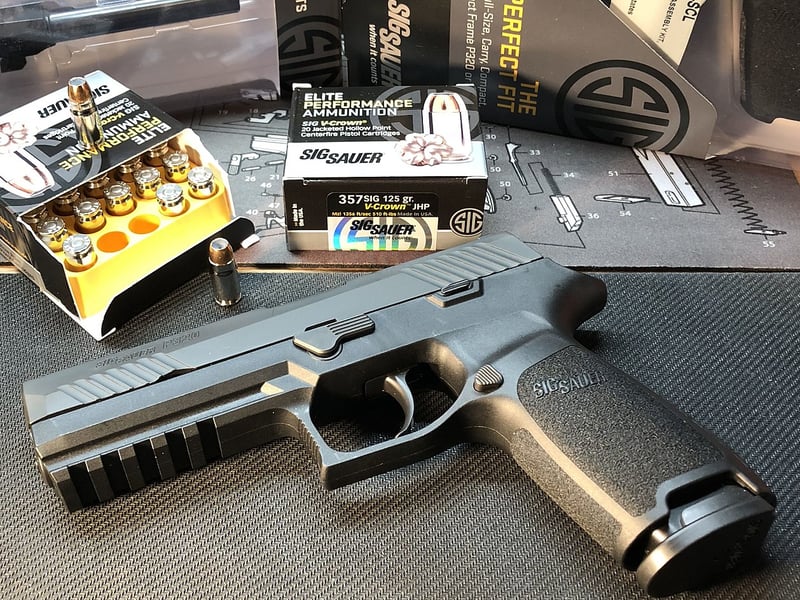
DENVER (CN) — The 10th Circuit on Tuesday reaffirmed its decision to deny a firearm to a Utah woman with a decade-old check fraud conviction on her record.
Melynda Vincent wrote a fraudulent check for $498.12 at a grocery store in 2008 when she was homeless and fighting drug addiction. She faced up to 30 years in prison and a $1 million fine but pleaded guilty and was sentenced to probation without imprisonment.
Today she is a social worker in private practice who also runs the Utah Harm Reduction Coalition.
As a single mother, she wants to own a firearm to protect her family but cannot under a 1961 federal law due to her past. Vincent sued the U.S. government in 2020 and a federal judge dismissed the case in October 2021.
Vincent appealed, citing the 2022 Supreme Court decision in New York Pistol & Rifle Association v. Bruen as shifting the burden to the government to show why she should still be deprived of her Second Amendment right.
The 10th Circuit first affirmed the lower court’s ruling in September 2023 and then again in June 2024, following the U.S. Supreme Court’s decision in Rahimi , which upheld the government’s ability to prohibit gun ownership to individuals under domestic violence restraining orders.
When Vincent asked the U.S. Supreme Court to take up her case, the high court vacated the 10th Circuit’s findings and ordered the appellate panel to review the case in light of Rahimi .
“Given this remand, we’ve freshly considered the Second Amendment claim and conclude that Rahimi doesn’t undermine the panel’s earlier reasoning or result,” U.S. Circuit Judge Robert Bacharach wrote in a 6-page opinion.
In a footnote, the Barack Obama appointee explained the U.S. Supreme Court’s instructions didn’t raise any flaws in the appellate court’s previous opinion.
Under the latest review, Bacharach wrote that “felon dispossession laws are presumptively valid” under both the 2008 Supreme Court case District of Columbia v. Heller and the 10th Circuit’s 2009 U.S. v. McCane, as well as Rahimi.
“Ms. Vincent argues, however, that the Second Amendment protects nonviolent offenders like herself. But this argument is unavailable under McCane ,” Bacharach wrote.
Vincent’s attorney, Sam Meziani of the Salt Lake City firm Goebel Anderson, said he plans to repetition the high court.
“We had previously asked the Supreme Court to review Mindy’s case. Even the Department of Justice agreed that the court should review one of these cases, including Mindy’s,” Meziani told Courthouse News via email. “But the court plainly thought it had sent a clear message with its Rahimi decision about the proper analysis and sent the case back to the 10th Circuit. It would seem that message was not heard and so we intend to ask the court to review Mindy’s case again.”
The U.S. Attorney General’s Office did not respond to a request for comment by press time.
Senior U.S. Circuit Judge Paul Kelly, appointed by George H.W. Bush, and Donald Trump-appointed U.S. Circuit Judge Joel Carson joined the opinion.
 Follow @bright_lamp
Subscribe to our free newsletters
Our weekly newsletter Closing Arguments offers the latest about ongoing trials, major litigation and rulings in courthouses around the U.S. and the world, while the monthly Under the Lights dishes the legal dirt from Hollywood, sports, Big Tech and the arts.