
 Search Articles


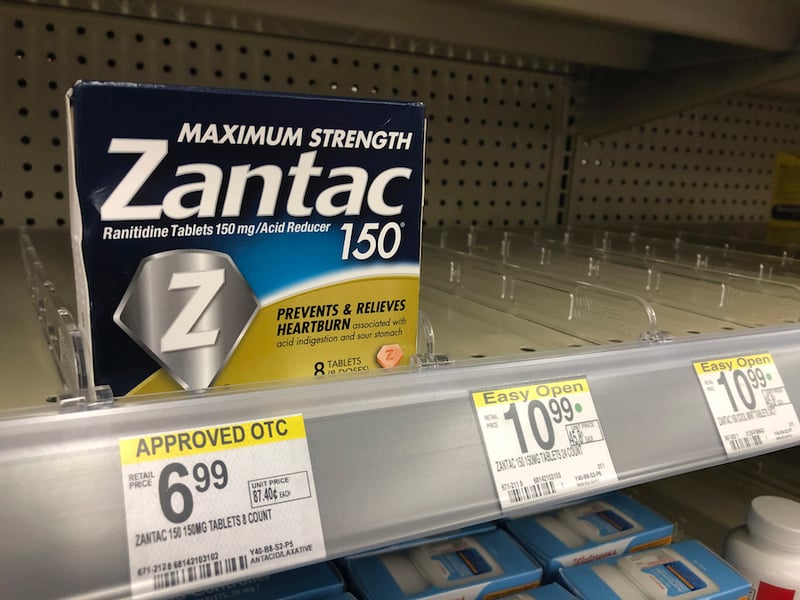
ATLANTA (CN) — A massive class action involving thousands of plaintiffs who claim they developed cancer from the heartburn medication Zantac came before an 11th Circuit panel on Friday.
The multidistrict litigation went off the rails after a federal judge granted summary judgment against more than 2,450 users of Zantac, ruling that they had failed to produce reliable expert testimony necessary to support their claims.
On appeal, the consumers argue the lower court improperly weighed the science and came to its own conclusion rather than evaluating the reliability of the experts’ methods to be brought before a jury. They disclosed a slate of highly credentialed experts on general causation who said that the contaminant NDMA in Zantac is a potential carcinogen, but many were excluded for several different reasons.
“This court should reaffirm the admonition that judges must not trade their black robes for white lab coats,” the consumers wrote in their brief.
U.S. Circuit Judge Adalberto Jordan said the lower court may have been a bit too thorough in its review of the expert opinions. The Barack Obama appointee noted that some of the things U.S. District Judge Robin Rosenberg criticized the experts for in her order appear to be more fit for a jury to decide after cross-examination.
“Not every reliability deficiency leads to exclusion,” Jordan said.
The defendants, which consist of multiple pharmaceutical companies and retailers, argue the individual plaintiffs could have disputed Rosenberg’s order and bring forward new evidence but refused to do so.
However, in the consumers’ view, they were prevented from doing so because Rosenberg consolidated the numerous individual claims into a master complaint. While intended to address common, cross-cutting legal issues, they contend the Obama appointee’s move barred them from individually pleading any of the arguments differently.
The three-judge panel disputed arguments from the companies who manufactured and sold the drug that federal law supersedes the consumers’ negligence claims.
The judges appeared to support the validity of the consumers’ arguments that multiple companies failed to ensure that Zantac and other ranitidine products were properly handled, stored and transported.
“Negligent storage wouldn’t be preempted,” Senior U.S. District Judge Virginia Covington said, sitting in from the Middle District of Florida.
According to the evidence and testimony presented by the consumers, the medication’s active ingredient, ranitidine, naturally breaks down over time into a dangerous carcinogen known as N-Nitrosodimethylamine, or NDMA.
They claim the companies should have known that improper handling could cause NDMA to form in ranitidine products over time in storage and by exposure to heat, moisture and humidity. Additionally, the companies failed to warn that consumers were at an elevated risk of developing cancer if the products were consumed with high-nitrate foods or consumed daily over several months.
The pharmaceutical companies, which include Sanofi, GSK and Pfizer, fought back against claims the consumers suffered monetary losses from purchasing the medication, which was pulled off the shelves by the U.S. Food and Drug Administration in 2020.
On Nov. 1, 2019, the FDA announced that its recent testing showed “unacceptable levels” of NDMA in Zantac and other ranitidine drugs, requesting that all manufacturers recall their products and cease all future sales.
“A risk can render a product less than it was sold for,” Jordan said.
Following the withdrawal, scientists around the world compared the cancer rates between people who took ranitidine and those who did not, finding those who took it developed cancer at higher rates than those who did not, according to the consumers’ complaint.
U.S. Circuit Judge Barbara Lagoa, a Donald Trump appointee, rounded out the panel. The judges did not signal when they intend to issue a ruling.
 Follow @Megwiththenews
Subscribe to our free newsletters
Our weekly newsletter Closing Arguments offers the latest about ongoing trials, major litigation and rulings in courthouses around the U.S. and the world, while the monthly Under the Lights dishes the legal dirt from Hollywood, sports, Big Tech and the arts.