
 Search Articles


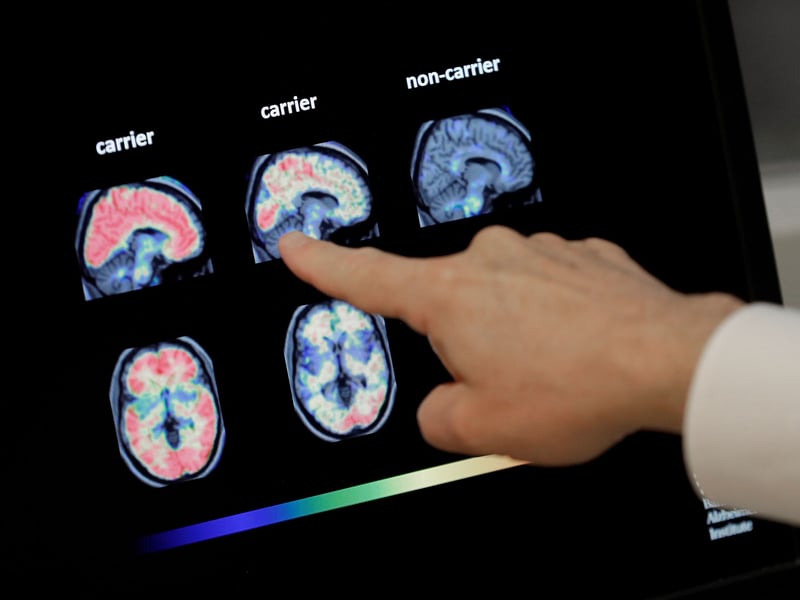
(CN) — Millions of people around the world live with Alzheimer’s disease. Scientists don’t exactly know why people get it, but according to research presented by Italian scientists at the European Academy of Neurology Congress 2025 in Helsinki, Finland, on Monday, a simple blood can predict cognitive decline in Alzheimer’s patients.
Using records of 315 non-diabetic patients with cognitive deficits, including 200 with Alzheimer’s disease, all of whom underwent an assessment of insulin resistance using what’s known as triglyceride-glucose index or TyG, neurologists at the University of Brescia in Italy determined that when patients were divided up, those in the highest third of the “Mild Cognitive Impairment AD subgroup” deteriorated faster than their “lower-TyG peers,” according to a press release for the study. Meaning, insulin resistance detected by the triglyceride-glucose index can flag people with early signs of Alzheimer’s who are four times more likely to face rapid cognitive decline, the researchers concluded.
“Once mild cognitive impairment is diagnosed, families always ask how fast it will progress,” wrote lead investigator Dr. Bianca Gumina, in a press release. “Our data show that a simple metabolic marker available in every hospital laboratory can help identify more vulnerable subjects who may be suitable candidates for targeted therapy or specific intervention strategies.”
Alzheimer’s is a progressive neurodegenerative disease that first affects people’s short-term memory and then gradually affects their long-term memory, language ability, and mobility. According to the Alzheimer’s Association, an Alzheimer’s care, support and research organization, one in three American seniors dies with the disease, or another form of dementia. More than 6 million Americans have the disease. By 2050, 13 million Americans — one in every five women and one out of 10 men — are projected to develop the disease in their lifetime.
The Centers for Disease Control and Prevention lists Alzheimer’s disease as the sixth leading cause of death for Americans, killing more than 114,000 people in 2023.
While scientists have linked insulin resistance to the disease, the researchers from the University of Brescia study dug into insulin resistance’s role in how quickly the disease progresses in patients during what’s termed the “prodromal mild cognitive impairment” stage.
“We were surprised to see the effect only in the Alzheimer’s spectrum and not in other neurodegenerative diseases,” Dr. Gumina wrote in the press release. “It suggests a disease-specific vulnerability to metabolic stress during the prodromal window, when interventions may still change the trajectory.”
The researchers found that high TyG was associated with blood–brain barrier disruption and cardiovascular risks.
The researchers, a press release states, are now studying whether “TyG levels also track with neuroimaging biomarkers to aid earlier detection and stratification.”
Identifying high-TyG patients could help prompt early lifestyle or pharmacological interventions to improve insulin sensitivity, they add.
“If targeting metabolism can delay progression, we will have a readily modifiable target that works alongside emerging disease-modifying drugs”, Dr. Gumina wrote in the press release.
Subscribe to our free newsletters
Our weekly newsletter Closing Arguments offers the latest about ongoing trials, major litigation and rulings in courthouses around the U.S. and the world, while the monthly Under the Lights dishes the legal dirt from Hollywood, sports, Big Tech and the arts.