
 Search Articles


(CN) — In late 2011, technicians for the petroleum company Shell were surveying the Gulf of Mexico for potential drilling sites when they came across an anomaly.
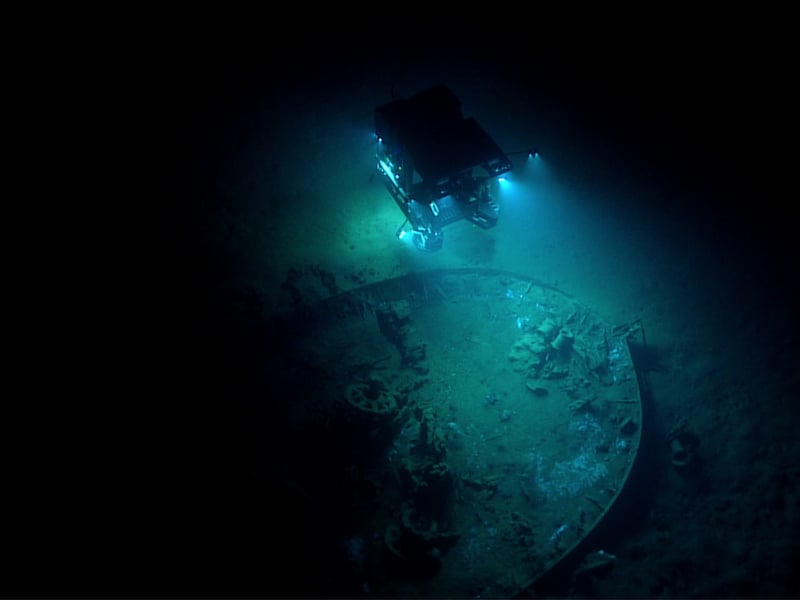
About 274 miles south of Galveston, Texas, and roughly 4,300 feet below the surface, sonar illuminated a rare sight. It was the hull of an 84-foot long sailing ship, its masts broken and cast to the sides.
The techs reported their discovery to the Bureau of Ocean Energy Management, an agency within the Department of Interior which currently manages a database of around 4,000 shipwrecks in the Gulf of Mexico, plus thousands more on the East and West coasts. The agency partnered with the National Oceanic and Atmospheric Administration to explore the shipwreck. Researchers ultimately found two more sunk ships in the vicinity, naming them Monterrey A, B and C.
The Monterrey shipwrecks are now among 13 sites nominated by the BOEM for placement on the National Register of Historic Places. Texas State University, which helped with Monterrey excavation, has called the find “one of the more significant shipwreck sites discovered in the Gulf.”
The BOEM last month published a series of videos showcasing the findings from each site — the result of a comprehensive study that was part of the nomination process. Authors hope their study will serve as a template for future nominations.
“Not all shipwrecks are created equal,” said James Delgado, a marine archaeologist and senior vice president at SEARCH Inc., who researched and wrote the study along with his colleagues. “They all have their own significance for their own reasons.”
Along with two other BOEM-nominated shipwreck sites, the Monterrey shipwrecks appear to be early 19th century ocean-going commercial traders.
Five other sites date from later in the 19th century and were likely used to rebuild the Southern economy after the Civil War. At least one of the nominated vessels was used in the commercial fishing industry. Another, the S.S. New York, was a luxurious water taxi that also transported small goods around the Gulf Coast.
In the case of Monterrey A, its wooden hull was still intact below the water line, thanks to a copper sheathing commonly added to vessels of the period to prevent corrosion. Researchers on the NOAA ship Okeanos Explorer maneuvered a remotely operated submersible around the site, finding at least five cannons and several crates of muskets.
Among the personal items recovered from Monterrey A were personalized dining sets and toiletries. There was also a medicine chest which still contained a vial of ginger for combating seasickness, as well as a bowel pump for constipation. The findings indicated the ship sank sometime after 1815, but its identity and mission remained a mystery.
Then, in 2012 and 2013, researchers discovered two other shipwrecks in the same vicinity.
They called the shipwrecks Monterrey B and C. Monterrey B was a sailing ship filled with a cargo of rolled hides, ceramic vessels and white blocks of a fatty substance, which scientists believed could be beef tallow. Monterrey C was heavily damaged and apparently did not have cargo. Still, researchers did discover one of the earliest commercially produced chronometers on the ship, which would have been an advanced navigational instrument at the time.
None of the three ships were positively identified, but the research team was able to surmise they were possibly sailing together before they sank, likely due to a large and violent storm. With its cannons and muskets, they think Monterrey A likely served as an armed escort for the other two vessels, all of them involved in international trade.

As part of the U.S. Department of Interior, BOEM is one of the smaller agencies of the federal government.
While mainly focused on managing 3.1 billion acres of submerged lands for domestic oil and gas exploration, it also maintains a list of shipwrecks as authorized by the National Historic Preservation Act. Of its 2024 budget of $260 million, the agency spent around $30 million on an environmental studies program that includes oversight of shipwreck sites.
“These sites represent different aspects of Gulf of Mexico history,” said Melanie Damour, a BOEM marine archaeologist and environmental studies coordinator. Each site “tells a fascinating story of what life was like at sea within a particular time period.”
“They all have some sort of story to tell us about Gulf of Mexico history — and a lot of that information can be captured in a National Register listing,” Damour added. That was true regardless of each ship’s purpose, whether it was used for wartime activities, fishing or transporting passengers around the Gulf.
The National Park Service will review the nominated shipwreck sites to determine whether they are eligible for inclusion on the National Register of Historic Places — a move that would protect the sites from development or disturbance and offer other benefits. There are more than 90,000 sites currently listed on the register, including a number of World War 2-era shipwrecks nominated by BOEM in 2007.
Scott Sorset, a BOEM marine archaeologist who worked on the current nominations, said that excavating and exploring shipwrecks was an important part of building a historical record.
“These are non-renewable resources,” he said. “Once you dig up a site, you can’t grow a new one or put it back together again.”
Delgado, the archaeologist who wrote the recent BOEM study, said that by studying the Monterrey shipwrecks, researchers “were able to tie it together into a more comprehensive narrative” about seafaring in the Gulf of Mexico.
“A lot of history isn’t about big folks and big events," Delgado said: “It’s about the rest of us who make a living and do our thing every day.”
Delgado recently documented the sunken wreckage of the Clotilda, America’s last slave ship, for inclusion on the National Register of Historic Places. He said the regulatory process to approve a new historic site can take around five or six years.
Nonetheless, Delgado is hopeful his report on the Gulf wrecks can be reproduced for future discoveries.
“Anybody wanting to move forward with another shipwreck can use this as a basic guide,” he said. “It takes away the need to go and spend a lot of time doing a lot of additional historical research.”
 Follow @gabetynes
Subscribe to our free newsletters
Our weekly newsletter Closing Arguments offers the latest about ongoing trials, major litigation and rulings in courthouses around the U.S. and the world, while the monthly Under the Lights dishes the legal dirt from Hollywood, sports, Big Tech and the arts.