
 Search Articles


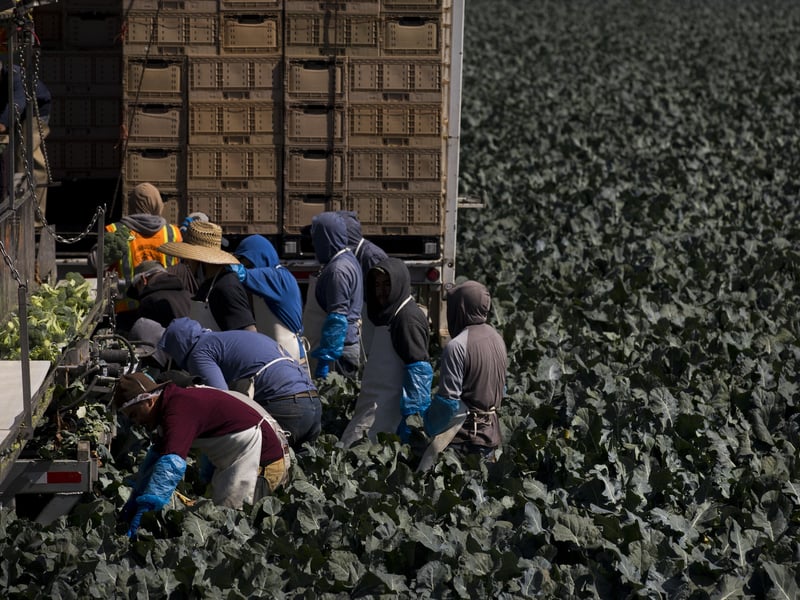
MANHATTAN (CN) — An amended New York statute prevents farm workers from having the autonomy to organize and collectively bargain as they see fit, a coalition of agricultural employers told the Second Circuit Thursday.
The Farm Laborers Fair Labor Practices Act was amended in 2020, requiring New York farms to recognize and bargain with a private labor union as the “exclusive representative” of their workplace, whether or not the workers want it.
In their 2023 complaint against the state, the farm groups asked for a preliminary injunction against the enforcement of the law. But a federal judge denied their request, finding that the employers haven’t been directly affected by the statute as their workers have.
The employers disagree, saying that the state’s enforcement of compelled unionization directly impacts their constitutional rights as well as those of their workers.
“Especially here, where employers suffer derivative harm, farms and farmworkers have a mutual interest in preserving their rights, and the state has denied farmworkers all practical avenues for relief,” the employers said in their brief.
Specifically, the employers say the amended law requires them to pay increased labor costs because of their compliance with the private labor union. The law also requires them to participate in a “card-check certification scheme,” a union selection process that ensures the private union is certified each time, which strips the agricultural workers and employers from having any choice in their organizing efforts.
The employers can appeal the certification with the Public Employment Relations Board but say they won’t pause the bargaining obligation while it’s pending.
“The certification remains in place, and the reparable harm is occurring during the time that it’s pending before the PERB,” Joshua Viau, an attorney with Fisher Phillips representing the employers, said.
But Joseph Spadola, an attorney with the New York Attorney General’s Office, said there is an ample process to dispute union certification. He added that the employers were unable to succeed with their claims because the worker statements failed to display instances in which the private union committed fraud or coercion.
“One set of workers simply said, ‘I am not interested in joining any union at this time,’” Spadola said. “They didn’t deny signing the cards supporting the union, and they did not say that the union lied to them when they presented the cards.”
Spadola added that the workers are not forced to participate in the union, pointing to the authorization cards that allow workers to consent to joining and allowing it to deduct fees from their wages.
U.S. Circuit Judge Barrington D. Parker, a George W. Bush appointee, asked how that authorization process applies to temporary agricultural workers who are in the United States on an H-2 visa.
“They came up in April, and the organizational activity took place,” Parker said, posing a hypothetical. “It’s now October, and they are back in Mexico.”
Spadola says it operates like any other seasonal industry and the card represents a “snapshot in time” that only collects fees from workers when they are on the payroll.
“If they’re back in Mexico and they’re no longer on the payroll, they’re not counted,” Spadola said.
U.S. Circuit Judges Frank Bianco and William J. Nardini, both Donald Trump appointees, also participated in the panel.
 Follow @NikaSchoonover
Subscribe to our free newsletters
Our weekly newsletter Closing Arguments offers the latest about ongoing trials, major litigation and rulings in courthouses around the U.S. and the world, while the monthly Under the Lights dishes the legal dirt from Hollywood, sports, Big Tech and the arts.