
 Search Articles


SAN FRANCISCO (CN) — A panel of Ninth Circuit judges questioned Wednesday the likelihood of artificial intelligence models infringing on copyright laws, with the unnamed plaintiffs seeking to ensure attributable information stays put when AI generates code that answers queries.
In January 2024, U.S. District Judge Jon Tigar dismissed most of the anonymous code writers’ claims, asserting GitHub and other software development companies’ coding assistant violated open-source licenses protecting their work, and denied in April 2024 the plaintiffs’ motion for reconsideration. In September 2024, Tigar granted an order for an interlocutory appeal.
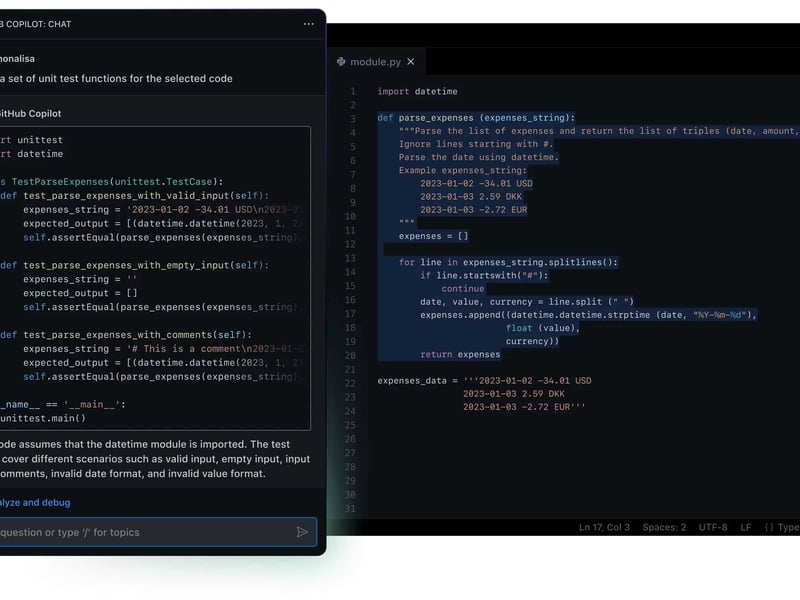
The 2021 lawsuit against Microsoft, GitHub and OpenAI questioned whether the AI-powered coding assistant GitHub Copilot relies on “software piracy on an unprecedented scale.”
The plaintiffs claim at different times, when AI assistants are trained using data that is copyrighted, and when it outputs code to consumers, it strips the Copyright Management Information from works and doesn’t give any attribution when relayed to the end-user.
The acts of copying and stripping the CMI from code, appellate attorney Jesse Panuccio said, are violations of the Digital Millennium Copyright Act.
“The defendants subsequently trained these programs to ignore or remove the CMI,” he said.
The plaintiffs seek an injunction to halt the “unlawful conduct” of removing CMI from copyrighted work.
But the three-judge panel wasn’t convinced the plaintiffs’ appeal had enough evidence on the merits or showed an actual injury to remand the case.
“You would still need to show that there was a nonspeculative, realistic possibility that your content was going to be reproduced without the appropriate attribution,” U.S. Circuit Judge Eric Miller, a Donald Trump appointee, said.
Panuccio said all the evidence that may be needed is in a “GitHub repository,” including the plaintiffs’ code that was uploaded and incorporated into Copilot with its CMI removed.
Copilot, which GitHub unveiled in 2021, is trained on public repositories of code scraped from the web. It uses artificial intelligence to absorb all the code in GitHub, and some code has been published using licenses requiring anyone reusing the code to credit the creators.
Miller was concerned about where the statute draws the line on what could be considered copying and what could be considered fair use.
“I think this is very familiar to copyright law,” Panuccio said. “It’s been going on for 250 years on the right of reproduction, where if someone copies a work, the question has always been, is it substantial enough copying? Does it get to the heart of the expression?”
GitHub attorney Chris Cariello said the plaintiffs didn’t have standing to make their claims.
“The basic problem that the injury, for which the plaintiffs seek redress, isn’t something that has ever happened to them or will happen to them,” he said. “You can’t sue on the basis that someone else might be injured at some point.”
Furthermore, Carriello said, the plaintiffs “don’t allege what their code does,” how frequently it may show up in algorithms or how the CMI is stripped.
“Stripping is an act,” he said. “They have to allege the mechanism by which that happens.”
Lisa Blatt, representing OpenAI, told the panel it should uphold the idea that removal occurs “if a defendant tampers with existing CMI on existing works and not simply fails to add CMI to the defendant’s own products.”
She said that it was important for the panel to make the distinction Miller was concerned about, on where to draw the line if removal of CMI is valid, because what AI generated was unlike the original work and what requires attribution.
“It is absolutely critical that this court, at least, reset what’s going on, and not just fix half the problem on an identicality requirement without also telling courts what the other side concedes is that there is no attribution right,” she said.
U.S. Circuit Judge Sidney Thomas, a Bill Clinton appointee, and U.S. District Judge Stanley Blumenfeld Jr., a Trump appointee, rounded out the panel.
Subscribe to our free newsletters
Our weekly newsletter Closing Arguments offers the latest about ongoing trials, major litigation and rulings in courthouses around the U.S. and the world, while the monthly Under the Lights dishes the legal dirt from Hollywood, sports, Big Tech and the arts.