Search Articles


OAKLAND, Calif. (CN) — Former board members and an employee of OpenAI say they raised concerns about artificial intelligence safety processes as the former nonprofit restructured to become one of the highest valued for-profit AI companies in the world.
On Thursday, a nine-person jury continued to watch video depositions from two of OpenAI’s former board members in a landmark trial pitting tech billionaires Elon Musk and Sam Altman, current OpenAI CEO, against each other.
Former OpenAI board member Helen Toner, an AI safety researcher, said in the deposition the company’s original nonprofit mission to ensure artificial general intelligence, or AGI, is created for “the benefit of humanity” was “deeply related” to safety, but as the company progressed to include a for-profit entity, safety was not as prioritized as it was under the nonprofit structure.
Tasha McCauley, another former OpenAI board member, echoed Toner’s concerns in her video deposition and explained the board’s thoughts when it fired Altman in November 2023.
She testified that over the course of being on the OpenAI board, “smaller interactions gave me real doubt” whether she could trust Altman. McCauley noted that Altman had once claimed to the board three variants of ChatGPT were submitted, tested and reviewed by the company’s deployment safety board, but in reality, only one had been through the safety board at the time.
She said there was a “pattern of dishonesty” that was “a difficult component of Sam’s leadership,” and his behavior became a part of the culture at OpenAI.
“A culture of lying, a culture of deceit,” she said. “It’s extremely concerning behavior because we were a nonprofit board. We did not have a high degree of confidence that we were informed and could make informed decisions.”
She said the concerns increased due the nonprofit’s mission to create AGI for the benefit of humanity.
“Stakes were going to get a lot higher moving forward,” she said.
Musk’s attorneys used McCauley’s video testimony to bolster the argument that the board — guided by the nonprofit’s mission and its ability to hire, fire and evaluate the CEO — was unable to work toward the company’s mission due to Altman. Musk claims Altman’s reinstatement as CEO less than a week after his firing made the board’s position as a conduit for the nonprofit’s mission more precarious.
Rosie Campbell, a former OpenAI worker who focused on AI safety, also took the stand Thursday. She testified she left OpenAI at the end of 2024, after two of OpenAI’s safety teams were disbanded.
She said the decision to launch certain ChatGPT test versions in India through OpenAI’s partnership with Microsoft without initial safety or board approval was indicative of OpenAI not upholding safety processes. She said it’s important to set strong precedent in safety processes — even if the test version was in no way unsafe — because there was a “need to know they are being followed reliably.”
“Over time it became a product focused organization,” she testified.
In a peevish exchange after noting Campbell wasn’t on the OpenAI executive team or board of directors, OpenAI counsel asked her “You really don’t know why you are in this courtroom today, do you?” — a question that was subsequently withdrawn.
The last live witness of the day was David Schizer, a law professor and former dean of Columbia University Law School, with expertise in nonprofit structures and compliance.
Musk’s lead counsel Steven Molo asked Schizer about OpenAI’s restructuring and its partnership with Microsoft — also a co-defendant in the case — starting in 2019 to its most recent restructure in 2023.
Altman partnered with Microsoft in 2019 after the software company agreed to invest $1 billion and later made another $10 billion investment in its for-profit arm. OpenAI is currently valued at more than $850 billion, with Microsoft’s 27% stake in the for-profit valued at around $200 billion.
In 2023, OpenAI restructured its public benefit corporation with its nonprofit arm initially taking a target redemption amount, or profit earnings, of up to $60.8 billion after it moved its intellectual property — valued at $6.08 million — into OpenAI’s for-profit arm. After the nonprofit, Microsoft and OpenAI employees reached their target redemption amounts, totaling approximately $275 billion, any residual profits would flow back to the nonprofit.
However, the restructuring, phrased as a hypothetical by Molo, also added a 20% annual increase in target redemption values starting in 2025, and it was unlikely, Schizer said, there would be any residual profits to funnel back into the nonprofit.
Schizer said, generally, the goal of nonprofits partnering with for-profit companies was to keep the economic interests of the nonprofits protected, and OpenAI’s structure “raises a lot of questions.”
In his 2024 suit, Musk claims Altman and current OpenAI president Greg Brockman deceived him about moving OpenAI from a nonprofit to a for-profit entity that no longer had a “fiduciary duty to benefit humanity.”
Musk, Altman, Brockman and former OpenAI chief scientist Ilya Sutskever co-founded OpenAI in 2015. Musk acrimoniously left the startup in February 2018.
He brings breach of charitable trust and unjust enrichment claims and seeks $150 billion in compensatory and punitive damages from OpenAI and Microsoft for betraying its original nonprofit mission. He also claims Microsoft aided and abetted the breach of charitable trust and that the company benefited from his early donations.
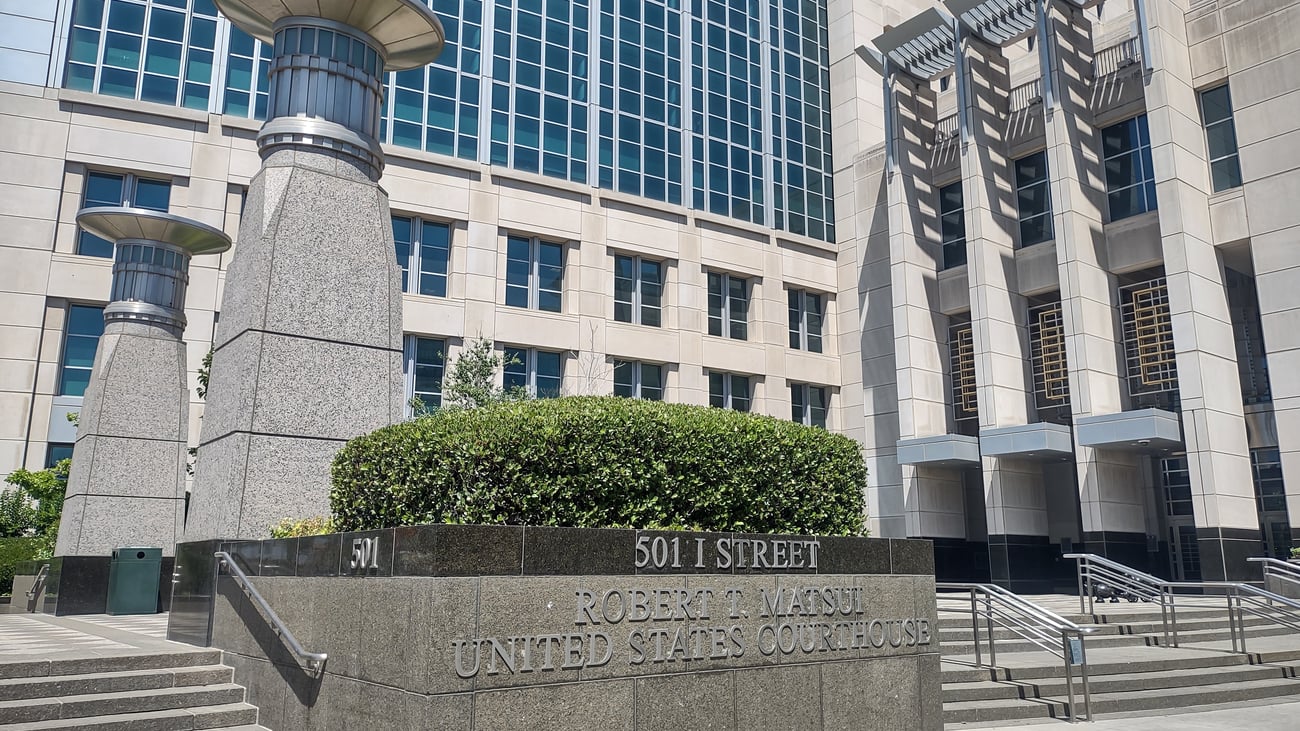
U.S. District Judge Yvonne Gonzalez Rogers presides over the trial. The Barack Obama appointee mentioned at the end of the day Thursday that the jury will start deliberations May 18, with closing statements scheduled for May 14.
Sutskever, who was an initial proponent of Altman’s firing, and Satya Nadella, the current CEO of Microsoft, are likely to be called as witnesses early next week.
Subscribe to our free newsletters
Our weekly newsletter Closing Arguments offers the latest about ongoing trials, major litigation and rulings in courthouses around the U.S. and the world, while the monthly Under the Lights dishes the legal dirt from Hollywood, sports, Big Tech and the arts.