
 Search Articles


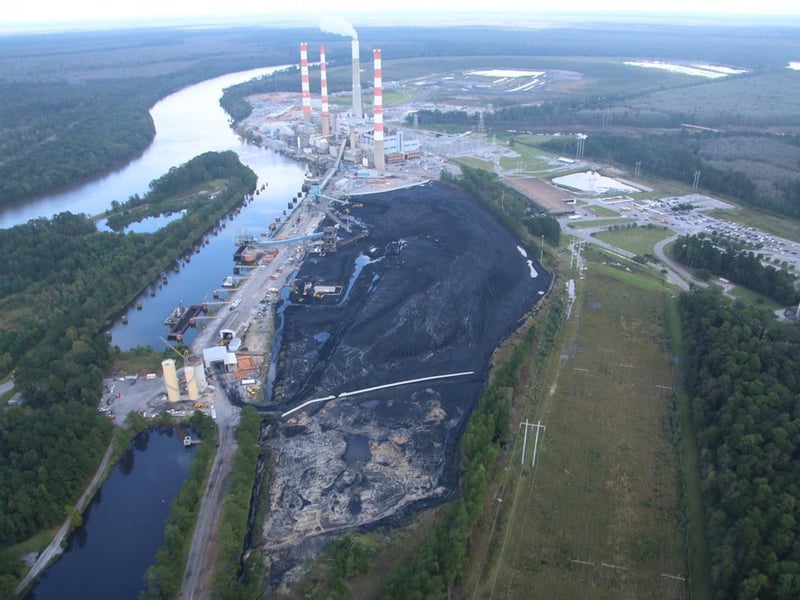
(CN) — An Alabama nonprofit pleaded with the 11th Circuit Court of Appeals Thursday to revive a lawsuit demanding the excavation of millions of tons of toxic coal ash from a decades-old impoundment at a power plant on the edges of the environmentally sensitive Mobile-Tensaw River Delta.
The case stems from Mobile Baykeeper’s 2022 citizen suit under the Resource Conservation and Recovery Act, claiming that Alabama Power’s 2020 “closure in place” plan — capping the unlined pond without removing the ash — violates EPA regulations by failing to prevent ongoing groundwater contamination. The 21-million-ton ash pile, laced with arsenic, mercury, and other heavy metals, sits perilously close to the delta, a primary or secondary drinking water source for nearly a million residents and a recreational haven for Baykeeper’s members.
A lower court dismissed the suit in January 2024 for lack of standing, ruling the environmental group’s claimed injuries weren’t fairly traceable to the closure plan. In the dismissal, Chief U.S. District Judge Kristi DuBose, an appointee of George W. Bush, noted that past harms predate the 2020 plan while future risks remain speculative amid EPA settlement talks.
Representing the plaintiff Thursday, attorney Nick Torrey argued that Alabama Power’s lagoon closure method violates federal regulations by leaving coal ash sitting in water, which continues to leach toxic pollutants. He stated that the lower court “assumed that there would be no benefit from the lawful closure method” and argued this was not how environmental remediation actually works.
Torrey emphasized that the court should have assumed the accusations were true and that the relief sought would reduce pollution. He further argued the dismissal departed from “well-settled case law on standing and ripeness” and did not properly evaluate the potential for redressing the environmental injury.
“What we’re trying to achieve is zero pollution,” said Torrey, of the Southern Environmental Law Center. “These rules were created exactly to stop this problem … if we’re allowed to go forward and do discovery [and] enforce these requirements, it will result in a lawful closure that stops that pollution from happening.”
Torrey added that the 11th Circuit should recognize that citizen enforcement is a primary mechanism for enforcing environmental regulations.
The three-judge panel seemed focused on understanding the practical implications of the proposed relief and whether it would genuinely address the environmental concerns raised by Mobile Baykeeper.
U.S. Circuit Judge Britt Cagle Grant questioned the purpose of citizen suits: “What would be the use of a citizen suit, which is a provision in the law, if it could never be effective?" the Donald Trump appointee asked. “Just a way to get people in court to kind of talk about things?”
Representing Alabama Power, attorney Ed R. Haden argued that Mobile Baykeeper’s lawsuit lacks redressability for several reasons. Haden told the panel that filing a compliant plan does not guarantee implementation due to regulatory requirements and the potential for discretion by state and federal regulators.
Haden also said the proposed relief would not actually stop pollution and might even increase environmental harm, while suggesting the plaintiff could have pursued alternative legal strategies, such as suing under the RCRA for imminent pollution or challenging the permit in state court. Still, there’s no guarantee that any court-ordered plan would actually be approved or implemented, he emphasized.
The panel also included U.S. Circuit Judge Andrew Lynn Brasher, a Trump appointee who asked Torrey a core legal question in rebuttal.
“If you prove everything that you say is true, and you get all the relief that you’ve requested, pollution would stay the same, right?” Brasher asked. “I’m saying that that’s the question for us.”
Torrey said Brasher’s question could only be answered if the case was allowed to continue toward discovery.
Coal ash is the powdery residue left over from burning coal in power plants. Environmental nonprofit EarthJustice estimates over a billion tons are stored in impoundments across the country in massive, often unlined ponds or landfills that hold a toxic cocktail of heavy metals and pollutants, including arsenic, mercury, cadmium, chromium, and selenium.
Designed as temporary storage solutions, several impoundments — some dating back decades — have failed catastrophically, as seen in the 2008 spill in Kingston, Tennessee, which released 5.4 million cubic yards of sludge that contaminated rivers and farmland for miles.
Thursday’s panel also included U.S. Circuit Judge Robin Rosenbaum, an appointee of Barack Obama. The panel did not indicate when it may issue a decision in the case.
 Follow @gabetynes
Subscribe to our free newsletters
Our weekly newsletter Closing Arguments offers the latest about ongoing trials, major litigation and rulings in courthouses around the U.S. and the world, while the monthly Under the Lights dishes the legal dirt from Hollywood, sports, Big Tech and the arts.