
 Search Articles


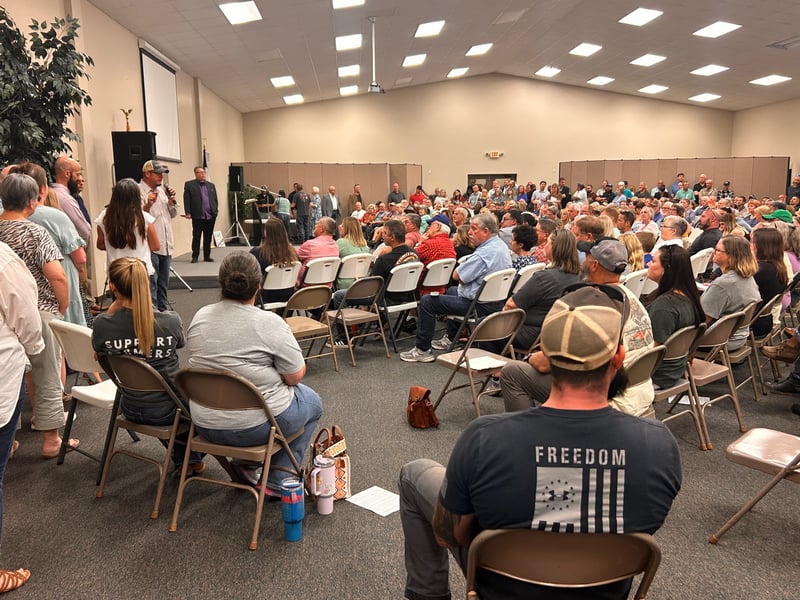
ENTERPRISE, Ala. (CN) — One attendee at the mass migration meeting at the Open Door Baptist Church in rural Enterprise, Alabama, Thursday evening asked about the lack of housing available for new immigrant neighbors. Another wondered whether their increasing presence resulted in a corresponding increase in crime.
Standing in the back of the room, occasionally taking heat from frustrated residents, Enterprise Police Department Chief Michael Moore said there was no evidence of a correlation.
Another person who took the microphone asked if the immigrants could legally possess guns. To a chorus of groans, Moore said he didn’t know. Another attendee said he had heard rumors the immigrants were “sex trafficking little girls” in shared housing units, while yet another proclaimed the immigrants were evidence of the “great replacement theory.”
Their questions and concerns were directed at Jay Palmer, who became a labor trafficking expert after blowing the whistle on Indian technology company InfoSys for immigration fraud, which resulted in a $34 million criminal penalty.
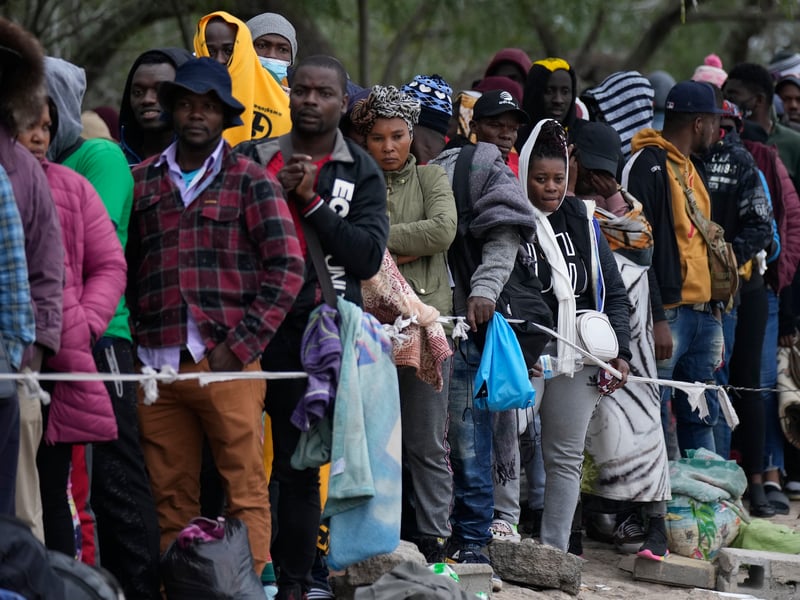
In the past several weeks, Palmer has crisscrossed the state of Alabama speaking to church congregations, civic organizations and elected officials about immigration — particularly the notable number of Haitians using the the Department of Homeland Security’s parole program for Cubans, Haitians, Nicaraguans and Venezuelans.
“Do I think they should be here under the program?” Palmer said during a phone call with Courthouse News Sept. 17. “No, but they are here and we have to do something because it is tearing our communities apart. And many more are coming.”
Both on the phone and at the meeting Thursday, Palmer couched it up to a humanitarian crisis. Although jobs are available, he said there is a lack of housing and transportation for foreign workers, while language barriers and cultural differences have caused alarm and strained social services.
The migration into each community is driven by word-of-mouth, but Palmer said problems are exacerbated by predatory staffing agencies that earn fees from both employers and employees and so-called “sponsors” of each parolee who take no responsibility for them once they have arrived.
“These people were thrown into our communities and they brought their culture here so what are we supposed to do?” Palmer asked over the phone. “We are not a sanctuary state and these are not sanctuary communities, but we have been forced into this role.”
Beneficiaries of the program, predominately Haitians, have been increasingly scrutinized since Republican presidential candidate Donald Trump used the platform of the Sept. 10 presidential debate to suggest they were eating cats and dogs in Springfield, Ohio.
Although those claims were immediately determined to be false, people in at least a half-dozen towns in Alabama began to ask more questions about the dark-skinned, Creole speaking immigrants arriving in greater numbers in their own neighborhoods.
In August, residents in the communities of Albertville and Boaz began to voice concerns about busloads of Haitian workers delivered to chicken processing facilities. Employers in the area explained the buses were provided free to transport their workforce, who were all legally eligible to work.
In the city of Sylacauga, elected officials suddenly adjourned a city council meeting after residents began asking questions about Haitian immigration Sept. 6. On Sept. 17, a member of the Sylacauga City Council appeared on national news to express fears of pending “civil unrest” over the issue.
Days later, Alabama Senator Tommy Tuberville sent a letter to U.S. Secretary of Homeland Security Alejandro Mayorkas claiming selective enforcement of immigration laws and allowing “an unanticipated influx of tens of thousands of Haitians to rural towns where resources are already strained.”
Tuberville pointed to the parole program as one culprit and added the program offers a false promise of support for migrants while also undermining national security.
According to an August report from U.S. Customs and Border Protection, nearly 530,000 people had entered the country under the program, including 214,000 Haitians. The program was briefly paused in August due to a fraud investigation, but since it has resumed, there are concerns many thousands more parolees are in the pipeline.
In a phone conversation earlier Thursday, Alabama State Representative Ben Robbins, a Republican from Sylacauga, said there is a lot of misinformation surrounding the new arrivals, but he emphasized the parole program has created “pure chaos.” Robbins claimed the federal government cannot provide specifics about the program because it does not track or monitor the parolees.
“There’s simple questions that can’t be answered and that frustrates me,” he said.
While he agrees with Palmer that local governments have largely been kept in the dark, Robbins does see a legislative opportunity.
“There are serious state legislation discussions and I plan on introducing some immigration bills,” he said.
Among the lower hanging fruit are requiring businesses to report the hiring of program parolees and to hold sponsors accountable for monitoring and reporting their compliance with the program.
“There hasn’t been a push to regulate staffing agencies, but we can certainly do something to look under the hood,” he said.
Back at the meeting, Zulma Fleury made her way to the microphone with the help of a walker. Fleury — a Haitian American who immigrated to the United States more than four decades ago and who owns a popular Puerto Rican cafe in neighboring Daleville — was one of the few non-white attendees of the meeting.
Fleury told the crowd that although she had fallen in love with her forever home in Alabama, she has recently become scared by the xenophobic rhetoric.
“I know everyone here tonight is here for the love of their country and their community and their family and 99% of us are God-fearing people,” she said. “But I’m worried about those who aren’t.”
 Follow @gabetynes
Subscribe to our free newsletters
Our weekly newsletter Closing Arguments offers the latest about ongoing trials, major litigation and rulings in courthouses around the U.S. and the world, while the monthly Under the Lights dishes the legal dirt from Hollywood, sports, Big Tech and the arts.