Search Articles


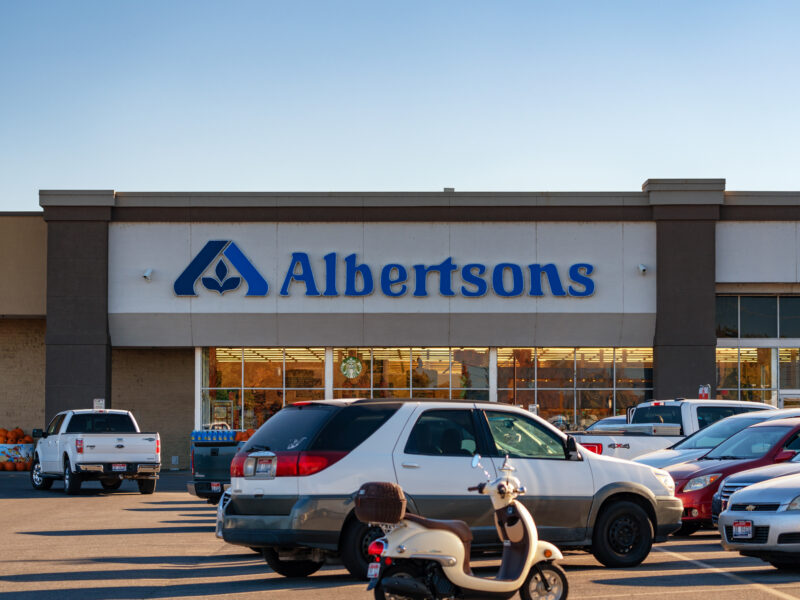
(CN) — The state of Washington wants Albertsons held responsible over its purported role in the opioid crisis, but the grocery chain maintained on Monday that doctors and drug manufacturers should take more of the blame.
“Albertsons put profits over patients safety,” Dan Albertsone, an attorney representing the state, said in his opening statements in the civil bench trial. “Pharmacies are not simply vending machines.”
The chain, he added, “neglected its own responsibility” by not reporting many of these suspicious orders to the Drug Enforcement Agency. Its safety policy, he said was “as good as no policy at all.”
Between the years 2006 and 2022, Albertsons owned the second largest chain of pharmacies in the state, during which time it dispensed more than 600 million opioid prescription drug pills to customers, according to the state.
Washington claims that of those orders, roughly 60% had “red flags” or warning signs about the customers. It says Albertsons’ pharmacies routinely ignored those warning signs, unquestioningly filling prescriptions for opioids.
Albertsone cited a number of examples of opioid medication being “diverted,” or purchased unlawfully to either be sold on the black market or abuse.
On a single day in 2009, one customer walked into an Albertson’s pharmacy and purchased 1,440 methadone pills. Another customer was able to buy more than 4,500 Oxycodone pills and more than 300 Oxycontin pills in a single month, from one store.
But Enu Mainigi, the attorney for the supermarket chain — which also operated as its own prescription drug distributor for about five years — said the so-called “red flag” analysis prepared by Washington had “never been used outside the courtroom,” and was essentially meaningless.
“In the real world, experts’ red flag guidance was far more nuanced and context dependent,” Mainigi said. She sought to shift the blame of the opioid crisis in the state onto doctors, regulators and drug manufacturers.
“The pharmacist’s role is not to reexamine patients and question the judgment of patients’ doctors, unless there’s a reason to think the prescription is illegitimate,” Mainigi argued. “Albertsons does not drive demand for opioids. Nothing happens without a doctor’s prescription.”
She added: “There certainly were moments we could have done better. But a small number of mistakes did not cause or substantiality contribute to the opioid epidemic.”
The opioid epidemic began in 1999; its causes are myriad, but among them was a shift in standard of care amongst doctors and health policy makers to treat pain more seriously.
Up until the 1990s, opioids were mostly prescribed to cancer patients and those dying from terminal disease. That began to change, as doctors and nurses began to treat pain as the “fifth vital sign,” asking all patients how much pain they were in on a scale of 1 to 10.
In 1995, the FDA approved Oxycontin, which became widely prescribed — and widely abused.
From there, the opioid epidemic took off. Many patients who started out taking prescription opioids would go on abuse other opiates, like heroin. The epidemic hit a new and even more deadly phase in the 2010’s, when fentanyl, a far more dangerous synthetic opioid, became available in the black market in the U.S.
According the Centers for Disease Control, more than 700,000 people died from opioid overdoses during the epidemic. The number of overdose deaths has been declining sharply since 2023.
Cities and states bore an enormous financial burden in dealing with the crisis, as emergency rooms were flooded overdoses, while public parks and libraries were faced with an increase in homelessness and, in some cases, crime.
In response, cities, states, counties and other government jurisdictions sued drug manufacturers, distributors and pharmacies in mass.
Purdue Pharma, which made and marketed Oxycontin, was forced to declare bankruptcy and entered into a national settlement with individual plaintiffs and governments, with the company and its owners, the notorious Sackler family, agreeing to pay out nearly $8 billion.
Governments also sued other opioid manufacturers, distributors and pharmacy chains for violating consumer protection laws and for creating a “public nuisance.”
Most of these cases reached settlements, with the companies agreeing to pay tens of millions of dollars. A handful made it to trial, with varying results.
In 2019, a state court judge ordered Johnson & Johnson to pay Oklahoma $572 million for the drug makers role in the crisis.
The company did far better in California, where an Orange County Superior Court judge found, “there is simply no evidence to show that the rise in prescriptions was not the result of the medically appropriate provision of pain medications to patients in need.”
A 10-week bench trial between West Virginia and the “big three” drug distributors — AmerisourceBergen, Cardinal Health, and McKesson — ended in a win for the defendants, although Fourth Circuit Court of Appeals overturned the verdict in 2025.
Washington state was one of states that were hit the hardest by the opioid epidemic, suffering from the third-highest overdose death rate, after West Virginia and Alaska. And its fatal overdose death rate, though lower than 2023, remains well above pre-pandemic levels.
“In the last three years alone, over 7,400 people have died of opioid overdoses in our state,” Washington’s attorney Kelsey Endres said on Monday. “That’s an average of three people-a-day.”
The Albertsons trial is expected to last until September, and to feature dozens of expert witnesses on former Albertsons employees.
At the end of it, King County Superior Court Judge Janet Helson will decide if the chain acted reasonably, and whether or not its actions played substantial role in causing or worsening the opioid crisis in the state.
 Follow @hillelaron
Subscribe to our free newsletters
Our weekly newsletter Closing Arguments offers the latest about ongoing trials, major litigation and rulings in courthouses around the U.S. and the world, while the monthly Under the Lights dishes the legal dirt from Hollywood, sports, Big Tech and the arts.