Search Articles


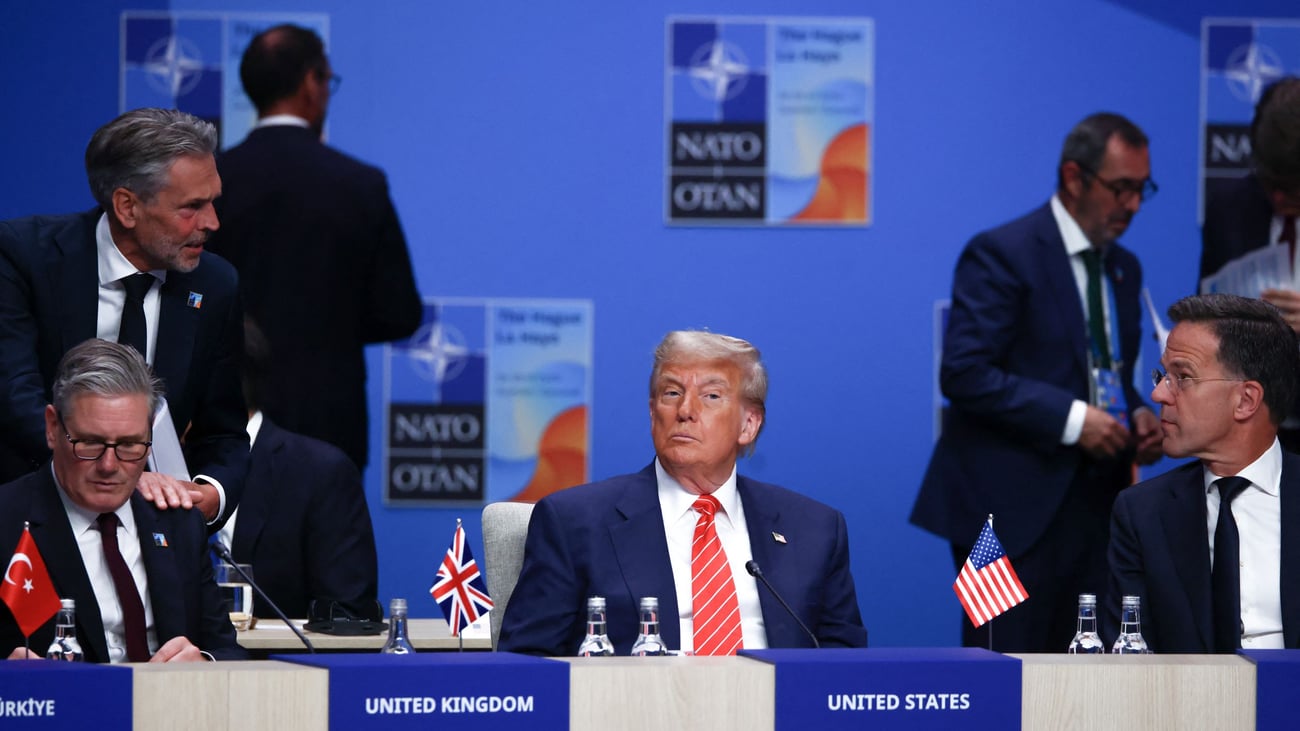
(CN) — Most Americans believe the United States should stay in NATO and that the alliance helps keep the country safer, according to a national survey released Thursday by the Annenberg Public Policy Center at the University of Pennsylvania. But support is far from unanimous — Democrats strongly back the military pact, while Republicans are much more skeptical and even more divided depending on the depth of their allegiance to President Donald Trump.
The poll, conducted prior to Trump’s meeting with NATO Secretary-General Mark Rutte on April 8 at the White House, shows clear public backing for America’s role in the 75-year alliance even as Trump’s support has cratered. Yet it also reveals sharp partisan differences and a notable fracture inside the Republican Party itself.
Overall, 61% of U.S. adults surveyed say it is at least moderately important for the United States to remain a member of NATO. Only 21% call it of little or no importance, while 18% say they are unsure. When asked about security, 52% say NATO provides at least a moderate benefit to U.S. security, including 19% who say the benefit is “a great deal” and another 14% who say “a lot.” Twenty-six percent see little or no benefit, and 22% are unsure.
Meanwhile, public opinion of NATO itself is more positive than negative. Thirty-eight percent of Americans hold a somewhat or very favorable view of the alliance, compared with 18% who view it unfavorably. Just under 30% claim neutrality while 17% say they don’t know enough to have an opinion.
The numbers look very different when broken down by party. Democrats are by far the most supportive: 79% say continued U.S. membership in NATO is at least moderately important and 68% see moderate or greater security benefits. Fifty-five percent hold a favorable view of the alliance.
Republicans are less enthusiastic. Only 44% say NATO membership matters at least moderately to U.S. interests, while just 34% believe it delivers moderate or better security benefits. Only 21% of Republicans have a favorable view of NATO.
But among Republicans who identify primarily as Trump supporters, support drops dramatically. Only 28% say staying in NATO is at least moderately important and just 22% say the alliance provides moderate or greater benefits to U.S. security. By contrast, Republicans who identify primarily with the GOP rather than Trump personally are much more positive: 59% see membership as important and 47% see meaningful security benefits. Those who support both Trump and the party fall somewhere in the middle.
Matthew Levendusky, director of the Annenberg Public Policy Center’s Institutions of Democracy division and a professor at the University of Pennsylvania, said the results show broad public support for NATO despite Trump’s criticisms.
“Although President Trump has repeatedly condemned NATO and said he’s considering withdrawing the U.S. from it, a majority of Americans say that the United States should remain a NATO member and that U.S. security benefits from NATO membership,” Levendusky noted in a statement.
Shawn Patterson Jr., a research analyst at the center, pointed to the Republican split as especially telling.
“What we’re seeing is not simply a partisan divide on foreign policy, the data may also suggest a fracturing within the Republican coalition itself,” he said. “Although these subgroup patterns are based on smaller sample sizes, the different views on NATO between Trump supporters and party supporters are significant. This has real implications for American foreign policy.”
The survey also asked a broader question about U.S. foreign military interventions. Forty-two percent of Americans say such actions more often worsen the situations in the countries where they occur, while only 20% say they improve conditions. Views there are also divided by party: 39% of Republicans think interventions usually help, compared with just 6% of Democrats. Only 10% of independents say interventions tend to improve things.
The poll was conducted by SSRS between Feb. 17 and March 20, 2026. It surveyed a nationally representative sample of 1,330 U.S. citizens aged 18 and older, mostly online with a small number of phone interviews. Results were weighted to match U.S. population benchmarks. The margin of error for the full sample is plus or minus 3.5% and is larger for smaller subgroups.
The findings come at a moment of active debate among Republican leaders. Senators Mitch McConnell of Kentucky and Thom Tillis of North Carolina recently pushed back against Trump’s suggestion that the U.S. might leave NATO, warning that withdrawal would hurt U.S. security. Senator Rand Paul of Kentucky, however, has supported giving Trump broad authority to pull out without Senate approval.
 Follow @gabetynes
Subscribe to our free newsletters
Our weekly newsletter Closing Arguments offers the latest about ongoing trials, major litigation and rulings in courthouses around the U.S. and the world, while the monthly Under the Lights dishes the legal dirt from Hollywood, sports, Big Tech and the arts.