
 Search Articles


(CN) — When almost 8 million Bolivians vote on Sunday, they will face a surprising option for president: Nobody.
In an election marked by years of political instability and infighting, with one of their main leaders blocked from running, expectations are high for the right-wing to return to power. There are eight candidates for the Andean country’s presidency, with three likely to enter a runoff. But there’s also an unlikely choice with the potential to make Monday headlines: Blank ballots.
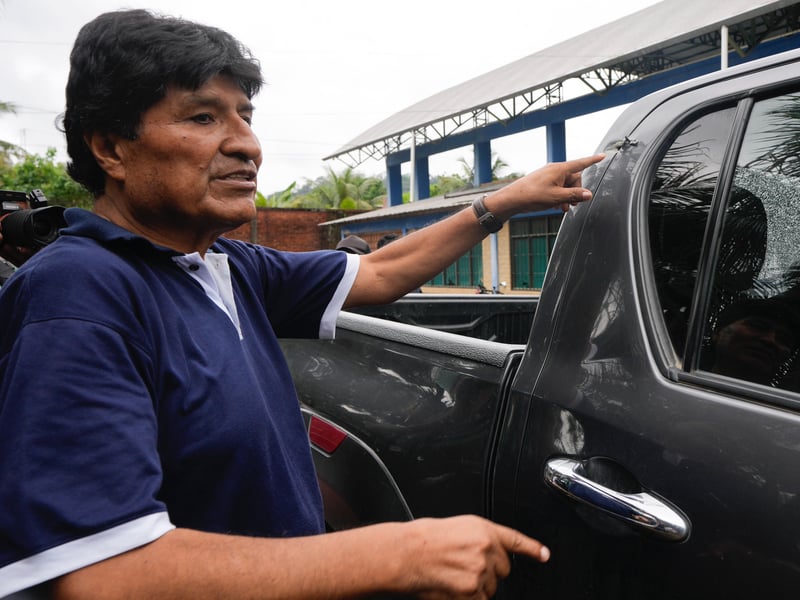
Leftist ex-President Evo Morales, the former trade union organizer and coca grower who became one of the century’s most relevant politicians in South America, led Bolivia between 2006 and 2019 but was barred from the race after a constitutional court ruling overturned unlimited reelections.
His absence has split the fragile support of left-wing voters between an emerging candidate who embodies Morales’ political program but lacks his backing, Andrónico Rodríguez, and Morales’ call to declare votes null as a rejection of the electoral process.
“In the long run, his campaign will benefit right-wing candidates,” said Natalia Aparicio, a Bolivian political analyst. Blank votes, regardless how many there are, cannot trigger an election redo: They must be excluded from the final tally, ultimately boosting all candidates’ percentages.
A slow but steady economic crisis in Bolivia, marked by the shortage of foreign currency, is showing some unavoidable signs, from the blooming of black markets for foreign currency to the shortage of fuel, sparking concern over the country’s future and its financial sustainability.
Conservative candidates such as Samuel Doria Medina and Jorge Fernando Quiroga Ramírez, likely to face a runoff according to polls, have pledged to overturn the country’s recent economic policies by seeking foreign aid, including loans from the International Monetary Fund, and implementing shocking austerity measures from day one in office.
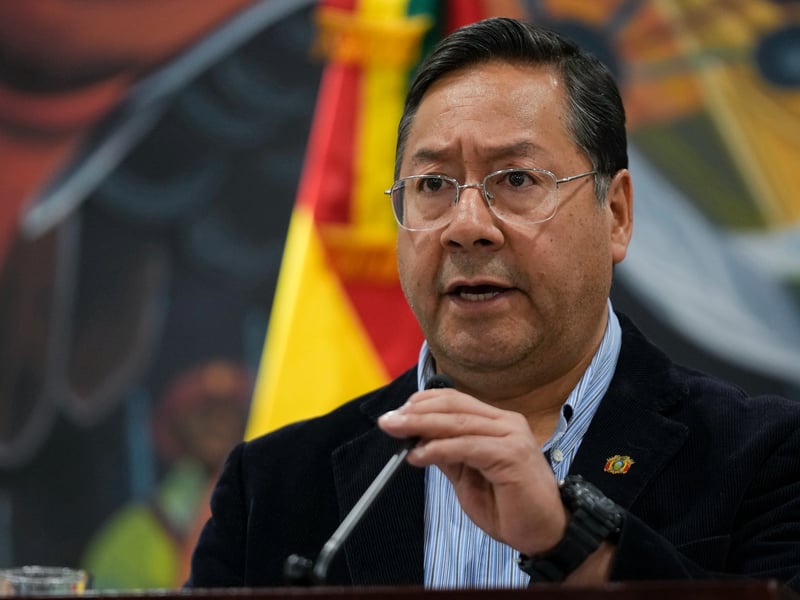
Luis Arce, the current president, was appointed by Morales as candidate of the party he founded, Movement to Socialism or MAS, but the two have been at odds for years. Morales blames Arce for being barred and politically persecuted in a case of sexual abuse that has led the cocalero leader to seclude himself in his rural house.
Arce’s administration has an approval rate below 25% according to a CB Consultancy report from earlier this year, which measures the image of Latin American politicians. He declined to run for reelection; polls showed him with less than 5% support.
“We’re under an institutional debacle,” said José Luis Exeni, a Bolivian political analyst. “None of the candidates has sparked enthusiasm.”
Unlike other Latin American countries, with elections marked by unorthodox candidates promising a radical change in the course of their societies, the menu of candidates in Bolivia this time around is dominated by “traditional” politicians.
The infighting among the left and the lack of innovative candidates have created momentum for the right-wing candidates, who slightly surpass 20% of polled voters but could make it to a run-off, nonetheless, inaugurating a different political era in the country.
“People will vote according to who they trust best to give this crisis a quick solution,” said Exen.
While the more conservative candidates pledge to agree on loans with the International Monetary Fund to stabilize the economy, the more progressive candidates say they would seek help from BRICS or an alliance with China.
“They’re all short-sighted programs,” Exen said. “Nobody is discussing a sustainable development model for the country.”
Jorge Fernando “Tuto” Quiroga, an industrial engineer who studied in Texas, was president of Bolivia after the resignation of former dictator Hugo Banzer, for whom he served as vice president. He was 41. He ran for the presidency in 2005, but lost to the then-emerging Evo Morales, and became an opposition leader to Morales’ MAS movement.
Now, Quiroga is campaigning on development through austerity programs, picking up the symbol of the chainsaw wielded by pro-Trump Argentinian President Javier Milei, promising “a dramatic slashing” of the government.
Meanwhile, Samuel Doria Medina — an economist from Arizona State University who presents himself as the next “business president” who will make the right choices “fast, without political calculation” — is running for the fourth time against the MAS. He pledges to cut bonds with Venezuela, Cuba and Nicaragua, while refocusing Bolivia’s international relations toward the United States and boosting lithium exports.
At the other end of the ideological spectrum, Andrónico Rodríguez, who considers Morales his political mentor, is running as an independent due to the incessant infighting within the MAS movement. The 36-year-old Senate president seeks to avoid funding from the IMF and promises to develop local industries and protect the country’s resources.
Despite the rejection of Morales, Rodríguez still represents a good option for those who were once attracted to the MAS movement.
Although Rodríguez’s polling numbers are lower than his right-wing opponents, Exeni said there could be surprises — a large number of voters are rural Indigenous people, who are difficult to measure in polling.
The question is whether those communities, once brought to the center of politics by Morales, will follow his call to blank votes or turn toward another candidate.
On Sunday, preliminary results are expected at 8 p.m. EST, with official results published at 9 p.m. EST.
Courthouse News reporter Lucía Cholakian Herrera is based in Buenos Aires, Argentina.
 Follow @luciacholakian
Subscribe to our free newsletters
Our weekly newsletter Closing Arguments offers the latest about ongoing trials, major litigation and rulings in courthouses around the U.S. and the world, while the monthly Under the Lights dishes the legal dirt from Hollywood, sports, Big Tech and the arts.