
 Search Articles


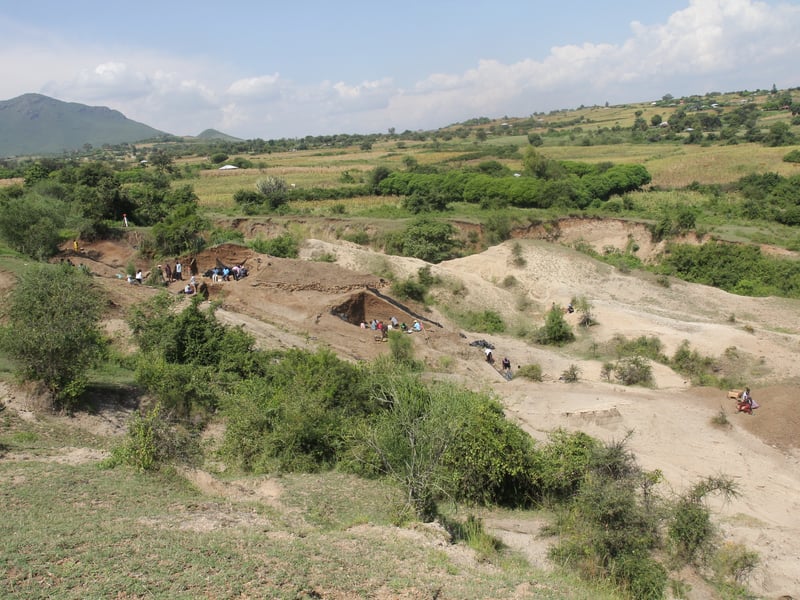
(CN) — Step aside, Bob the Builder — ancient human relatives have been collecting stone materials to build personal toolkits for as long as 2.6 million years, scientists said Friday.
Known collectively as the Oldowan toolkit, these collections of durable carved stones were gathered over long distances and used to pound plant material or process meat.
“People often focus on the tools themselves, but the real innovation of the Oldowan may actually be the transport of resources from one place to another,” said study co-author Rick Potts in a statement. “The knowledge and intent to bring stone material to rich food sources was apparently an integral part of toolmaking behavior at the outset of the Oldowan.”
Previous visits to analyze artifacts found in southwestern Kenya’s fossil-rich Homa Peninsula piqued the interest of scientists Potts and Emma Finestone, senior authors of the study published in Science Advances.
Potts, who is also the Smithsonian National Museum of Natural History’s Peter Buck Chair of Human Origins, has spent extensive time excavating in the Kenyan region and collecting data on ancient humans since 1985.
A recent excavation by the team uncovered a trove of stone tools and butchered hippopotamus bones, which would later be announced as the oldest known evidence of ancient human ancestors using tools to butcher animals. The breakthrough discovery only inspired further investigation, particularly in Nyayanga, an archaeological site rich with items as old as three million years old.
Ancient humans used stone tools for a “variety of pounding and cutting tasks,” Queens College professor and co-author Thomas Plummer said in a statement. “The diversity of activities that used stone tools suggests that even at this early stage of cultural development, stone tools enhanced the adaptability of the hominins using them.”
An analysis of the geochemistry of stone cores and flakes from the site revealed that many of the rocks found were composed of volcanic or metamorphic rock materials like rhyolite or quartzite — materials that are common several miles east of the peninsula.
According to the researchers, ancient human ancestors likely realized these certain materials were stronger and more effective as tools, opting to carry the stones long distances to later be carved and utilized as part of a toolkit.
The fact that materials were carried as far as eight miles shows a developmental step in ancient brains, researchers say.
While some advanced animals like chimpanzees can carry items over short distances, purposefully collecting and transporting resources is a human-only skill and a major milestone in our evolution that shows the ability to make mental maps and plan ahead for tasks like processing food.
Some of the rocks uncovered are also as old as 2.5 million years, surpassing the previous record of 2 million-year-old human-transported carved rocks discovered at a site farther south on the Homa Peninsula. The discovery marks a broad 600,000 year difference for anthropologists and could mean that human brains were more evolved earlier than previously thought.
The researchers say these findings shine a light on the history of humanity’s relationship with raw materials and technology—a relationship that is older than previously thought.
“Humans have always relied on tools to solve adaptive challenges,” said Finestone. “By understanding how this relationship began, we can better see our connection to it today — especially as we face new challenges in a world shaped by technology."
Subscribe to our free newsletters
Our weekly newsletter Closing Arguments offers the latest about ongoing trials, major litigation and rulings in courthouses around the U.S. and the world, while the monthly Under the Lights dishes the legal dirt from Hollywood, sports, Big Tech and the arts.