
 Search Articles


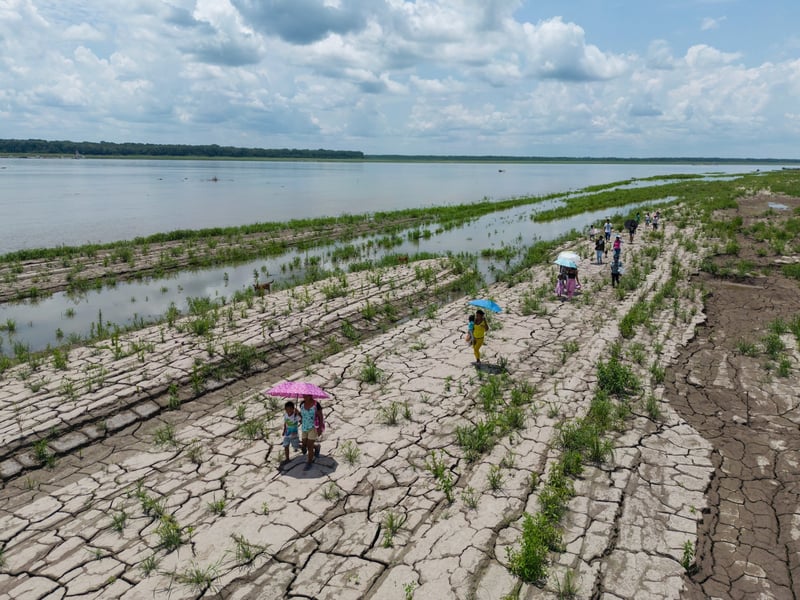
(CN) — A continually warming world could alter the way ocean currents regulate huge swaths of the Earth’s climate, making even rainy places like Central America, the Amazon and Indonesia, susceptible to drought.
Researchers, in a study published Wednesday in the journal Nature, studied how ancient rainfall patterns interacted with the Atlantic Meridional Overturning Circulation, a massive system of ocean currents that moves water through the Atlantic Ocean and what that could mean for the future of Earth’s climate.
By moving warm water from the tropics to the North Atlantic, the AMOC plays an important part in regulating the climate by both locking in place the tropical rain belt at the equator and redistributing heat from the southern hemisphere to the northern hemisphere.
The team of scientists used climate records from 17,000 years ago — consisting of what lead study author and University of Colorado Boulder professor Pedro DiNezio called paleoclimate records — including evidence of precipitation preserved in rock formation and sediments in caves.
DiNezio and his team used computer models to study those ancient rainfall patterns. They then used those patterns to predict how climate change could affect the AMOC and the surrounding environment in the future.
Their models predicted that as the AMOC weakens and cools in the northern part of the Atlantic Ocean, the Caribbean and other parts of the other half of the Atlantic could also drop in temperature, which could mean a significant decrease in rainfall over Central America, the Amazon, and West Africa, which could lead to droughts in areas that now receive significant rainfall.
“This heightened risk of future drought will fall on vulnerable societies and ecosystems across the tropics, particularly Central America, the Amazon, and Indonesia, adding urgency to the mitigation of human emissions of greenhouse gases,” the researchers write in the study.
If climate change continues to alter the way the ocean water moves, parts of the Amazon rainforest could see a 40% reduction in rainfall and the monsoon season in South Asia could even weaken, they add. The droughts could dry out rainforests, affecting not only fragile ecosystems, but peoples’ livelihoods across the tropics.
“This is bad news, because we have these very important ecosystems in the Amazon,” DiNezio said in a statement. “Drought in this region could release vast amounts of carbon back into the atmosphere, forming a vicious loop that could make climate change worse.”
DiNezio, who works in CU Boulder’s Department of Atmospheric and Oceanic Sciences, said that he’s planning on doing follow up studies on similar impacts to the Pacific Ocean and if it could activate extreme El Nino events, impacts and effects on the western U.S. and impacts of drought on the Amazon.
“We still have time, but we need to rapidly decarbonize the economy and make green technologies widely available to everyone in the world. The best way to get out of a hole is to stop digging,” DiNezio said.
Subscribe to our free newsletters
Our weekly newsletter Closing Arguments offers the latest about ongoing trials, major litigation and rulings in courthouses around the U.S. and the world, while the monthly Under the Lights dishes the legal dirt from Hollywood, sports, Big Tech and the arts.