Search Articles


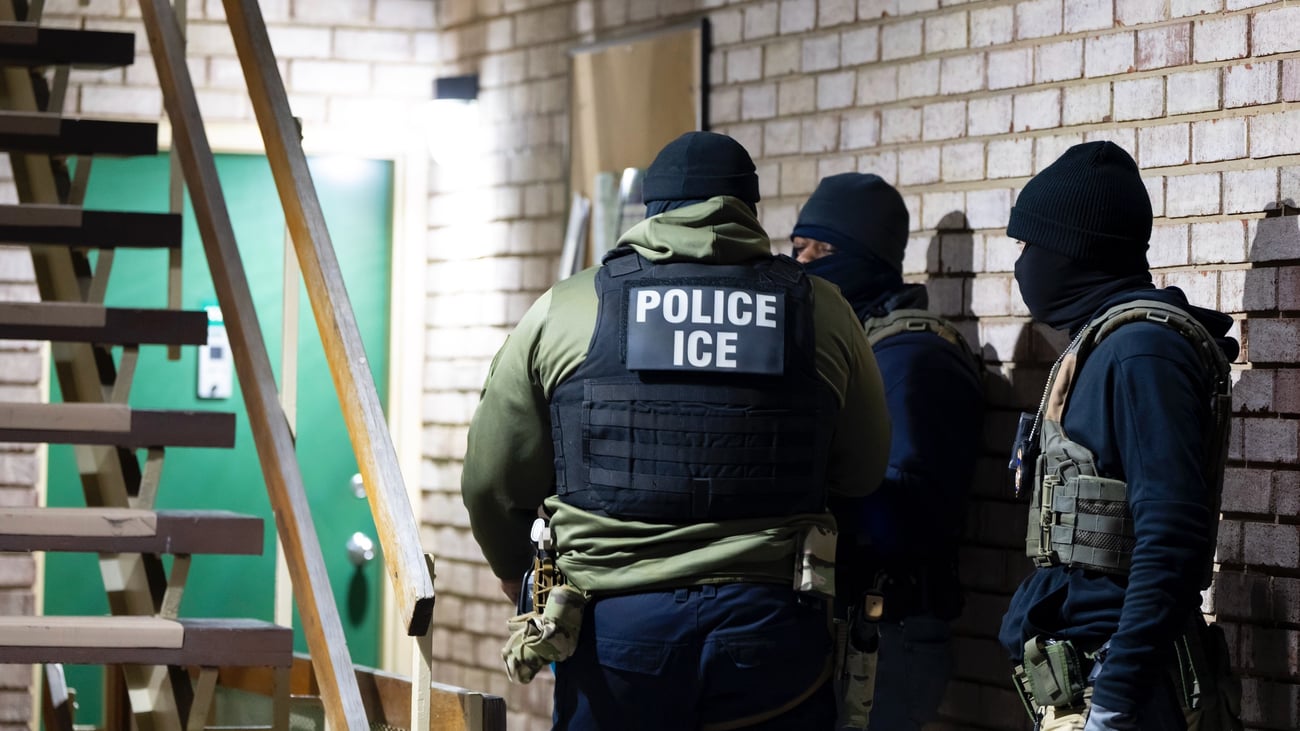
PHILADELPHIA (CN) — The Department of Justice sued the city of Philadelphia and multiple city officials Thursday over a municipal ordinance banning law enforcement at all levels from using face coverings and unmarked vehicles to conceal their identities.
Describing the law as “blatantly unconstitutional,” the federal government accused Philadelphia, Mayor Cherelle Parker, District Attorney Larry Krasner and City Solicitor Renee Garcia of “undermin[ing] the principles of federalism that underlie our entire constitutional order” by limiting federal law enforcement from properly conducting its duties.
“For centuries, the Supreme Court has repeatedly recognized that states have no authority whatsoever to regulate the federal government’s operations,” the federal government wrote in its complaint.
“Despite that well-established precedent, Philadelphia — the very city where the principles of federal sovereignty and supremacy were first established — recently enacted a bill that purports to do exactly what constitutional law says it cannot: subject federal officers and agencies to criminal and civil liability, respectively, through laws that seek to regulate how those officers carry out their federal duties,” the government added.
The ordinance targeted in the suit — passed by Philadelphia City Council on April 23 and adopted on May 8 as part of a larger “ICE Out” legislative package — prohibits all local, state and federal law enforcement operating in Philadelphia from wearing a mask, facial covering or other garment that obscures their identity, except in limited circumstances.
Additionally, the ordinance prevents the intentional concealment of officer badges, tags and labels; bans the use of unidentified vehicles in the course of official duties; and requires law enforcement to identify themselves to a subject of arrest, holding or detention.
“Accountability to the public is an inherent attribute of a democracy, and the ability for members of the public to know basic information about agents of the state with minimal exemptions is vital in a democratic society,” Philadelphia at-large Councilmember Kendra Brooks wrote in the bill. “The need for accountability is heightened when state actors are granted policing power by the people. A state, local, and federal government that is accountable to the public is essential for democracy and safety."
Under the ordinance, failure to comply would constitute criminal concealment, punishable by law. It is currently set to take effect on July 7, 60 days after its adoption.
“We will arrest you,” Krasner said in fiery support of the ordinance in January. “We will put handcuffs on you. We will close those cuffs. We will put you in a cell. We will do everything in our power to convict you, and we will make sure you serve your entire sentence because Donald Trump has no power whatsoever to pardon you.”
In its complaint, the federal government accused the city’s bill of violating the U.S. Constitution’s supremacy clause, which allows federal law to take precedence over conflicting state and municipal laws.
The government’s argument is not new — it made similar claims when challenging bans on masked federal agents in California and New Jersey.
While a final ruling has not yet been made in either case, a Ninth Circuit appeals panel issued an injunction in April prohibiting California from enforcing its ban pending appeal, finding that the Trump administration was likely to prevail on its supremacy clause claim.
“The supremacy clause prohibits states from enacting a law that directly regulates federal operations even if the law regulates state operations in the same manner,” U.S. Circuit Judge Mark Bennett, a Donald Trump appointee, wrote in the three-judge panel’s unanimous opinion. “If a state law directly regulates the conduct of the United States, it is void irrespective of whether the regulated activities are essential to federal functions or operations.”
The Trump administration’s complaint against Philadelphia comes just hours after it scored a notable win against the City of Brotherly Love in the Third Circuit, as a three-judge panel unanimously ruled that Interior Department officials can alter an exhibit on people enslaved at George Washington’s and John Adams’ Philadelphia presidential home.
 Follow @JacksonHeals
Subscribe to our free newsletters
Our weekly newsletter Closing Arguments offers the latest about ongoing trials, major litigation and rulings in courthouses around the U.S. and the world, while the monthly Under the Lights dishes the legal dirt from Hollywood, sports, Big Tech and the arts.