Search Articles



TUCSON, Ariz. (CN) — The Center for Biological Diversity accused the Trump administration of stalling the listing of an endangered snail to allow the construction of Trump’s second border wall that will plow through its only habitat in Organ Pipe Cactus National Monument.
In a lawsuit filed Thursday, the center says the U.S. Fish and Wildlife Service ignored the legal deadline to list the Quitobaquito tryonia — a springsnail the size of a poppyseed — as endangered.
“Federal officials are stalling while one of North America’s rarest animals inches toward extinction,” Russ McSpadden, southwest conservation advocate at the Center for Biological Diversity, said in a press release. “The Quitobaquito tryonia lives in a tiny ribbon of desert water that could be destroyed for the useless political theatre of Trump’s second border wall. These snails play an invaluable ecological role and they urgently need protection.”
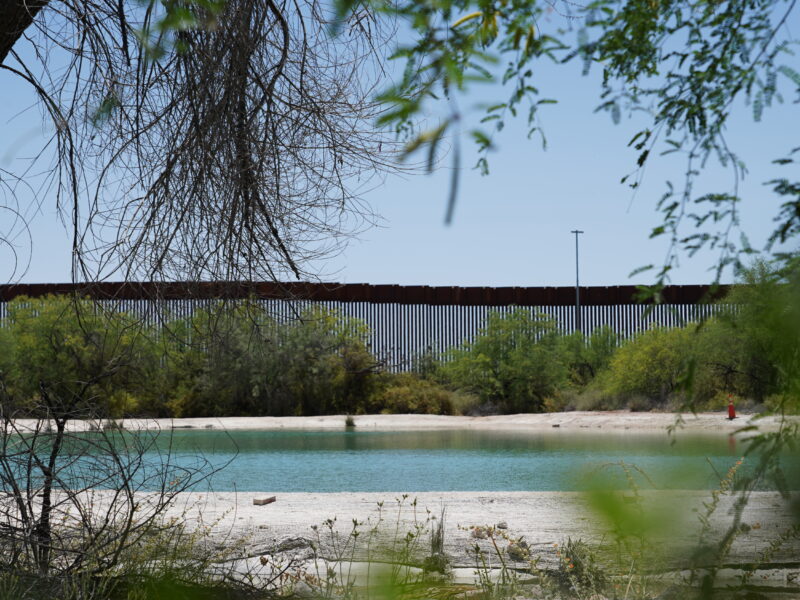
Though he hasn’t completed the first, President Donald Trump plans to build a second, parallel wall running 100 feet north of the existing border wall to create “enforcement zones” and funnel migrants into Border Patrol corridors. The second wall is set to run right through Quitobaquito Springs and the wetland area and destroy the spring’s hydrologic functions and water retention, the center says.
The animal’s habitat, a single spring flowing into a pond, is less than an acre in size. A second, smaller population lives in a seep about 350 feet from the main channel. The snails historically lived in two other nearby springs, but those populations died out after excessive groundwater pumping and drought reduced waterflow. The center says in the lawsuit that recent drilling for border wall construction has compounded those threats on the rest of the snails.
In response to a petition for listing, the Endangered Species Act requires Fish and Wildlife to list a species as endangered and establish critical habitat within one year of a public finding that the listing is warranted, which itself is derived from a 12-month review.
The service determined in an initial 90-day finding that listing was warranted in 2007, but didn’t conduct a 12-month study until legally compelled to in 2023. In the eventually released 12-month finding, Fish and Wildlife determined the primary risk factors affecting the status of the tryonia are the “reduction of spring discharge,” “effects of climate change,” and “spring modification." It recommended designating 6,095 square feet of critical habitat.
But nearly three years later, no listing has been made.
“It has now been over ten years since the service received the petition to list the Quitobaquito tryonia,” the center says in the lawsuit. “During the service’s egregious, unlawful, and inexcusable delay in providing protections demanded by the ESA, the Quitobaquito tryonia has continued to suffer significant loss of habitat and population declines.”
Along with the snails, Quitobaquito Springs, which is culturally significant to the Hia-Ced O’odham and Tohono O’odham people, supports endangered Quitobaquito pupfish and Sonoyta mud turtles, also found nowhere else in the world.
The second border wall, if built, would likely destroy the spring. But it may not mean a death sentence for the critters.
Experts at the Phoenix Zoo and the Arizona-Sonora Desert Museum are working with volunteer conservationists to draft emergency salvage plans for all three species.
“The fact that scientists are being forced to plan emergency salvage for species found nowhere else on Earth shows how reckless border wall projects have become,” McSpadden said. “Instead of protecting one of the most extraordinary desert springs in North America, the Trump administration is about to destroy it and wipe out the animals living there.”
This lawsuit is the second the center has recently filed in Arizona to slow border construction, for which the Trump administration has waived more than 50 environmental, public health and tribal sovereignty laws.
Last year, it sued over the waiver of environmental laws to build the wall through the San Rafael Valley — one of the few known jaguar corridors between the U.S. and Mexico. Experts say a completed border wall through the San Rafael and other wildlife refuge areas will permanently remove jaguars from the American Southwest.
The lawsuit comes weeks after border wall contractors destroyed part of the ancient Las Playas Intaglio, a roughly 1,000-year-old geoglyph in Cabeza Prieta National Wildlife Refuge about 30 miles west of Quitobaquito Springs. Contractors scraped a construction corridor directly through the site for additional border wall construction.
“The destruction of the Las Playas intaglio is a warning for Quitobaquito,” McSpadden said. “When the Trump administration casts aside environmental and cultural protection laws for border wall construction, irreplaceable places become incredibly vulnerable. Quitobaquito Springs is both an essential habitat for endangered species and a sacred cultural landscape that deserves protection from irreversible damage.”
Fish and Wildlife did not immediately respond to a request for comment.
 Follow @JournalistJoeAZ
Subscribe to our free newsletters
Our weekly newsletter Closing Arguments offers the latest about ongoing trials, major litigation and rulings in courthouses around the U.S. and the world, while the monthly Under the Lights dishes the legal dirt from Hollywood, sports, Big Tech and the arts.