
 Search Articles


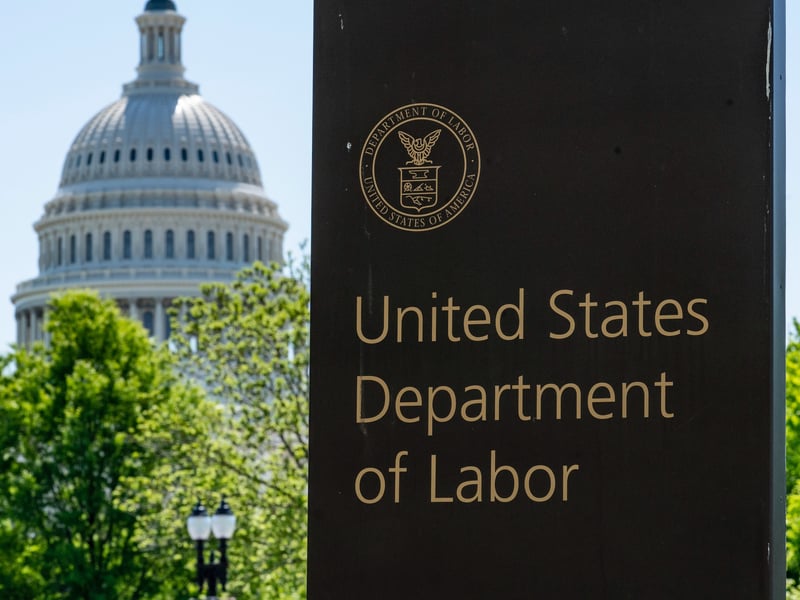
SAN FRANCISCO (CN) — A Ninth Circuit panel ordered the U.S. government to release reports describing the ethnicity and sex of federal contractors to an investigative journalism outfit on Wednesday, deeming the documents not “commercial information” that can be kept confidential and away from the public.
“First, information is the object of commerce — serves a commercial function — and is therefore ‘commercial’ if it is designed to be profitable. That is, if it was made to be bought and sold. The department does not argue that any of the information in the EEO reports was made to be bought and sold,” U.S. Circuit Judge Anthony Johnstone, a Joe Biden appointee, wrote for the court.
The Center for Investigative Reporting — a San Francisco nonprofit news organization that investigates and reports on injustices in the United States — filed a Freedom of Information Act request with the U.S. Department of Labor for documents from 2016 to 2020 to use the information to report on federal contractors’ racial, sexual and ethnic diversity, or possibly their lack thereof.
The federal government notified its contractors of the request. Nearly 5,000 objected to the release of their information. The government released the remaining reports to the Center for Investigative Reporting, prompting the organization to sue in 2022 for the remaining 16,000 documents.
“The workforce-composition data in the reports at issue do not describe ‘the exchange of goods or services or the making of a profit,’” therefore, they are not reports of commercial information that should be shielded from the public, Johnstone said, affirming a federal court ruling that the documents should be released to the Center for Investigative Reporting.
The lower court sided with the news outlet in 2023, ruling that reports were not exempt from disclosure under FOIA. The government appealed that ruling to the Ninth Circuit, arguing that the reports are confidential commercial information that reveal contractor’s organizational structure and headcount, which if released to the public would jeopardize their businesses.
Using Allied Universal — one of the largest private security guard companies in the world, and one of the companies that contracts with the federal government — as an example, Johnstone wrote that the number of employees the company has is visible on the reports, but other factors in their business model, like how much they pay their employees, or their company’s overhead, is not included.
The reports, Johnstone adds, only reveal one aspect of the business that affects their sales and profits, not the totality.
Victoria Baranetsky, attorney for the Center for Investigative Reporting, praised the ruling.
“This ruling draws a critical line: not all information submitted by government contractors can be automatically withheld from the public under Exemption 4. The decision reinforces that for information to qualify as commercial, it must reveal more than a mere connection to business. It must disclose information that goes to the core of the business — like supply chains, pricing strategies, or demand patterns — the truly intimate aspects of a company’s inner workings," she said. “This case is a significant step toward greater transparency and a necessary check on overbroad claims of confidentiality.”
Representatives of the Department of Labor did not immediately respond to a request for comment.
Senior U.S. Circuit Judge Norman Randy Smith, a George W. Bush appointee and U.S. District Judge for the District of Montana Dana Christensen, a Barack Obama appointee, sitting by appointment, rounded out the panel.
Subscribe to our free newsletters
Our weekly newsletter Closing Arguments offers the latest about ongoing trials, major litigation and rulings in courthouses around the U.S. and the world, while the monthly Under the Lights dishes the legal dirt from Hollywood, sports, Big Tech and the arts.