Search Articles


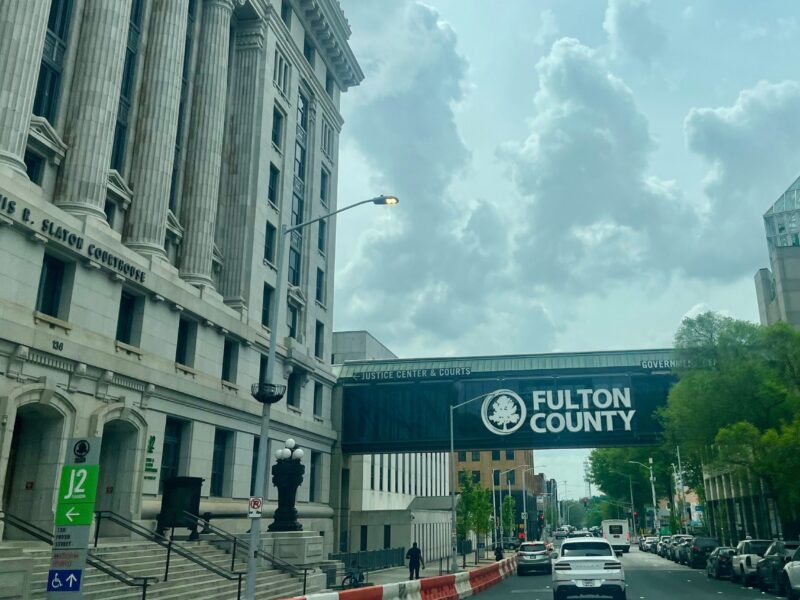
ATLANTA (CN) — A Georgia federal judge on Tuesday blocked the Justice Department from enforcing a subpoena that sought the names and personal information of thousands of 2020 Fulton County election workers.
In the order, U.S. District Court Judge Billy Ray called the breadth of the demand “staggering.”
The Trump administration sought the names, residential and email addresses, and personal telephone numbers of all individuals who worked or volunteered in the presidential election in Georgia’s most populous county.
The request came after the Justice Department obtained a search warrant to take possession of all the county’s original ballots from the 2020 election, fueling Trump’s claims the county caused him to lose to former president Joe Biden. In January, the FBI seized 656 boxes of election materials from Fulton County.
“These records, even if they lead to the DOJ finding individuals who worked for Fulton County in the 2020 election who support the theory that the 2020 election was not fair, would not lead to information that could be used to charge anyone with anything, at least not any viable charge,” Ray wrote.
“That is because the statute of limitations for any possible crime arising from the 2020 election has long expired, as the DOJ must have brought such a case, if it could, no later than late 2025 or the early weeks of 2026.”
Ray, a Trump appointee, said the order does not prevent a continued inquiry into Trump’s claims, but that a grand jury, which exists to investigate potential crimes, cannot be used to do so.
He emphasized the sought information is private and sensitive and that the Justice Department’s subpoena raises concerns of its ability to appropriate such information without a legitimate purpose.
Fulton County argued the subpoena is the Justice Department’s “latest effort to target and harass the president’sperceived political enemies — this time election officials, poll workers, and volunteers in Fulton County whom Donald Trump continues to disparage as he perpetuates his false claim that they ‘stole’ the 2020 election.”
The Justice Department refuted the claim and accused the county of obstructing the next step of its investigation process.
But Ray agreed with the county that it would be burdened by compliance because the sweeping demand would chill the participation of election workers and impair its ability to administer its elections. He said the feds were engaging in an “arbitrary fishing expedition."
“Without a showing that the subpoenaed information will result in a prosecutable crime, the court finds the DOJ’s need for the subpoenaed information to be questionable, at best,” Ray said.
“Surely, the DOJ could articulate a ’need’ for almost any evidence. However, that is not the legal standard. Instead, that low need for the information does not outweigh the burden on Fulton County.”
It is unclear how poll workers from November 2020 would have anything to do with accusations of ballot image alterations in January 2024, Ray said.
The current Trump administration launched the investigation into Fulton County following a referral by the White House’s former election security and integrity director Kurt Olsen. The twice-sanctioned lawyer has been a prominent election denier and has since joined a U.S. attorney’s office in Florida looking into whether previous probes of Trump amounted to a criminal conspiracy against him.
It also came soon after the dismissal of the sprawling racketeering case brought against Trump and several of his allies by Fulton County District Attorney Fani Willis for conspiring to overturn his election defeat in Georgia.
Fulton County attempted to stop the justice Department’s investigation and get its seized ballots returned.
A different federal judge, U.S. District Judge J.P. Boulee, previously held the county did not satisfy its burden of showing that the government “callously disregarded” its rights through the execution of the search warrant.
But Boulee also noted the affidavit proffered to obtain the warrant “was defective in some respects,” that the affidavit’s inclusion of certain statements was “troubling,” and that Fulton County had correctly identified some of the affidavit’s features as “problematic.”
 Follow @Megwiththenews
Subscribe to our free newsletters
Our weekly newsletter Closing Arguments offers the latest about ongoing trials, major litigation and rulings in courthouses around the U.S. and the world, while the monthly Under the Lights dishes the legal dirt from Hollywood, sports, Big Tech and the arts.