
 Search Articles


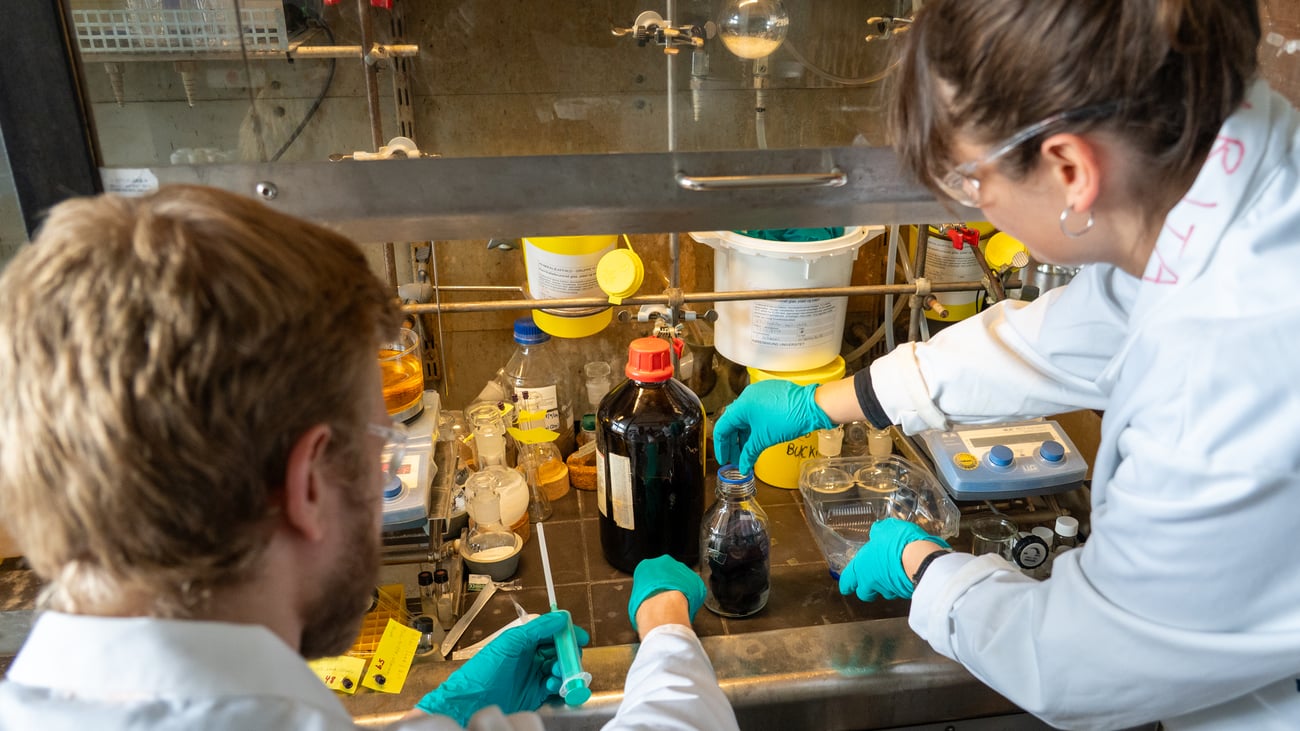
(CN) — The Ninth Circuit on Tuesday affirmed a federal judge’s ruling that temporarily blocked the Trump administration from canceling research grants following an executive order order that sought to root out policies promoting diversity, equity and inclusion.
But the appeals panel reversed part of the judge’s ruling that blocked the canceling of other grants with a more vague explanation, finding the lower court lacked jurisdiction to issue the preliminary injunction.
“We are pleased that the district court’s decision on the First Amendment claims has been affirmed,” said one of the plaintiffs’ attorneys, Claudia Polsky, the director of the Environmental Law Clinic at the UC Berkeley School of Law. “We’re disappointed by and disagree with the ruling as to claims under the Administrative Procedure Act, and are considering next steps.”
In the opening months of President Donald Trump’s second term, three federal agencies — the Environmental Protection Agency, the National Science Foundation and the National Endowment for the Humanities — sent out letters terminating research grants en masse in April 2025. The EPA’s form letter stated the grant “no longer effectuates the program goals or agency priorities,” and the “objectives of the award are no longer consistent with EPA funding priorities.” The National Endowment for the Humanities told researchers the agency was “repurposing its funding allocations in a new direction in furtherance of the president’s agenda.”
In June 2025, six University of California researchers filed a class action on behalf of two different classes: one group, who said their grants had been canceled with no explanation, or only vague explanation; and a group who said their grants were nixed because of Trump’s executive order terminating all DEI-related activities. While the second group sued under the First Amendment, arguing the terminations were aimed at suppressing a viewpoint, the first group suited under the Administrative Procedure Act, or APA.
In their appeal, the federal government argued the Tucker Act prevented the lower court from having jurisdiction over the APA claims.
The three-judge panel cited a 1973 Ninth Circuit ruling undermining the Tucker Act’s power and noted a 5-4 U.S. Supreme Court ruling from last year where the justices allowed the Trump administration to cancel $783 million in health research grants.
“The Supreme Court recently confronted similar circumstances in NIH, and that decision binds us here,” the Ninth Circuit panel wrote in its Tuesday ruling. “The Supreme Court reasoned that the APA’s limited waiver of sovereign immunity “does not provide the District Court with jurisdiction to adjudicate claims ‘based on’ the research-related grants or to order relief designed to enforce any ‘obligation to pay money’ pursuant to those grants.” The grants, they wrote, were essentially contracts.
But the panel agreed that the blocking of DEI grants was likely unconstitutional.
“The government does not dispute that the agencies terminated the grants at issue because of the recipients’ perceived expression of DEI, DEIA, or environmental justice viewpoints,” the panel wrote. “The terms DEI, DEIA, and environmental justice are inherently directional … They convey the viewpoint that the exclusion of historically disadvantagedgroups is undesirable … Because the agencies’ termination of grants is aimed at the suppression of viewpoints with which the government disagrees, it likely violates the First Amendment.”
The unanimous opinion was signed by Senior U.S. Circuit Judge Richard Paez, a Bill Clinton appointee; U.S. Circuit Judge Morgan Christen, a Barack Obama appointee; and U.S. Circuit Judge Roopali Desai, a Joe Biden appointee.
Attorneys for the Department of Justice did not respond to an email requesting a comment on the ruling.
The case remains active, and can proceed with discovery toward an eventual trial.
 Follow @hillelaron
Subscribe to our free newsletters
Our weekly newsletter Closing Arguments offers the latest about ongoing trials, major litigation and rulings in courthouses around the U.S. and the world, while the monthly Under the Lights dishes the legal dirt from Hollywood, sports, Big Tech and the arts.
Additional Reads

 ‘Blah blah blah’ in court record May 26, 2026
 School board president unfairly ousted May 26, 2026
 Student magazines stay shuttered May 26, 2026