Search Articles


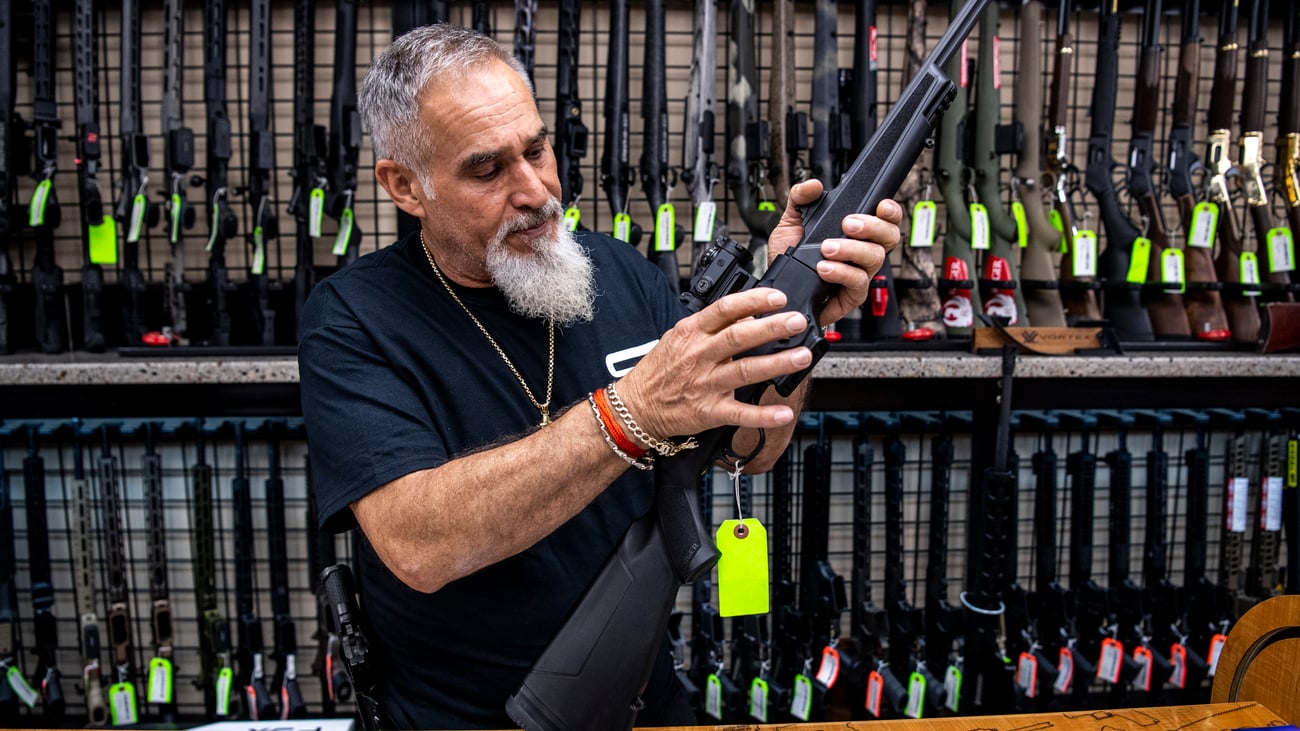
WASHINGTON (CN) — The Supreme Court ruled against federal regulations disarming illegal drug users on Thursday, sinking the Trump administration’s case against a self-described casual marijuana smoker with a Glock.
Writing for the majority, Justice Neil Gorsuch said the government failed to meet the high court’s history test, noting a disconnect between comparing historical habitual drunkard laws to a modern statute addressing illegal drug use.
“We appreciate that drugs and guns can sometimes make for a dangerous mix,” the Donald Trump appointee wrote. “We appreciate, too, that the government’s effort to analogize a modern statute addressing drug use to historical laws must be approached with a sensitivity to the fact that many drugs well known today were unknown in early America.”
The federal law at issue criminalizes gun possession for “an unlawful user” of any controlled substance. Swapping drunkards for drug users, the Trump administration argued that the law should be upheld.
Habitual drunkard laws targeted people whose drinking rendered them practically incapacitated and incapable of managing their affairs. But in the case before the court, the government classified Ali Danial Hemani as an “unlawful user” because he smoked marijuana about every other day.
The comparison didn’t pass muster with the justices. Gorsuch said the government’s arguments would automatically disarm anyone who regularly uses any amount of any controlled substance for anything other than its prescribed purpose.
“Put simply, on the government’s telling, §922(g)(3) sweeps in large numbers of people without regard to whether their substance use has the kind of incapacitating effect on them that historical habitual drunkard laws normally required,” Gorsuch said.
Gorsuch drew on a “culture of copious drinking” during the founding era to demonstrate the incongruence of the government’s comparison.
“John Adams took ‘a tankard of hard cider’ with his ‘daily breakfast,’” Gorsuch wrote for the majority. “Some say James Madison ‘consumed a pint of whiskey daily.’ George Washington often drank three glasses of madeira in the evening — ‘not enough to be considered a heavy drinker in his day.’”
Hemani was indicted for unlawfully possessing a firearm after federal investigators found a Glock 19 9mm pistol and marijuana in his family home. The high court unanimously upheld a lower court finding that Hemani’s drug charges were unconstitutional.
Justice Samuel Alito, a George W. Bush appointee, joined by Justice Elena Kagan, a Barack Obama appointee, only concurred with the court’s judgment, but stopped short of joining Gorsuch’s opinion.
The high court’s decision follows a recent trend of rulings favoring expansive Second Amendment rights, starting with NYSRPA v. Bruen in 2022, upending the legal standard for assessing gun laws. In 2024, the court ruled that domestic abusers could still be disarmed under the new historical standard in United States v. Rahimi.
United States v. Hemani asked whether certain groups who present a special danger of misuse can be barred from gun ownership. Unlike Rahimi’s individualized judicial determination of dangerousness, legal experts said Hemani considered a purely legislative determination about a class of persons.
Marijuana has been classified as a Schedule I controlled substance, meaning a government assessment found no currently accepted medical use, a high potential for abuse and a lack of accepted safety for use of the drug under medical supervision.
The Trump administration pointed to this designation as evidence of a dangerousness finding. Sarah Harris, principal deputy solicitor general at the Justice Department, told the court that anyone knowingly using illegal drugs could be considered an unlawful user under the statute.
The Trump administration argued that the founders disarmed habitual drunkards, so modern congresses can outlaw firearm possession by habitual drug users.
But Gorsuch said that argument didn’t match how the federal or state governments have treated marijuana offenses. In 2013, the Department of Justice issued a memorandum curtailing enforcement efforts against users, and many states have legalized its use.
“Whatever one thinks of these developments, the federal government has not just tolerated them; it helped fuel them,” Gorsuch wrote. “All of which leaves it awkwardly positioned to suggest that the millions of Americans who now regularly use marijuana are categorically and unusually dangerous.”
The court said its ruling was narrow, however. Gorsuch said the decision didn’t address efforts to ban addicts or anyone presently intoxicated from possessing a firearm. And he said prosecutors could try to bring a charge under the same statute accompanied by individualized proof that a defendant’s drug use rendered him a danger to himself or others.
“All that is before us is one, if surely ambitious, theory,” Gorsuch wrote.
Justice Clarence Thomas, a George H.W. Bush appointee, wrote a separate concurring opinion noting future commerce clause issues for the court to address. And Justice Ketanji Brown Jackson, a Joe Biden appointee, joined by Justice Sonia Sotomayor, another Obama appointee, wrote a concurring opinion casting doubt on the Bruen inquiry.
 Follow @KelseyReichmann
 Follow @kelseyreichmann.bsky.social
Subscribe to our free newsletters
Our weekly newsletter Closing Arguments offers the latest about ongoing trials, major litigation and rulings in courthouses around the U.S. and the world, while the monthly Under the Lights dishes the legal dirt from Hollywood, sports, Big Tech and the arts.