Search Articles


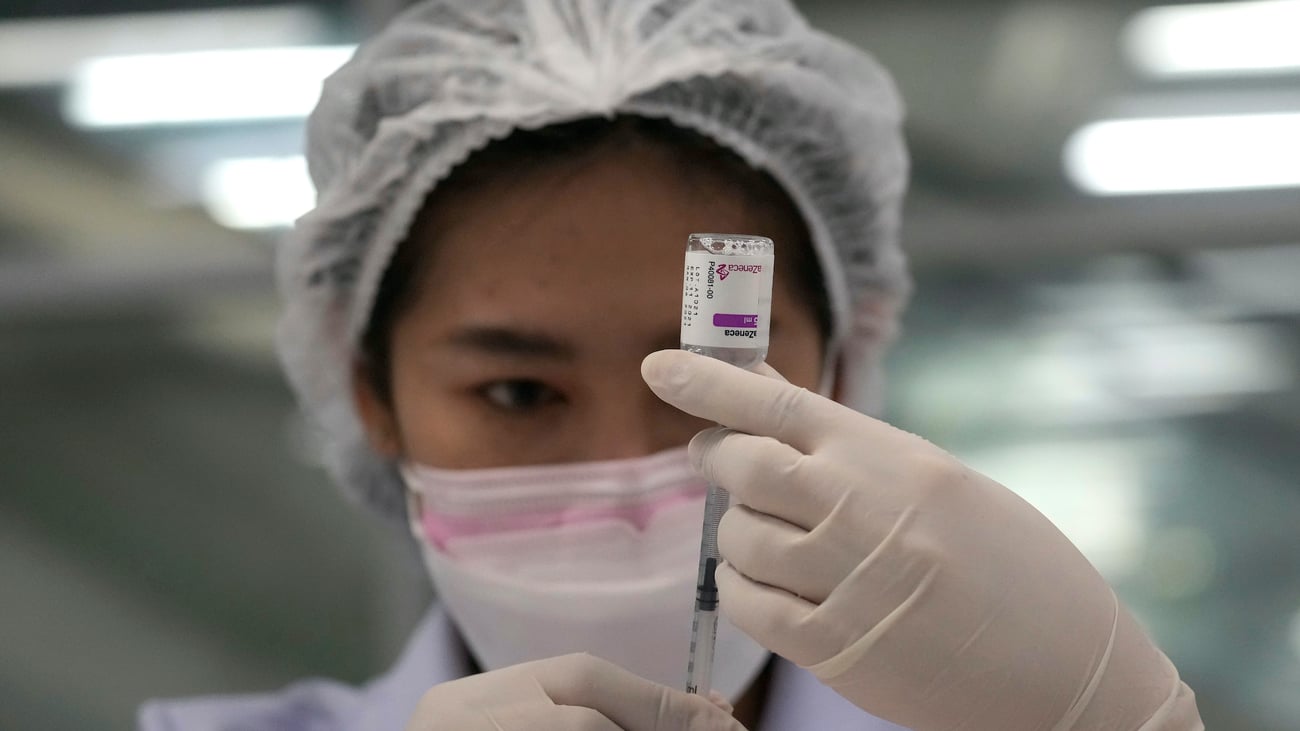
(CN) — A Tenth Circuit panel ruled in favor of the pharmaceutical giant AstraZeneca on Thursday after a Utah woman who claims she was injured by a Covid-19 vaccine during clinical trials filed a lawsuit against the company after she said it failed to uphold its agreement to cover her medical costs.
Brianne Dressen says that she suffered debilitating symptoms after she took the trial vaccine in 2020 after signing an informed consent form that said that AstraZeneca would cover the costs of any injuries resulting from the vaccine. But that never happened.
The pharmaceutical company has maintained that it is protected from liability in such lawsuits under the Public Readiness and Emergency Preparedness Act, or PREP Act, and moved to dismiss Dressen’s claims. A three-judge panelagreed with the pharmaceutical company.
The decision reverses a federal court rulingin November 2024 that denied AstraZeneca’s motion to dismiss Dressen’s lawsuit.
“Our view is different,” U.S. Circuit Judge Harris wrote in Thursday’s opinion. “Exercising jurisdiction under the collateral-order doctrine interpreting 28 U.S.C. § 1291, we reverse the district court and hold that the statute immunizes all claims for loss, including breach-of-contract damages. We must remand, however, for the district court to now consider whether AstraZeneca waived its immunity in the [informed consent form].”
The form explicitly stated the PREP Act may limit the ability to sue for vaccine-related injuries. The PREP Act, originally passed in 2005, was designed to provide companies like AstraZeneca with broad legal liability protections in the event of public health emergencies.
Dressen argued the company is not entitled to immunity under the PREP Act because she sued for breach of contract, not tort. The case revolves around whether the statute includes breach of contract claims.
But the panel was not persuaded by Dressen’s arguments.
“We begin with the language of the statute,” Harris, a George W. Bush appointee, wrote for the panel. “The PREP Act’s immunity provision says nothing about shielding covered persons from specific causes of action. Instead, the statute protects against particular ‘claims for loss.’ A suit for breach of contract is as much a ‘claim’ as a suit under tort law.”
Harris added Dressen failed to show how the losses listed in the PREP Act were recoverable only through tort claims.
The panel ultimately concluded the plain text of the PREP Act barred Dressen’s contract claims.
“There can be little doubt about the purpose of PREP Act immunity,” Harris wrote. “Immunity arises only when the HHS secretary determines that there is a public-health emergency requiring an all-hands-on-deck effort by members of the country’s healthcare sector to unflinchingly work on measures, like the Covid-19 vaccine, to abate the crisis. Nothing could make the members flinch more quickly than the specter of financial ruin from litigation over experimental therapy.”
U.S. Circuit Judge Timothy Tymkovich, also a Bush appointee, and U.S. Circuit Judge Robert Bacharach, a Barack Obama appointee, joined the opinion.
Dressen claims she wanted to help the development of the vaccine by participating in the clinical trials. But after receiving the vaccine she very quickly developed symptoms that included blurred vision, headache, nausea, fever and tinnitus, among others.
Over time, her symptoms also included weight loss, abnormal heart rates and light and sound sensitivity. She was diagnosed with post-vaccine neuropathy in 2021.
She described the experience as a waking nightmare that left her disabled and cost her and her family hundreds of thousands of dollars in medical costs.
AstraZeneca meanwhile ignored her complaints until it offered her $1,200 in exchange for releasing the company from any future financial responsibility, she says.
Attorneys for the parties did not respond to requests for comment.
The U.K.-based pharmaceutical company withdrew its Covid-19 vaccine in 2024 due to low demand.
Subscribe to our free newsletters
Our weekly newsletter Closing Arguments offers the latest about ongoing trials, major litigation and rulings in courthouses around the U.S. and the world, while the monthly Under the Lights dishes the legal dirt from Hollywood, sports, Big Tech and the arts.