
 Search Articles


The Pac-Man-like consumption events took places about a billion years ago.
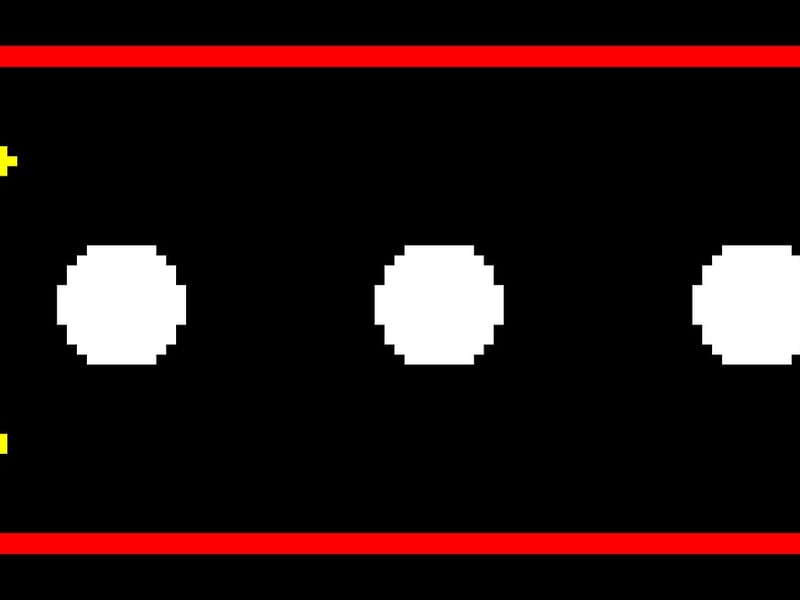
(CN) — In a first-of-its-kind discovery that experts say could fundamentally change our understanding of the physics of the universe, scientists have found evidence of black holes eating entire neutron stars in a single cosmic bite.
Of the countless phenomena humans have labored to better understand in the hopes of unlocking the mysteries of the cosmos, few have reached the level of prestige as black holes. Made up of entire stretches of space where the force of gravity is so strong that nothing — not even light — can escape, black holes are some of the most well-discussed objects in the study of space. Besides being perhaps the most powerful forces in the known universe, they are also often believed to be untapped treasure troves of knowledge into the creation and evolution of galaxies themselves.
It’s understandable, then, why researchers spend so much of their time exploring the existence of black holes. And now one group of researchers believes they have found evidence of perhaps one of the most impressive feats ever pulled by one of these cosmic heavyweights.
In a study published Tuesday in The Astrophysical Journal Letters, a team of more than 1,000 scientists from around the world reveal they have found gravitational waves nearly a billion years old that tell of a black hole consuming an entire neutron star — a dense leftover core from a collapsing supermassive star — in a single go. What’s more, the researchers say they have evidence of this unprecedented event happening not once but twice.
Susan Scott, a co-author on the study based at the ANU Research School of Physics in the Centre for Gravitational Astrophysics, stresses the event was not simply a black hole crashing into another object. This black whole outright consumed a star in a single swoop.
“These collisions have shaken the universe to its core and we’ve detected the ripples they have sent hurtling through the cosmos,” Scott said in a statement accompanying the study. “Each collision isn’t just the coming together of two massive and dense objects. It’s really like Pac-Man, with a black hole swallowing its companion neutron star whole.”
Researchers are particularly thrilled they have two entirely different consumption events to study. The first involved a black hole roughly nine times larger than our sun eating a neutron star roughly twice the mass of our sun, while the second feast involved a slightly smaller black hole about six times the size of our sun and a star only a little larger than our sun.
Experts say events like this have always been theoretically possible but have never been directly observed until now. Scientists have watched a neutron star impact with another star and have even seen two black holes collide, but to watch one devour its companion star has been on scientists’ wish list for a long time.
Now that they’ve seen it, experts are hopeful that these unprecedented findings could help teach us entirely new lessons on the evolution of the universe, the building blocks of matter and even the strange inner-workings of time and space itself.
“These kind of detections are incredibly rare,” Johannes Eichholz from the ANU Centre for Gravitational Astrophysics and an associate investigator with OzGrav, said. “Like the ripples from these two events, which have been felt a billion years later, these findings will have a profound impact on our understanding of the universe for many years to come."
Follow Carson McCullough on Twitter
 Follow @CarsonAndLloyd
Subscribe to our free newsletters
Our weekly newsletter Closing Arguments offers the latest about ongoing trials, major litigation and rulings in courthouses around the U.S. and the world, while the monthly Under the Lights dishes the legal dirt from Hollywood, sports, Big Tech and the arts.