Search Articles


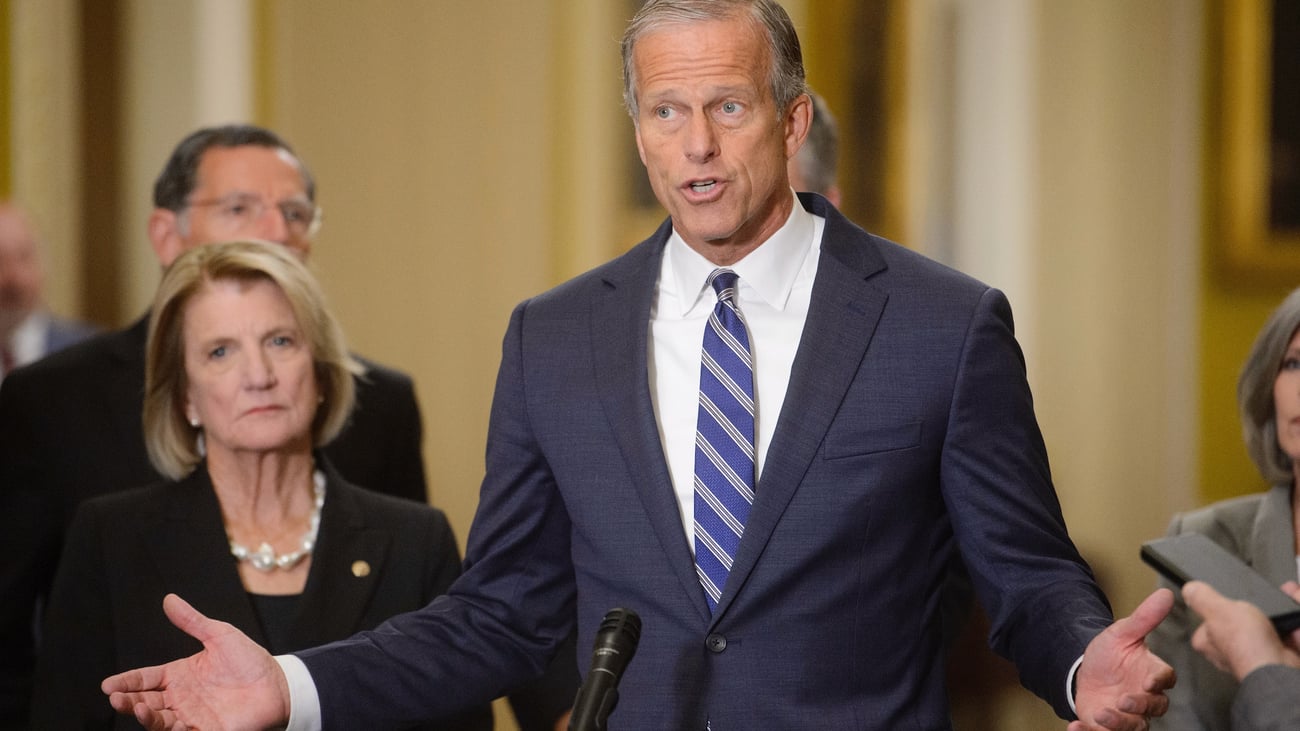
WASHINGTON (CN) — A billion-dollar settlement fund proposed by President Donald Trump for victims of so-called government “weaponization” completely derailed a crucial budget bill in the Senate this week, as Republican lawmakers broke with the administration over the controversial program.
Senate Majority Leader John Thune sent his colleagues home for the weekend Thursday, meaning the chamber will not vote as initially planned on a major budget reconciliation package that would have funded immigration enforcement agencies and possibly handed Trump $1 billion for security upgrades at his White House ballroom construction site.
The surprise move came shortly after an acrimonious meeting on Capitol Hill between Senate Republicans and acting Attorney General Todd Blanche, who met with lawmakers to assuage concerns about a roughly $1.8 billion settlement fund announced by the Justice Department this week.
Members of Congress across both sides of the aisle have expressed concern about the new fund, which was the result of a settlement between Trump and the Internal Revenue Service in a longstanding lawsuit over the 2019 leak of the president’s tax returns. Blanche and other administration officials have said that the program would accept claims from anyone who believes they were targeted by the federal government for their political and ideological beliefs.
Critics of the fund — which included many Senate Republicans — have framed it as a “slush fund” for the president’s political allies and worried that it opened an avenue for people convicted of violent crimes related to the Jan. 6, 2021, Capitol riot to seek financial restitution.
During Thursday’s meeting with Blanche, Republicans reportedly pressed him on whether funds from the “weaponization” program would be available to people who assaulted police officers. The attorney general said those people would not be eligible to apply.
Still, Republican lawmakers were apparently dissatisfied with Blanche’s reassurance, leaving the budget reconciliation measure in the lurch as the Senate begins a weeklong recess for the Memorial Day holiday.
The Justice Department said in a statement that the attorney general had a “healthy discussion” with Republicans about the settlement fund and that he informed lawmakers the program would not require a “single dime” from reconciliation funding. “We will continue to work with the Senate to get critical reconciliation funds approved,” the agency added.
The collapse of the Senate budget reconciliation process, if only temporary, is a major repudiation of the Trump administration from a Republican conference that has largely been unwilling to challenge the president on his agenda. And it represents a serious setback for both the White House and GOP leadership, which had been toying with the idea of a third budget reconciliation package ahead of November’s midterm elections.
Meanwhile, in the House, a bipartisan group of lawmakers took steps this week to ban the proposed $1.8 billion settlement fund entirely.
A bill unveiled Thursday afternoon by New York Representative Tom Suozzi and Pennsylvania Representative Brian Fitzpatrick would bar the use of federal funds for “the payment of any claim” submitted through the Justice Department’s “anti-weaponization” fund. Fitzpatrick, a Republican who has already expressed concern about the settlement fund, told reporters Thursday that he and Suozzi were looking to “kill” the program.
Maryland Representative Jamie Raskin used similar language in a measure he proposed Wednesday. The top House Democrat on Wednesday also moved to subpoena Blanche, Treasury Secretary Scott Bessent and other administration officials over the settlement fund.
His effort to approve those subpoenas in the House Judiciary Committee narrowly failed thanks to Republican lawmakers, but Raskin secured a key vote from California Representative Kevin Kiley, formerly a GOP lawmaker who recently reregistered as an independent. Raskin told Courthouse News on Wednesday afternoon he hoped more Republicans would get on board with his effort amid growing backlash to the settlement fund.
The new program, announced by the Justice Department on Monday, would set up what the agency has called a “systematic process” to redress claims of so-called government weaponization. The roughly $1.776 billion fund would be bankrolled through the Justice Department’s judgment fund, a reserve used to pay out government settlement awards.
Claims under the program would be adjudicated by a five-member panel selected by the attorney general. Congress would have limited oversight of the fund — according to a document sent to Senate Republicans on Thursday, lawmakers would be “welcome to submit additional inquiries” to the Justice Department about the program but would apparently wield little influence.
 Follow @BenjaminSWeiss
Subscribe to our free newsletters
Our weekly newsletter Closing Arguments offers the latest about ongoing trials, major litigation and rulings in courthouses around the U.S. and the world, while the monthly Under the Lights dishes the legal dirt from Hollywood, sports, Big Tech and the arts.