
 Search Articles


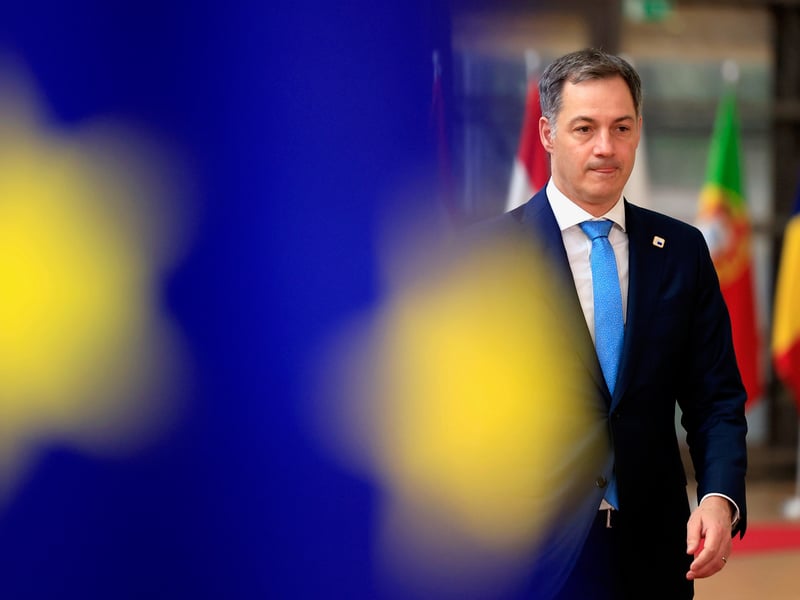
BRUSSELS (AFP) — Belgium on Monday kicked off its quest for a new governing coalition after elections pushed center-right parties into prime positions across the country, in a rare alignment.
Analysts predict that with the political stars matching up across the linguistically divided country, finding a deal could take less time than usually — but still at least six months.
Sunday’s regional and national vote saw conservative N-VA maintain its decade of control in Dutch-speaking Flanders, beating far-right Vlaams Belang into second place.
Meanwhile in French-speaking Wallonia, the center-right Reformist Movement smashed through the long-standing supremacy of the Socialist Party. They also claimed first place in Brussels.
On Monday, Prime Minister Alexander De Croo — who had seen his liberal party hemorrhage support —handed in his resignation to King Philippe as per protocol.
The king then began preliminary talks with the heads of the different political parties in the hope of naming someone in the near future who will try to look for a potential agreement.
N-VA chief Bart De Wever, the current mayor of Antwerp, could be the most likely candidate to get the initial nod — as his party claimed the most seats, 24, in the 150-seat federal parliament.
“We’re completely moving away from the traditional Belgian narrative of the last fifty years, according to which Flanders is on the right and Wallonia is on the left,” said Vincent Laborderie, a professor at UCLouvain university.
“We have the impression of a structural shift in the electorate towards the center-right.”
With its complex regional and national system, Belgium has an unenviable record of painfully protracted coalition discussions — reaching 541 days back in 2010-2011.
“Logically, we should go faster this time,” Laborderie said — still suggesting that it would take six months to find a “landing.”
David Sinardet, an expert at the VUB university in Brussels, said progress would depend on how forcefully N-VA pushed for its long-standing position of giving greater powers to the regions.
“If there are no major demands on that issue that complicate things, a government could be formed quite quickly,” he said.
In the meantime, De Croo will remain caretaker prime minister.
—
By Agence France-Presse
Subscribe to our free newsletters
Our weekly newsletter Closing Arguments offers the latest about ongoing trials, major litigation and rulings in courthouses around the U.S. and the world, while the monthly Under the Lights dishes the legal dirt from Hollywood, sports, Big Tech and the arts.