
 Search Articles


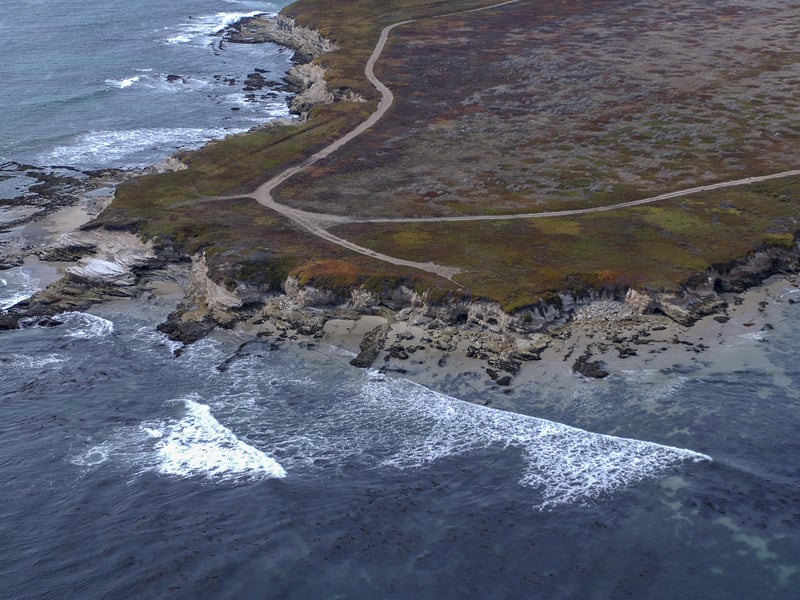
(CN) — The Biden administration said Friday it has designated 4,543 square miles of coastal and offshore waters along 116 miles of California’s Central Coast as the Chumash Heritage National Marine Sanctuary.
The sanctuary, which stretches from from just south of the Diablo Canyon power plant in San Luis Obispo County to the Gaviota Coast in Santa Barbara County, is the third-largest in the National Marine Sanctuary System, the National Oceanic and Atmospheric Administration said.
It is also the first tribally nominated sanctuary in the United States, said U.S. Senator Alex Padilla, a Democrat representing California and chair of the Senate Environment and Public Works Subcommittee on Fisheries, Water, and Wildlife.
“After years of advocacy, today’s announcement finally honors the Chumash people’s sacred waters as a National Marine Sanctuary and safeguards a vibrant and diverse Central Coast ecosystem," Padilla said. “This sanctuary designation marks a hard-fought victory for the Chumash people, our conservation priorities, and the responsible development of offshore wind as California strives to meet its ambitious clean energy goals.”
The sanctuary was proposed for nomination in 2015 by the Northern Chumash Tribal Council, and it is designation is the result of a decade of work by tribes, Indigenous peoples, community leaders, organizations, businesses, state and local officials, and members of Congress, including then-Senator and now Vice President Kamala Harris, NOAA said.
“This recognition is a crucial moment for our community," said Violet Sage Walker, chairwoman of the Northern Chumash Tribal Council, whose father, the late Chief Fred Collins, lead the nomination of the sanctuary. “It will not only raise awareness of the Chumash People around the world, but also honor the legacy of my late father and affirm our commitment to the stewardship of our land.”
The Chumash Peoples have lived along the California coastline for at least 13,000 years, and the waters within and surrounding the sanctuary are of great significance to them.
“Their distinct Indigenous Knowledge systems, cultural practices, and deep connections to this place provide essential expertise and inspiration for sustaining both marine ecosystems and cultural identity,” NOAA said. “For hundreds of generations, Chumash Peoples have lived in a reciprocal relationship of balance as part of this environment. They continue to care for the environment and their cultures, while resiliently surviving the brutal trials and trauma of history.”
It is the first new sanctuary in the National Marine Sanctuary System specifically managed for biodiversity conservation since the designation of Olympic Coast National Marine Sanctuary in 1994, according to NOAA. In contrast, the three other sanctuaries designated over the past three decades were primarily focused on maritime heritage and cultural resource preservation.
The sanctuary’s boundary stretches out to nearly 60 miles from shore and down to a maximum depth of 11,580 feet, NOAA said. The area is an important and vibrant ecological transition zone with high biological productivity that supports dense aggregations of marine life, including a plethora of sea birds, marine mammals, invertebrates, and fishes.
Habitats within these waters range from lush kelp forests to rocky reefs to sandy beaches, as well as significant offshore features like the Rodriguez Seamount, Arguello Canyon, and a portion of Santa Lucia Bank, according to NOAA.
It will also greatly enhance habitat connectivity and migratory corridors for wildlife between Monterey Bay and Greater Farallones/Cordell Bank national marine sanctuaries to the north, and Channel Islands National Marine Sanctuary to the south.
The sanctuary’s boundaries, the NOAA said, exclude areas where future subsea electrical transmission cables and floating offshore substations could be installed outside the sanctuary to connect the Morro Bay wind energy area to the electrical power grid at Morro Bay and the Diablo Canyon power plant.
 Follow @edpettersson
Subscribe to our free newsletters
Our weekly newsletter Closing Arguments offers the latest about ongoing trials, major litigation and rulings in courthouses around the U.S. and the world, while the monthly Under the Lights dishes the legal dirt from Hollywood, sports, Big Tech and the arts.