
 Search Articles


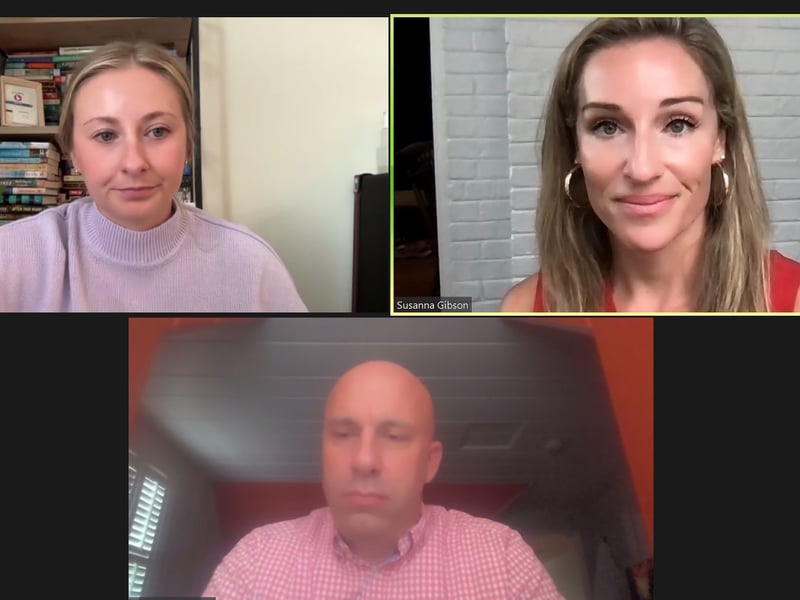
RICHMOND, Va. (CN) — State lawmakers, advocates and victims of the nonconsensual distribution of intimate images held a virtual press conference Wednesday announcing new bipartisan model legislation to prevent technology-facilitated gendered violence and image-based sexual abuse.
Democrat Susanna Gibson’s life changed forever in September of 2023 when a Republican operative shared videos with the press of her and her husband performing sex acts for money online. Gibson had no idea that her livestreamed videos would be archived forever.
The nurse practitioner was running for Virginia’s House of Delegates in a crucial Richmond suburb. Gibson lost on Election Day in a race that raised over $2 million in donations between her and Republican David Owen.
In searching for the years-old videos, she made a connection between pornography websites and sex trafficking. Gibson prefers not to mention the site by name as it increases web traffic.
“I learned of this when I was informed that intimate images of me had been posted on a website dedicated to nonconsensual content with the stated goal of forever ruining, exposing, sharing and objectifying all women and girls, preferably as soon as they turn 18,” Gibson said. “This site features professional women, doctors, lawyers, nurse practitioners alongside girls who appear to be under 18 as well as women being trafficked”
Gibson’s focus changed from candidacy to advocacy, and her political action committee MyOwn Image has partnered with state legislators to reform, update, and, in some cases, add laws to protect victims.
“These images represent real people and real sexual violence that extends beyond the digital space,” Gibson said.
Gibson said that the term image-based sexual abuse is preferred to “revenge porn,” which she said places blame on victims and fails to recognize that motivations often extend beyond personal grievance. Instead, they may include financial gain, social status, voyeuristic gratification, humiliation, power, extortion, coercion, and the like.
The proposed policy would add a criminal sentence of up to five years for people who disseminate explicit content without consent from the subject. Virginia’s current penalties only allow for up to one year of jail time for perpetrators.
The five-page policy introduces a tiered punishment for repeat offenders. The lowest offense level, a misdemeanor, sets the legal standard as reckless disclosure rather than requiring affirmative proof of intent to intimidate or harm.
A study of over 700 college students in 2021 found that 45% had shared intimate photos within the last year, and 24% shared intimate pictures with strangers. Miss South Carolina 2022 Jill Dudley said that sharing intimate images is common in relationships.
“It is not the act of taking or sharing these images that is shameful,” the attorney and sexual abuse advocate said. “The real shame truly lies in the violation of consent.”
South Carolina is the only state without a law criminalizing the nonconsensual distribution of intimate images. South Carolina Deputy Attorney General Matt Gates said his office and legislators plan to change that in 2025.
Virginia Delegate Carrie Coyner, a Republican, raised concerns about the rising number of artificially generated graphic images of nonconsenting people.
“I’m the mom of three teenagers, and I know fellow parents are familiar with the harms and risks of social media and cyberbullying,” Coyner said. “But the increased risk posed by digitally forged intimate images makes these issues much more severe. Abusers now have easy access to publicly available tools, capable of creating an endless array of digital forgeries, of intimate images.”
New Jersey Assemblywoman Jessica Ramirez said she is introducing a bill to address nonconsensual, intimate image sharing concerning elections.
“As younger women make their first runs for office, contending with this problem is more urgent than ever,” Ramirez said. “It can impact someone’s desire to step up and run for office at all.”
In Florida, prosecutors can only charge perpetrators who shared the images with the intent to cause emotional distress to the victims.
“Perpetrators often share these images for reasons that don’t fit neatly into that definition,” Florida state Representative Kathrine Waldron said. “The current standard gives offenders an easy way to avoid accountability. So simply put, it ties the hands of victims who are seeking justice.”
Some of the concerns about the policy include whose jurisdiction a perpetrator is tried in if the image is shared nationally, the statute of limitations and how to avoid violating the First Amendment. Gibson said her PAC collaborated with criminal justice reform and First Amendment advocates.
“The nonconsensually created or shared images and videos we are discussing here today are not pornography or entertainment. They are tools of trauma, coercion and sexual violence,” Gibson said. “We need laws to reflect the seriousness of these crimes.”
Subscribe to our free newsletters
Our weekly newsletter Closing Arguments offers the latest about ongoing trials, major litigation and rulings in courthouses around the U.S. and the world, while the monthly Under the Lights dishes the legal dirt from Hollywood, sports, Big Tech and the arts.