
 Search Articles


WASHINGTON (CN) — A bipartisan pair of Senate lawmakers on Thursday unveiled legislation they said would reaffirm Congress’ role in setting trade policy, just hours after the Donald Trump administration rolled out a slate of import tariffs on some of the country’s closest partners in commerce.
Following through on a campaign trail promise, the president on Wednesday unveiled his expansive tariff policy, which slapped a 10% levy on all U.S. imports and a slate of higher duties on some of the U.S.’s closest trading partners. Under the White House’s new plan, set to take effect April 9, tariffs on China would top 54%.
And with the prospect of a global trade war looming, Democratic and Republican lawmakers are both looking to restrict the president’s authority to unilaterally levy tariffs.
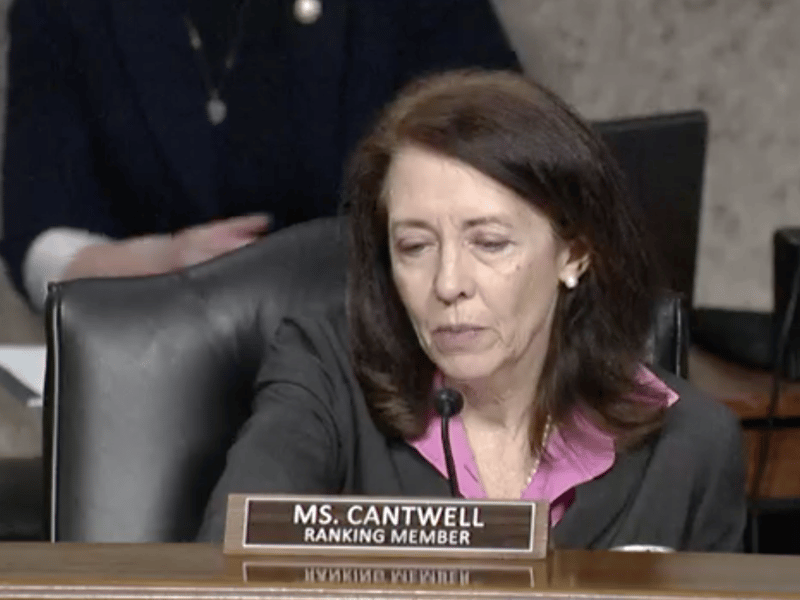
Washington Senator Maria Cantwell and Iowa Senator Chuck Grassley on Thursday unveiled a measure that would restore Congress’ power over tariffs. The White House currently has limited authority to impose tariffs without lawmaker approval, backed by federal law which allows the executive to declare a national emergency and declare such duties.
“For too long, Congress has delegates its clear authority to regulate interstate and foreign commerce to the executive branch,” Grassley said in a statement; the proposed bill would “ensure Congress has a voice” in trade policy.
Cantwell pointed out that lawmakers have “a duty to stop actions that will cause harm.”
“Trade wars can be devastating, which is why the Founding Fathers gave Congress the clear Constitutional authority over war and trade,” she said.
If made law, the senators’ proposed legislation would establish limitations on tariff policy similar to those set for use of military force under the War Powers Act — requiring the president to notify Congress within 48 hours of enacting new import duties. Any such notification, the bill said, must include the White House’s reasoning for new tariffs and an analysis of their potential impacts on U.S. businesses and consumers.
Further, any tariffs imposed by the president would expire in 60 days unless Congress passes a joint resolution approving them. Lawmakers would also have the authority to end tariffs at any time.
Speaking on the Senate floor Thursday morning Cantwell decried that she called Trump’s “arbitrary” tariff policies which throw the global economy into chaos.
“The current approach, in my opinion, is outside the predictable, rules-based system,” she said. “It’s arguable that the current approach is literally a misconstruction of statutory authorities.”
Cantwell and Grassley introduced their legislation just hours after the Senate narrowly approved a resolution that would end the Trump administration’s tariffs on Canadian imports. Several Republicans, including former Senate GOP leader Mitch McConnell, voted with Democrats in favor of the measure.
But the House, where Republican lawmakers have been more broadly supportive of hiking import duties, is unlikely to pass the resolution. House Speaker Mike Johnson wrote in a post on X Wednesday evening that the White House’s new tariffs send a “clear message” about U.S. posture towards its trading partners.
“These tariffs restore fair and reciprocal trade and level the playing field for American workers and innovators,” he said.
As he unveiled the new set of tariffs at the White House Wednesday afternoon, Trump claimed that the U.S. has been “looted, pillaged, raped and plundered by nations near and far.” During his nearly hourlong remarks, global markets and stock futures dipped — and trillions of dollars were erased from U.S. stock exchanges as markets opened Thursday morning.
The new tariffs include an additional 34% increase on Chinese imports, as well as 20% duties on goods from the European Union. Taiwan, Vietnam and South Korea are also on the list of more than 180 countries that now face at least 10% import taxes. Russia and North Korea, however, appear to have been left off the list.
Meanwhile, a separate set of 25% tariffs on automobile imports took effect Wednesday night.
 Follow @BenjaminSWeiss
Subscribe to our free newsletters
Our weekly newsletter Closing Arguments offers the latest about ongoing trials, major litigation and rulings in courthouses around the U.S. and the world, while the monthly Under the Lights dishes the legal dirt from Hollywood, sports, Big Tech and the arts.