
 Search Articles


(CN) — Aviculturists fought for additional exotic bird species to be imported into the country, challenging the government’s denial of their petitions at a federal appeals court in Jacksonville, Florida Tuesday.
However, the three-judge 11th Circuit panel appeared unpersuaded by the aviculturists’ argument that captive-bred species should be approved for import on a country-by-country basis.
The Organization of Professional Aviculturists and the Lineolated Parakeet Society argued that the U.S. Fish and Wildlife Service has only amended its list of approved species permitted for import once in over 30 years.
Both nonprofit organizations focused on promoting the sustainable trade and conservation of avian species, petitioned for two captive-bred bird species to be permitted for import from specific countries of origin.
But Fish and Wildlife denied the requests and told the groups that both species would need to be included on the approved list globally.
Attorney Astrid Stuth Cevallos argued that when adding species to the approved list, the service must consider a global, species-wide analysis of trade in both wild-caught and captive-bred specimens of that species.
Under the Wild Exotic Bird Conservation Act, a captive-bred species can be included on the approved import list only if the service determines the species is regularly bred in captivity and no wild-caught birds of the species are in trade, or the species is bred in a qualifying facility.
It also says the service will list a species on the approved list by “the countries of origin from which the species may be imported” or “if appropriate, the qualifying facilities in those countries from which the species may be imported.”
“Why doesn’t that require a global consideration?” U.S. Circuit Judge Robin Rosenbaum asked.
Representing the aviculturist groups, attorney David Garcia argued a species can meet those requirements in just one or a few countries.
“Why wouldn’t you consider where in the entire world it is regularly captively bred?” Rosenbaum, a Barack Obama appointee asked.
U.S. Circuit Judge Nancy Abudu, a Joe Biden appointee, agreed with Rosenbaum, noting that picking and choosing which countries to examine for import would still require a global analysis.
Senior U.S. Circuit Judge Gerald Tjoflat asked Garcia if there was a monetary incentive to the groups’ argument.
“Birds are more expensive to import from Europe than Brazil. The birds we want are more expensive birds,” Garcia said. He added that any profit from importing the species would be very small.
In their petitions to the service, the groups sought to add the cactus conure and the green form of the lineolated parakeet to the approved list, both of which are native to parts of South America but captive-bred in certain European countries.
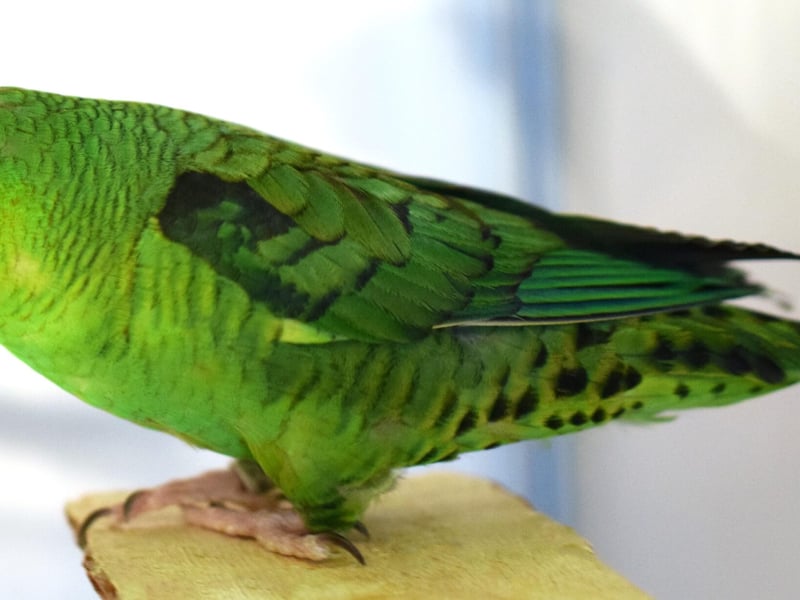
The lineolated parakeet, also known as the barred parakeet, is native to South America but common in worldwide aviculture. Because the typical wild form of the bird is the green form, the U.S. only allows other color mutations that are nonexistent in the wild to be imported to avoid international trade of wild-caught birds.
Last year, a Florida judge dismissed the aviculturists’ suit claiming the service’s denial was arbitrary, capricious, and an abuse of discretion.
U.S. District Judge Kathleen Williams determined the groups’ petitions were invalid for not listing the species as to “the countries of origin from which the species may be imported."
She wrote in her ruling that their argument simply ignores “the unambiguous language of the statute,” which permits the addition of captive-bred “species” as a whole, not just certain subsets of that species.
Rosenbaum instructed both parties to file briefs on how the definition of “species” contained in the statute at issue affects the panel’s analysis within 14 days.
The panel did not signal when they will release a ruling.
 Follow @Megwiththenews
Subscribe to our free newsletters
Our weekly newsletter Closing Arguments offers the latest about ongoing trials, major litigation and rulings in courthouses around the U.S. and the world, while the monthly Under the Lights dishes the legal dirt from Hollywood, sports, Big Tech and the arts.