Search Articles



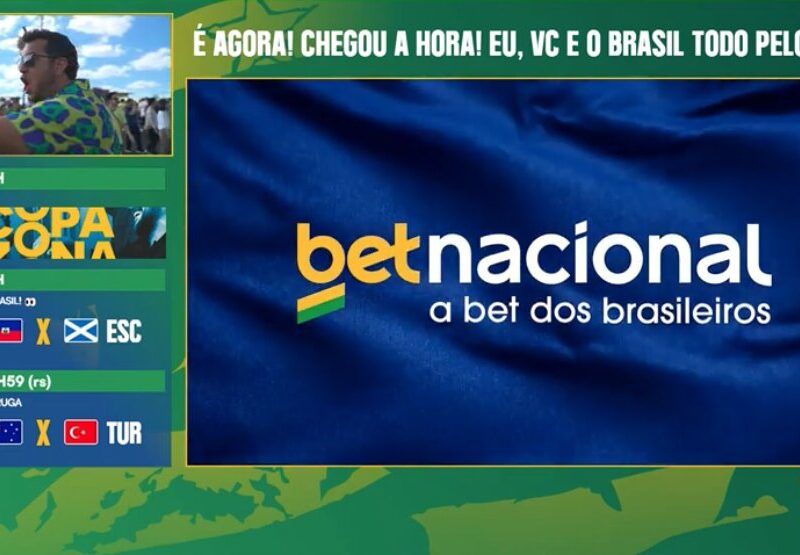
RIO DE JANEIRO (CN) — During Brazil’s World Cup opener last month, the broadcast by CazéTV, Brazil’s largest sports channel on YouTube, carried the look of a national celebration.
In one ad for Betnacional, a Brazilian sports betting platform, a blue flag waved at the center of the screen with its slogan: “the betting site for Brazilians.” A banner at the top read, “It’s happening! The time has come! You, me and all of Brazil chasing the sixth title!”
In another ad, channel presenters appeared in a studio-style segment, with the Bet365 logo displayed beside CazéTV’s own branding.
On screen, the platform promoted a “super-boosted” offer for “every match day.” The host’s pitch was direct: “What are you waiting for? Download the Bet365 app.” Below, in small letters, were warnings about responsible gambling, age restrictions and risks.
Those were among the channel’s milder betting ads. Other segments — which explicitly highlighted odds, tied bets to plays unfolding on the field and encouraged viewers to wager during matches — drew regulatory scrutiny starting June 24, when Senacon, Brazil’s National Consumer Secretariat, opened an inquiry into possible irregularities in betting advertising during CazéTV’s World Cup broadcasts.
A day later, Conar, the country’s advertising self-regulator, opened three proceedings over betting offers read aloud by presenters and commentators. On June 26, Conar recommended suspending the ads.
Last Thursday, Brazil’s betting regulator revealed it had notified four betting operators and two media outlets to explain World Cup advertising that showed signs of violating betting regulations.
The inquiries placed CazéTV at the center of a national debate over betting advertising during live sports broadcasts.
Fixed-odds betting was legalized in Brazil in 2018, but the current legal framework was not approved until late 2023.
Throughout 2024, the Finance Ministry detailed the framework in ordinances that set rules for licensing, oversight, anti-money laundering controls, responsible gambling and advertising.
Since 2025, only companies authorized by the Finance Ministry’s Secretariat of Prizes and Bets may legally operate in the country.
In a statement, the secretariat said the ads under review contained elements barred by betting regulations, including messages that encouraged urgency to wager and warnings about risks and age restrictions printed in type too small to read.
Fabíola Meira de A. Breseghello, a partner at Meira Breseghello Advogados and coordinator of a compliance working group at the São Paulo chapter of the Brazilian Bar Association, said the country is structuring betting advertising through a mixed system, rather than a simply prohibitive approach.
Under that model, the Secretariat of Prizes and Bets acts as the sector regulator, responsible for authorizing, monitoring, overseeing and sanctioning operators. Senacon reviews advertising from a consumer protection standpoint. Conar carries out ethical advertising self-regulation, with specific rules for betting ads.
Juliana Sene Ikeda, a digital law attorney and partner at Campos Thomaz Advogados, said Brazilian law does not ban betting advertising during live sports broadcasts. But those spots remain commercial communication and must comply with rules on advertising identification, protection of vulnerable consumers and the Finance Ministry’s specific regulations.
“In a traditional commercial break, the audience recognizes advertising more easily,” Ikeda said.
When advertising is woven into the broadcast itself, she said the line between editorial and promotional content can blur.
“In addition, the intensity of advertising during sporting events may be considered a relevant factor in assessing abusiveness when it contributes to psychological pressure or excessive encouragement to consume,” she said.
Igor Rodrigues Britto — an attorney and director of the Brazilian Institute for Consumer Protection, a nongovernmental organization that advocates for consumer rights and ethical business practices — said betting advertising in Brazil is already a problem on its own, but the ads aired during World Cup broadcasts crossed every line.
“The law setting limits on this kind of marketing is very lenient. But the advertising some announcers and commentators are doing is so extreme that if authorities enforced the current law, these broadcasts would be taken down,” he said. “The effect is needless debt, totally unnecessary financial losses for viewers, worsening gambling addiction and misinformation that especially harms teenagers.”
Britto added that Brazil needs “much more robust” consumer protection laws, with coordination among federal, state and local authorities to confront powerful economic sectors such as betting companies.
The concern comes as sports betting surges during the World Cup.
Data updated daily by Brazilian fintech Klavi showed that, as of July 1, the share of Brazilians who had sent money to betting platforms since the start of the tournament reached 35.1%, up from 11% in May.
The average amount deposited per user also rose during the World Cup. On July 1, it reached 218 reais ($43.60), compared with an average of 188 reais ($37.60) before the tournament. The figures are compiled from Brazil’s Open Finance system.
In a statement, the Brazilian Institute of Responsible Gaming, which says it represents about 75% of the Brazilian market, said it is following the concerns raised by the federal government and society over fixed-odds betting advertising, and supports efforts to investigate confirmed violations of the law.
“The regulated sector positions itself as part of the solution,” the institute said.
The institute said it also works with Conar to continuously review advertising self-regulation standards and instructs its members to follow legal requirements.
Authorized companies operate under legal and regulatory requirements and share the government’s goal of fighting irregularities and reducing the space occupied by illegal operators, the institute said.
CazéTV did not respond to a request for comment.
In a statement sent to Brazilian media and published by local outlets, the channel said it had decided to adopt “a more specific and conservative standard for betting-brand activations” and that those actions would now follow “a more traditional advertising format.”
The channel also said its advertising complies with Brazilian law, Conar guidelines and industry best practices, and it works only with operators licensed by the Finance Ministry.
Jefferson Leão Pires, an attorney specializing in regulatory law at Poliszezuk Advogados, said “the betting epidemic is already real” and did not begin with the World Cup.
Pires said measures limited to the tournament’s broadcasts fall short given how deeply embedded betting has become in Brazilian sports. Since fixed-odds betting was legalized, he pointed out, there is no longer a sports environment without sponsorship from betting companies.
“The problem is not just the abstract legality of the product being advertised, which is questionable enough on its own, but the way it is incorporated into the sports spectacle,” Pires said.
The regulatory response cannot be limited to one broadcaster or to one specific form of promotion during one specific event, he said.
“It also needs to reach sponsorship, merchandising, real-time calls and every form of insertion that turns a risky product, much like alcohol and tobacco, into a normalized element of the sports experience,” Pires said.
Courthouse News reporter Marília Marasciulo is based in Brazil.
Subscribe to our free newsletters
Our weekly newsletter Closing Arguments offers the latest about ongoing trials, major litigation and rulings in courthouses around the U.S. and the world, while the monthly Under the Lights dishes the legal dirt from Hollywood, sports, Big Tech and the arts.