
 Search Articles


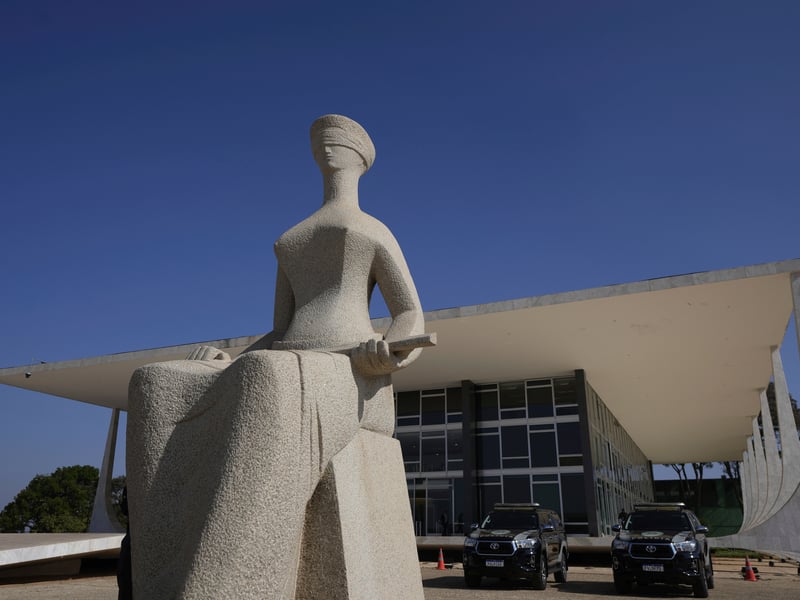
RIO DE JANEIRO (CN) — On Thursday, Brazil’s Supreme Court issued a rare per curiam ruling in ADPF 635, a landmark case on police violence in Rio’s favelas.
The court issued a 20-page decision reinforcing federal oversight in Rio de Janeiro’s public security crisis and setting out new accountability measures for state law enforcement.
“This is the first case in which the Supreme Court announces a per curiam decision, and all justices agreed to a common statement. It is symbolically important that we were able to do this to affirm the court’s commitment to human rights and public security for all people, including those living in poor communities and in favelas, who have the same rights as everyone else,” said Luís Roberto Barroso, the Supreme Court’s chief justice, during the session.
Filed in 2019 by the Brazilian Socialist Party, the Action for Breach of a Fundamental Precept 635 gained national attention in 2020. That’s when Edson Fachin, a Supreme Court justice and the case’s rapporteur, found that police operations in the impoverished neighborhoods on Rio’s periphery should only take place under “absolutely exceptional circumstances” during the Covid-19 pandemic. The injunction curbed many armed raids in the city’s outskirts and sparked national debate on the constitutional limits of state force.
In a surprising move, the court empowered the Federal Police to lead investigations into organized crime in the state — particularly in cases with interstate or international ramifications — and ordered the federal government to increase funding for personnel, infrastructure, and equipment.
The ruling also mandates the creation of a permanent task force focused on intelligence and financial investigations into militias, arms trafficking, and money laundering. Agencies such as the Financial Activities Control Council (COAF) and the Federal Revenue Service must prioritize these investigations.
The court partially approved the public security plan submitted by the state of Rio de Janeiro but required several additions. Among them is a strategy for reoccupying territories dominated by criminal groups, ensuring not only a sustained police presence but also access to education, health care, and social services.
The court acknowledged progress made by the state government since the case was filed in 2019, citing the adoption of body cameras and improved communication with the state prosecutor’s office. However, it stopped short of declaring an end to the “unconstitutional state of affairs” identified by Fachin in his February opinion.
New rules for transparency and accountability include mandatory body cameras in non-investigative operations, public reporting of police lethality data, expedited autopsies, and a requirement that ambulances be present during planned raids involving risk of armed conflict. A mental health program for officers involved in deadly incidents must be implemented within 180 days, including procedures for temporary removal from field duties.
João Gabriel Madeira Pontes, an attorney who co-drafted the original petition, said the final ruling reflects consensus and introduces new elements — such as the involvement of the Federal Police and COAF — not originally part of the litigation.
“What seems to have happened is an attempt by the court to broaden the ADPF, which originally focused on police lethality, into a more comprehensive tool for addressing public security issues overall,” he said.
Justices emphasized the structural nature of the case, recognizing both state omissions and human rights violations committed by criminal groups. They rejected proposals to suspend helicopter use, to require disclosure of tactical protocols, or to impose bans on police operations near schools and hospitals.
Activist and researcher Fransérgio Goulart, coordinator of the Right to Memory and Racial Justice Initiative, criticized the outcome.
“There will be no independent forensics, operations near schools are allowed, helicopters remain authorized as shooting platforms,” he said. “The police lethality reduction plan has turned into an occupation plan. The Supreme Court’s consensus policy is anti-democratic because they ruled in favor of the state.”
Pontes was more optimistic. “This ruling shouldn’t be seen as a snapshot — it’s a frame in a longer film. It’s another chapter in a five-year process, and in that sense, a very positive one,” he said, citing the sharp decline in police violence since the case began.
Still using the film metaphor, Pontes said the next chapter will be oversight. “A lot can still happen. Some requests that weren’t granted could become crucial during the monitoring phase,” he said.
Oversight will be coordinated by the National Council of Public Prosecutors (CNMP), which will publish biannual reports and lead a working group including civil society and state authorities. In the event of noncompliance, a judge appointed by the court may take enforcement measures.
After the ruling, Rio de Janeiro Governor Cláudio Castro praised the decision. “Public security in Rio wins. The people who want to live safely win,” he said, emphasizing the end of helicopter restrictions. “The decision removes barriers to our security forces in the fight against crime. The state intends to fully comply,” he added.
Subscribe to our free newsletters
Our weekly newsletter Closing Arguments offers the latest about ongoing trials, major litigation and rulings in courthouses around the U.S. and the world, while the monthly Under the Lights dishes the legal dirt from Hollywood, sports, Big Tech and the arts.