
 Search Articles


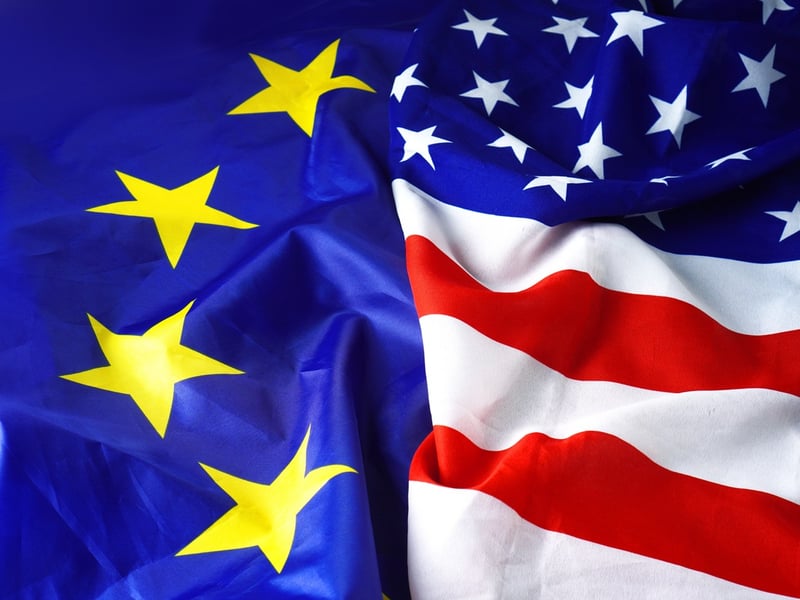
The rope tying America to Europe has been in place for long enough that it is hard to imagine it gone.
A bit like looking at long-ago starlight through a space telescope, past events come forward through the lens of history to illuminate events of today.
World War II takes up a big part of the viewer because it is recent enough that the last generation lived through it, as it is with me whose father carried a rifle through France and into Germany.
But America also gave a broad shoulder to France, England and Russia in World War I, also to great sacrifice. And if you go back to the birth of the nation, it came about through separation from England, an almost maternal tie that is still felt in our foreign policy.
So it comes as a kind of shock to think of that rope dropping off into the ocean that lives between our continents. President Macron last week used four different adjectives to describe the shock: “It is an electroshock. We need asymmetric shocks, we need external shocks. It is an exogenous shock for Europeans.”
He seemed to accept a separation.
“What Trump is saying to Europe is that it is up to you to carry the burden. And I say, it is up to us to take it on.”
But the idea of America taking away the support it has so long given to the European nations is more a strange aberration – part of the general disorder being heaped upon our nation.
Yet, severance, partial or complete, is conceivable, even probable, under the current administration. Just as it appears likely, even certain, that the current administration will sell out Ukraine.
Within that context, VP Vance goes to a security conference in Germany, and, rather than talk about core ideas tied to the defense of Europe, he lectures the assembled leaders on abortion and religious rights, and, as he sees it, the failings of their democracy.
“Europeans, the people have a voice,” Vance told the military and political leaders from the lectern. “If you are running in fear of your own voters, there is nothing America can do for you.”
In the context of the entire speech, it is clear he is talking about the rise of far-right parties in Europe. The German party on that edge, Alternative für Deutschland, certainly understood it that way.
“Excellent speech!” wrote Alice Weidel, the AfD’s co-leader.
So you put this corner of the foreign policy jigsaw puzzle together — the ideological piece from Vance and the power piece from Trump — and the revealed image is one of a relationship heading toward fracture. And it would be with foreboding that Europeans would see that image come into view.
Ukraine will be forced to cave to Russia, and the Europeans will be unable to fight on alone. So they will have to swallow it.
And a chill will settle into the European bones.
As someone whose mother was French and who spent a lot of long holidays in Denmark, I have followed their elections and parliamentary systems over time. The in-your-face difference between democratic structures there and here is that minority parties have a voice over there. It is not a winner-take-all system.
In terms of power, minority parties are nonexistent in America. There are two parties and that is all. They trade off terms in the majority, one that drowned in identity politics and the other that rode to power on a potpourri of tech, Christian, business, worker notions.
So Europe actually practices a more vigorous form of democracy than the U.S. by giving power to a greater range of voices. Vance’s democracy homily rightly fell on angry ears within the European leadership.
“The threat that I worry the most about vis-à-vis Europe is not Russia, it’s not China, it’s not any other external actor,” Vance preached. “What I worry about is the threat from within.”
He was trying to export the Trump ideology to Europe. He is a true believer. And true believers are dangerous, on both sides of the Atlantic.
Subscribe to our free newsletters
Our weekly newsletter Closing Arguments offers the latest about ongoing trials, major litigation and rulings in courthouses around the U.S. and the world, while the monthly Under the Lights dishes the legal dirt from Hollywood, sports, Big Tech and the arts.