
 Search Articles


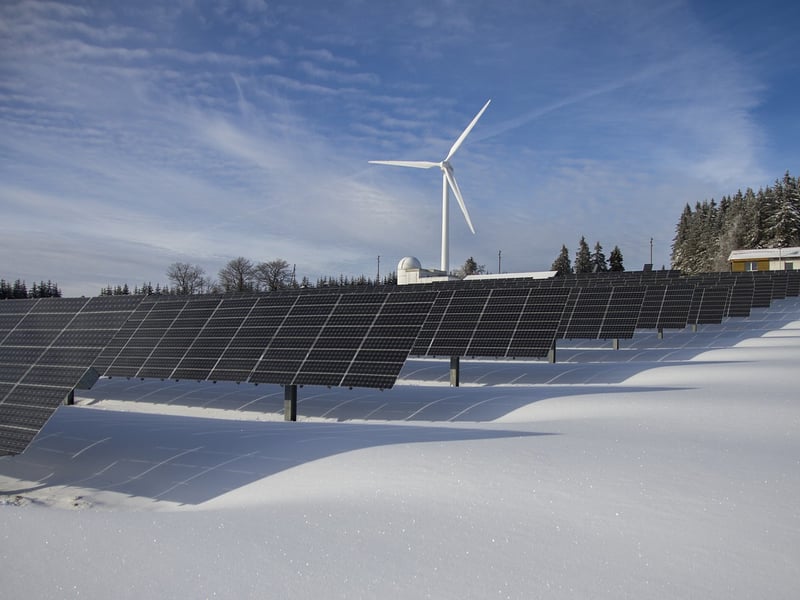
MANCHESTER, England (CN) — Britain generated a record amount of renewable electricity last year, yet households still grapple with some of the highest energy bills in Europe as prices edge up again this winter.
Renewable sources produced 127 terawatt hours of electricity in 2025, up from 119 terawatt hours in 2024, according to industry data. Wind was the biggest renewable source of electricity.
The milestone comes as the government pushes toward its clean power target, which aims to almost phase out gas from electricity generation by 2030. But the rapid growth of renewables has not translated into cheaper energy for consumers.
On Jan. 1, the energy regulator Ofgem raised its price cap, hiking bills for millions of households in England, Scotland and Wales even as Storm Goretti brings snow, rain and strong winds to a country gripped by bitterly cold temperatures.
Under the new cap, prices for households on variable tariffs rose by 0.2% — the equivalent of a $4 annual increase for a household using a typical amount of gas and electricity. That takes an average energy bill to $2,359 a year.
Advocates say even small increases matter after years of elevated prices.
Some vulnerable households in parts of England, Wales and Northern Ireland are receiving cold weather payments worth $33 a week when temperatures are forecast to remain at or below 32 Fahrenheit for the next week.
Government promises to bring bills down
The government has pledged to cut energy bills by up to $400, but prices rose through 2025, putting pressure on ministers to explain why record renewable generation is not easing household costs.
Critics say the problem lies less with renewables than with the structure of Britain’s electricity market, which links the price of all power to gas, even when wind and solar dominate supply.
Richard Green, professor of sustainable energy business at Imperial College London, said newer renewable projects are already lowering costs compared with what consumers would otherwise pay, but their impact is being blunted.
“The more recent renewable stations are reducing bills compared to what they otherwise would be — supplying power at prices based on the auctions that awarded Contracts for Differences that are now below the wholesale price paid for the rest of the electricity bought by retailers for consumers,” Green said.
Gas is keeping prices up
He said electricity pricing still follows the cost of the most expensive generator needed at any moment, which is usually gas.
“Other bill components have been rising, offsetting the benefits from the cheaper renewables,” he added, noting that consumers are also still paying for earlier, more expensive renewable projects that helped drive down costs over time.
Green said further reforms would be needed to unlock more consumer benefits, including expanding transmission capacity so power from windy and remote areas can reach demand centers, and investing in longer-term energy storage
Ronan Bolton, professor of sustainable energy at the University of Edinburgh, said the pricing model was struggling to keep pace with a low-carbon power system.
“In a competitive market model as exists in Britain, wholesale power prices tend to align around the marginal cost of the last unit required to meet demand,” Bolton said, adding that gas still typically fills that role.
As more renewables come online, he said, the hours when gas sets the price should shrink.
But Bolton said other parts of household bills are rising. Britain delayed major grid upgrades for years and is now playing catch-up, he said.
Fuel poverty fears
Consumer groups say the latest price cap increase comes at a dangerous time.
In a statement, the End Fuel Poverty Coalition warned that “a marginal change to the energy price cap will put more pressure on struggling households this winter.”
The group said almost a third of adults report being unable to keep their home at the recommended minimum temperature of 64 degrees Fahrenheit.
“It really is a case of every little doesn’t help as cold weather grips the country and the price cap nudges upward,” a spokesperson said. “Households are facing their fifth winter of unaffordable energy bills.”
The coalition said the energy industry has made more than $168 billion in U.K. profits since 2020 and urged ministers to fund home insulation programs, reform energy pricing and introduce a social tariff.
Public frustration is also playing out online.
Delme, a nurse from Southampton, said she could only afford to heat her small apartment for two hours a day. “I am freezing at the moment, how is this even ok?” she wrote.
Susan called the latest increase “ridiculous,” with “energy companies making big profits while most of us can’t even afford to have our heating on hardly at all.”
Environmental gains are more visible
While the economic benefits remain elusive for many consumers, environmental impacts from the shift to renewables are becoming clearer.
U.K. carbon emissions fell by 4% in 2024, official figures show, driven by lower use of gas and coal in electricity generation and industry.
Emissions are now 54% lower than in 1990, according to the Department for Energy Security and Net Zero.
The transport sector remains the largest source of emissions, accounting for 30% of the total. But falling diesel use contributed to a 2% drop in transport emissions, helped by a surge in electric vehicle sales.
All-electric vehicles accounted for nearly one quarter of new car sales in the U.K. last year, a record high.
More than 473,000 electric vehicles were registered in 2025, making Britain Europe’s second-largest EV market by volume, according to the Society of Motor Manufacturers and Traders.
Greenpeace said the environmental progress should not be overlooked.
“In 1990, the U.K.’s electricity came almost entirely from coal, with a little oil,” said Lily Rose Ellis, climate campaigner for Greenpeace UK. “Since then, thanks to a shift towards renewable energy, carbon emissions from the power sector have been slashed by over three quarters.”
She added: “Last year, the U.K. made history by becoming the world’s largest economy to end new oil and gas exploration.”
Ellis said the transition is crucial to prevent climate-driven disasters such as floods, storms and heatwaves, but warned that the current pricing system undermines public support.
“Even though we’re producing half of our electricity from renewable energy in the U.K., our electricity prices are set by a mechanism which allows the smaller 30% we get from volatile and expensive gas, and not wind and solar, to set the price we pay for power,” she said.
She urged the government to cut gas use faster and reform electricity pricing.
For now, Britain’s clean power transition is delivering measurable environmental gains, but those benefits remain largely invisible to households facing another winter of high energy bills.
Courthouse News reporter James Francis Whitehead is based in England.
 Follow @jayfranklinlive
Subscribe to our free newsletters
Our weekly newsletter Closing Arguments offers the latest about ongoing trials, major litigation and rulings in courthouses around the U.S. and the world, while the monthly Under the Lights dishes the legal dirt from Hollywood, sports, Big Tech and the arts.