Search Articles


LOS ANGELES (CN) — California charged 21 people with operating a hospice fraud scheme that used stolen identities to bill the state’s Medi-Cal program for $267 million in nonexistent services.
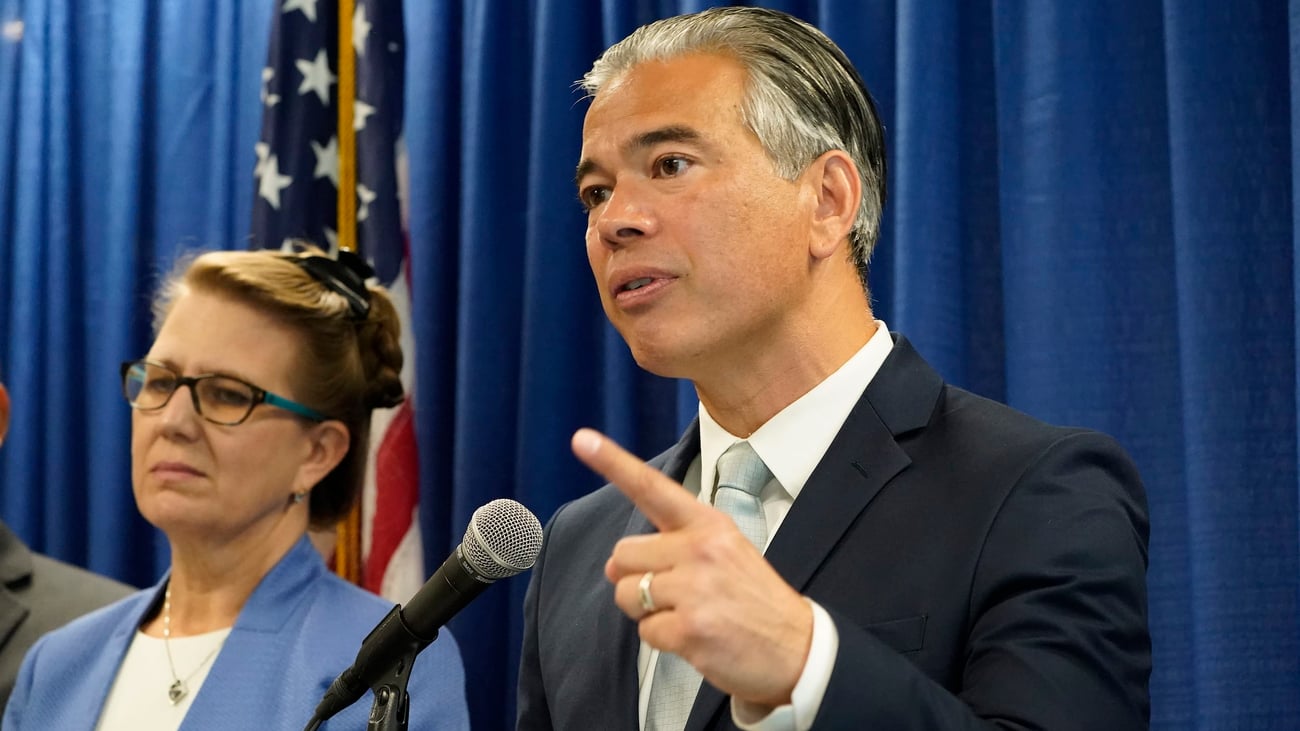
California Attorney General Rob Bonta announced the takedown at a press conference in Los Angeles on Thursday, using the occasion to push back against the Trump administration’s accusations that health care fraud is rampant in California because of the incompetence of the state’s leadership.
“This is the just latest example of the California DOJ’s longstanding, ongoing and successful efforts to combat hospice and Medi-Cal fraud,” Bonta said. “We’ve been doing this work for years. We’ve been doing it successfully before certain people in this country decided to think about it for the first time.”
The fraud scheme purportedly involved 14 hospice businesses and a billing company that were purchased by straw owners. Authorities say the accused fraudsters used the dark web to buy stolen identities belonging to out-of-state residents and enrolled them in Medi-Cal, a program that provides health care services for low-income California residents.
They billed Medi-Cal for nonexistent services using fabricated records, sham offices and fake diagnoses while the so-called patients were healthy, living outside California and completely unaware that they had been enrolled in hospice care, Bonta said.
The fraudsters then funneled the money through a web of more than 130 shell companies to evade detection, according to the attorney general. So far, only $30 million of the $267 million has been recovered, he added.
Bonta insisted that the suggestion made by Trump administration that health care fraud was a uniquely California problem was ludicrous and untrue.
However, the California state auditor sounded the alarm four years ago that bogus hospice agencies in Los Angeles were likely defrauding Medicare and Medi-Cal on a massive scale, noting a 1,600% increase of such agencies in LA County since 2010.
The rapid, disproportionate growth in the number of hospice agencies in LA County, the excessive geographic clustering of these agencies, the long duration of the services they provide and the high rates of patients discharged alive were all indicators of fraudulent operations, the auditor found.
In LA County, the number of hospice agencies ballooned to 1,841 in 2021 from just 109 in 2010, according to the auditor’s report. As a result, the county had 45 times as many hospice agencies as the state of New York and 59 times as many as Florida, per their respective populations.
Moreover, the LA County hospice agencies were suspiciously clustered together. In one case, the auditor found 210 active hospice agencies located within a mile of each other in the Van Nuys neighborhood. One office building in the neighborhood was supposedly listed as the address of more than 150 licensed hospice and health agencies, which appeared to exceed the building’s physical capacity.
In many cases, the hospice agencies weren’t listed on building directories, and in some cases the agency’s name was only on a paper sign taped to a door, or the purported door of an agency had no sign at all, according to the report.
Assembly Republican Leader Heath Flora responded to Bonta’s announcement by demanding a legislative special session to tackle the fraud problem.
“This is not limited to one program. We’ve seen serious concerns in hospice, Medi-Cal, high-speed rail, homelessness spending, and in-home health services, to name a few. Same pattern every time. Money goes out. Oversight doesn’t keep up,” Flora said in a statement.
“If we are finally taking this seriously, then do it right. Call a special session. Put real funding behind enforcement and bring every department in and get answers. Californians deserve to know how much was lost, who was supposed to be watching, and what is being done to make sure it never happens again.”
 Follow @edpettersson
Subscribe to our free newsletters
Our weekly newsletter Closing Arguments offers the latest about ongoing trials, major litigation and rulings in courthouses around the U.S. and the world, while the monthly Under the Lights dishes the legal dirt from Hollywood, sports, Big Tech and the arts.
Additional Reads
 Washington state millionaire tax faces legal challenge April 9, 2026