
 Search Articles


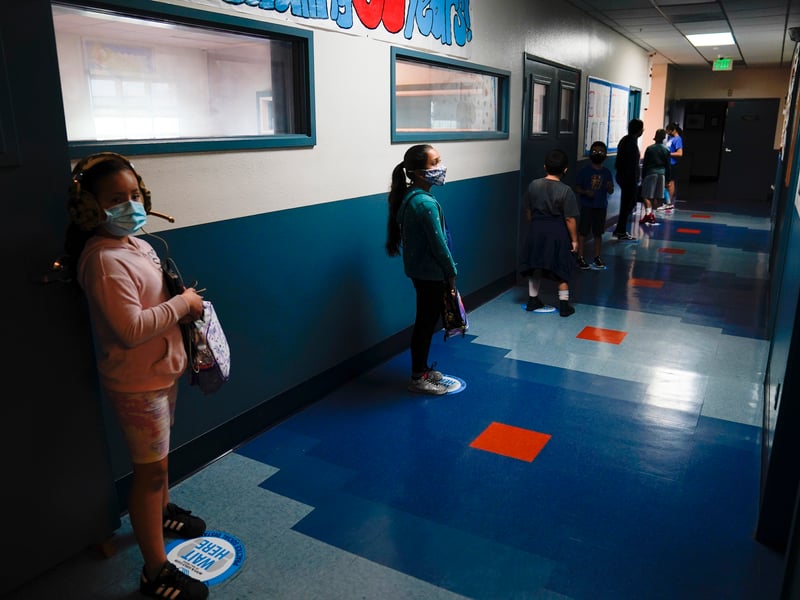
OAKLAND, Calif. (CN) — California will pursue new legislation and spend at least $2 billion to support students whose public education suffered during the Covid-19 pandemic, in a settlement with parents of K-12 children in Oakland and Los Angeles.
The agreement comes amid the pressure on the state to examine the pandemic’s impact on K-12 students. The lawsuit filed in 2020 accuses California of having mishandled remote learning during the pandemic, and failing to address the resulting harm to its most vulnerable students.
The plaintiffs claimed that students already at risk of having lower test scores and less education support, often from lower-income and Black and Latino families, should be supported by evidence-based programs to ensure they are meeting the same educational goals as their peers. They said the state failed to show “any meaningful strategy or execution to ensure that the disparate impacts experienced by students of color and low-income students were addressed, much less remediated.”
In the settlement announced Thursday, California agreed to dedicate at least $2 billion in existing emergency grant funds to programs serving students identified as needing more support in math and English language arts. The state also agrees to pursue new legislation to make statutory changes requiring school districts to better measure and report on student progress in new ways using Covid recovery funds.
The settlement uses what is left from the now $6.3 billion Learning Recovery Block Grant, money from the federal government during the last phase of the American Rescue Act that expires Sept. 30. It limits funding to the lowest performing student groups and chronically absent students while requiring strategies which have evidence to show they are effective. School districts will create their own plans to meet new requirements, including to assess chronic absenteeism and quickly identify students with the highest need of support. They will have to report on the success of those programs over the next three years, and members of the public can file complaints about the programs.
The Office of the Governor did not respond to a request for comment by press time. But state Board of Education spokesperson Alex Traverso said the agreement would focus learning recovery funds on those who need it most.
“This proposal includes changes that the administration believes are appropriate at this stage coming out of the pandemic to focus use of these one-time dollars over the last three years of availability on the students who were most impacted and continue to need support," Traverso said.
The law firm Morrison Foerster LLP helped litigate the case. Mark Rosenbaum, director of the co-counsel nonprofit Public Counsel’s Opportunity Under Law project, said the agreement came out of the collaboration between different state officials, including from the governor’s office.
“The urgent vision of this historic settlement is not just to recoup the academic losses suffered by California’s most disadvantaged students, but to erase the opportunity gaps altogether exacerbated by the pandemic,” Rosenbaum said. “The $2 billion-plus that will be committed exclusively to implementation of evidence-based solutions for students in greatest need of learning recovery supports is dedicated to the most pressing crisis in America today. This is a victory of partnership of students, caregivers and community organizations with California’s leadership that recognizes that educational opportunity is the state’s greatest natural resource.”
The plaintiffs can return to court if the state’s commitment to spending wavers or the pursuit of legislation does not come to fruition. They can also move to dismiss the litigation with prejudice if they find new legislation enacted during the 2024-2025 budget process meets the agreement.
The settlement, first filed Jan. 24, follows years of litigation with declarations from parents describing their children’s struggles with inadequate guidance and equipment while enrolled in remote classes through 2021. California is still reeling from the school closures ordered in March 2020, when many school districts pivoted to online learning without enough equipment and support.
The Legislature passed a slashed K-12 education budget for 2020-2021 while up to 1 million students went without equipment which would have cost the state $400 million to $500 million. About 36 billion in federal Covid funding for schools arrived in 2021. Funds for learning loss mitigation had to be spent to extend the school year with new devices, connectivity aid and identifying skill gaps.
In its motion to dismiss, the state touted its “robust and wide-ranging efforts to remediate the impact of the pandemic” and said the plaintiffs failed to show any state policy “caused a disparate impact on plaintiffs because of their race or income status." But Alameda County Superior Court Judge Brad Seligman denied the state’s motion, saying in a 12-page ruling this past August that there is no dispute that low-income students of color had less access to support during the months of remote learning in 2020 and 2021.
 Follow @nhanson_reports
Subscribe to our free newsletters
Our weekly newsletter Closing Arguments offers the latest about ongoing trials, major litigation and rulings in courthouses around the U.S. and the world, while the monthly Under the Lights dishes the legal dirt from Hollywood, sports, Big Tech and the arts.