
 Search Articles


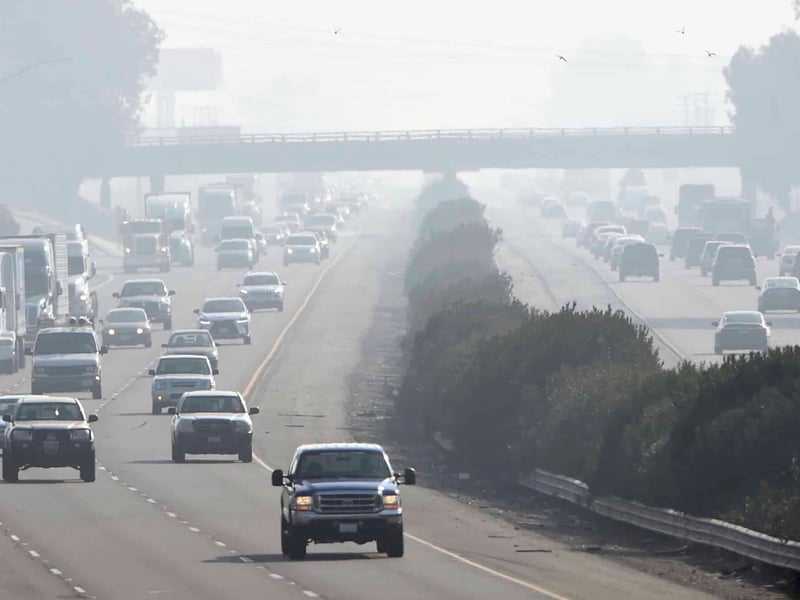
OAKLAND, Calif. (CN) — A federal judge questioned California and other states on Thursday over their claims Congress improperly adopted resolutions “disapproving” of state waivers that allow stronger emission standards than the federal Clean Air Act standards.
On May 22, the Senate joined the House in adopting three resolutions that “disapproved” of the waivers, which President Donald Trump signed on June 12.
The resolutions didn’t change any existing law, nor create a new rule or criteria by which the Environmental Protection Agency, which grants the waivers to the states, to approve or deny them. California claims that by not enacting a law, it couldn’t disapprove the waivers.
“There is certainly some irregularity about the process,” U.S. District Judge Haywood Gilliam Jr. said. “That’s not a judicial finding; this is a discussion.”
California and the states claim that by employing the Congressional Review Act — through which legislators can overturn federal agency regulations via a joint resolution of disapproval and passed with a simple majority — and using expedited procedures as the vehicle to stop California and the other plaintiff states from requiring stricter emission standards, it “ran roughshod over federalism and separation of powers principles.”
California Deputy Attorney General Elaine Meckenstock said the act did not apply in this case; though the federal government voted to disapprove of federal laws regarding the enaction of the waivers, the states did not consent to Congress negating state laws, she said.
“The entire statute is premised on a federal agency promulgating a federal rule,” she said. “And that never happened here. And so, there is no action, no finding, no determination, that could ever have been made within the scope of the authority provided by the CRA.”
Gilliam, a Barack Obama appointee, said he understood the arguments presented by the plaintiffs but wanted examples of how Congress might change federal rules like what what happened with the waivers. Meckenstock cited cases that were similar in discussing the importance of the limits of Congress’s power.
“In all of these cases, the fundamental question is, did Congress make law?” Meckenstock said. “Did it amend the underlying substantive federal law in any way? And if it did, then it acted within its sphere. But if it didn’t. as it did not do her, then it acted outside of its sphere and interfered in another branch’s activities.”
But she further said the case was unprecedented and should be reviewed in that way.
“Your honor, honestly, I don’t know if a process that begins with everybody knowing that the statute doesn’t apply and then the first thing that happens as part of the actual process is EPA slaps a label on an already final action, purporting to change the nature of that action,” she tells the court about using the CRA to bring the resolutions to a vote.
“That’s clearly extraordinary. I’m not aware of any agency ever doing anything remotely like that. And it’s obviously defective, because agencies can’t change the nature of an action after they’ve finalized it,” she said.
In their amended complaint, the states asserted Tenth Amendment violations.
“With every step, the workings of the national government failed to follow the law and likewise failed to honor the ‘special restraints on federal power over the states,’" the plaintiffs claim in their complaint. “The ‘extraordinary defects’ in the national political process that produced these resolutions render them unlawful and ‘invalid under the Tenth Amendment’ and principles of structural federalism.”
Department of Justice attorney Robert Stander, representing the federal government, said Gilliam should grant the defendant’s motion to dismiss because the states lacked standing.
He said it was “widely speculative” of the states to presume injury over their potential inability to receive waivers in the future due to Congress’s actions and called the plaintiffs’ case “much ado about nothing.”
“Before these resolutions, EPA had authority to issue waivers for these regulations,” he said. “They no longer have that authority. So that’s a simple amendment in the authority to issue waivers, and that’s the end of the matter.”
Meckenstock disagreed with Stander’s characterization of what Congress did and his arguments regarding California’s desire to request more waivers.
“Congress has only done this three times in the 60 plus years that EPA has been granting waivers, and the only three times it did so were when EPA reported to reclassify waivers into rules, and sent them over to Congress,” Meckenstock replied. “So, the idea that it’s speculative that if the EPA did that again, Congress would do the same thing, just doesn’t fly.”
Starting in 1967, the Clean Air Act waiver provision through the EPA has granted California more than 75 preemption waivers for updates to the state’s new motor vehicle emissions control program. According to the plaintiffs, “these waivers have allowed California to improve on it’s already excellent program, to foster technological advancements, and to protect Californians from harmful pollution.”
California is joined in the suit by Colorado, Delaware, Massachusetts, New Jersey, New Mexico, New York, Oregon, Rhode Island, Vermont, and Washington state, all of whom generally adopt many of the Golden State’s emissions rules.
Meckenstock said California was in the process of requesting another waiver when the resolutions were signed.
“Alright, I’ll assess if I agree with that, but fair enough,” Gilliam said.
Gilliam did not make a ruling from the bench and took the motion to dismiss under submission.
“We’ll aim to issue something as soon as I can,” he concluded.
Subscribe to our free newsletters
Our weekly newsletter Closing Arguments offers the latest about ongoing trials, major litigation and rulings in courthouses around the U.S. and the world, while the monthly Under the Lights dishes the legal dirt from Hollywood, sports, Big Tech and the arts.