
 Search Articles


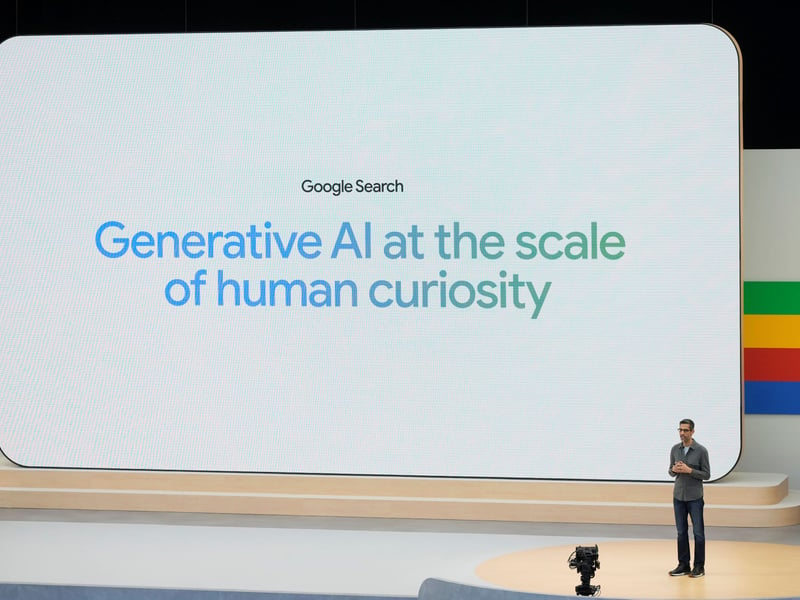
SACRAMENTO, Calif. (CN) — California Governor Gavin Newsom on Sunday vetoed a bill that would have required the implementation of safeguards and policies for the development of large artificial intelligence models.
Simultaneously, Newsom announced initiatives he said would protect Californians from the quick-moving and transformative technology,
Senate Bill 1047 — written by state Senator Scott Wiener, a San Francisco Democrat — would have required AI developers, along with those who provide the computing power to train them, to ensure catastrophic harm was avoided by placing guardrails on AI.
Newsom in a statement said Wiener’s bill fell short of a flexible, comprehensive solution to avoid the possibility of catastrophic risk. However, the governor added that he agrees with Wiener in that the state can’t wait for a major incident before acting.
“By focusing only on the most expensive and large-scale models, SB 1047 establishes a regulatory framework that could give the public a false sense of security about controlling this fast-moving technology,” Newsom said. “Smaller, specialized models may emerge as equally or even more dangerous than the models targeted by SB 1047 — at the potential expense of curtailing the very innovation that fuels advancement in favor of the public good.”
Wiener in a statement called the veto a setback for those who believe that AI developers need oversight.
“The companies developing advanced AI systems acknowledge that the risks these models present to the public are real and rapidly increasing,” Wiener added. “While the large AI labs have made admirable commitments to monitor and mitigate these risks, the truth is that voluntary commitments from industry are not enforceable and rarely work out well for the public.”
While vetoing Wiener’s bill — which was supported by Elon Musk, the owner of SpaceX, Tesla and the social media giant X — Newsom rolled out a series of initiatives he said would create workable guardrails for AI.
Newsom said he’s asked AI experts to help develop those rules, which will focus on an analysis of the capabilities and risks of frontier models. The governor intends to work with the Legislature next year on what he called a critical matter.
Experts who will help with this initiative include the “godmother of AI,” Fei-Fei Li; Tino Cuéllar, a member of the National Academy of Sciences Committee on Social and Ethical Implications of Computing Research; and Jennifer Tour Chayes, dean of the College of Computing, Data Science, and Society at UC Berkeley.
“Safe and responsible AI is essential for California’s vibrant innovation ecosystem,” said Li, co-director of the Stanford Institute for Human-Centered Artificial Intelligence, in a statement. “ To effectively govern this powerful technology, we need to depend upon scientific evidence to determine how to best foster innovation and mitigate risk.”
Newsom did sign an AI-related bill on Sunday: Senate Bill 896, written by Napa Democratic state Senator Bill Dodd. The bill codifies parts of Newsom’s September 2023 executive order on AI. It will require the state’s Office of Emergency Services to widen its scope when assessing possible AI threats to infrastructure and mass casualty events.
Newsom pulls the brake on speed-alert system for vehicles
California Governor Gavin Newsom on Saturday vetoed a high-profile bill that would have required a speed-alert system in vehicles sold or leased in the Golden State.
Senate Bill 961 — written by state Senator Scott Wiener, a San Francisco Democrat — would have required every passenger vehicle, motor truck and bus sold or leased in California to have a passive intelligent speed assistance system installed. That system would have given a one-time signal every time a driver exceeded the speed limit by over 10 mph.
Newsom in a veto statement said he appreciated the drive to improve traffic safety, though Wiener’s bill had several issues. He pointed to federal law that currently regulates vehicle safety standards. Adding requirements that are specific to California would make a patchwork of rules that undermine the federal framework.
[The National Highway Traffic Safety Administration] is also actively evaluating intelligent speed assistance systems, and imposing state-level mandates at this time risks disrupting these ongoing federal assessments,” Newsom wrote.
Wiener called the governor’s veto disappointing.
“Today’s veto is a setback for street safety at a time Californians are feeling extremely unsafe,” Wiener said in a statement. “The evidence is clear: Rising levels of dangerous speeding are placing all Californians in danger, and by taking prudent steps to improve safety, we can save lives.
“I’m extremely grateful to the amazing coalition that came together to support this bill and look forward to continuing our work together to make our roads safe for all users,” Wiener added.
The bill exempted emergency vehicles and motorcycles, as well as vehicles that lack a global positioning system and front-facing camera. It would have become effective with the 2030 model year.
The version of the bill that reached the governor’s desk was a far cry from Wiener’s initial legislation.
Wiener initially intended for vehicles to have an intelligent speed limiter system, which would have stopped vehicles from exceeding the speed limit by over 10 mph. The bill was amended as it moved through the legislation process, replacing the system with one that only alerted a driver to speeding.
Senate Republicans had urged Newsom to veto the bill, saying Californians didn’t need “Big Brother” to tell them how to drive.
Newsom faces a rapidly approaching Monday deadline to sign or veto bills.
Late Friday, Newsom announced that he was vetoing another transportation-related bill. He returned Assembly Bill 2286 to its author, Winters Democratic Assemblymember Cecilia Aguiar-Curry, without his signature.
The bill would have prohibited an autonomous vehicle with a gross weigh of over 10,000 pounds from being on a public road for testing purposes, or transporting goods or people without a human operator in the vehicle at the time.
Newsom vetoed a similar bill last year.
In his veto statement, Newsom said the state Department of Motor Vehicles has created a framework that enables innovation while protecting the public’s safety. Draft regulations call for limiting an autonomous vehicle’s speed to roads with speed limits of 50 mph or higher, as well as excluding the transport of people or hazardous materials.
Newsom noted that 35 jurisdictions have authorized the testing of heavy-duty autonomous vehicles, including Arizona, Texas, Washington state and the District of Columbia. California is the only state that’s actively prohibiting them.
The governor wrote that the state must be a technology leader while protecting the public.
“Toward that end, my office offered multiple rounds of suggested amendments, which were unfortunately not accepted,” he added. “While I cannot sign this legislation in its current form, my administration stands ready to work with the Legislature and stakeholders toward progress on this issue.”
Subscribe to our free newsletters
Our weekly newsletter Closing Arguments offers the latest about ongoing trials, major litigation and rulings in courthouses around the U.S. and the world, while the monthly Under the Lights dishes the legal dirt from Hollywood, sports, Big Tech and the arts.