
 Search Articles


SACRAMENTO, Calif. (CN) — Assemblymember Marc Berman, now in his ninth year in the California Assembly, remembers promising his chief of staff that he’d never write an animal bill.
Tuesday morning, that changed.
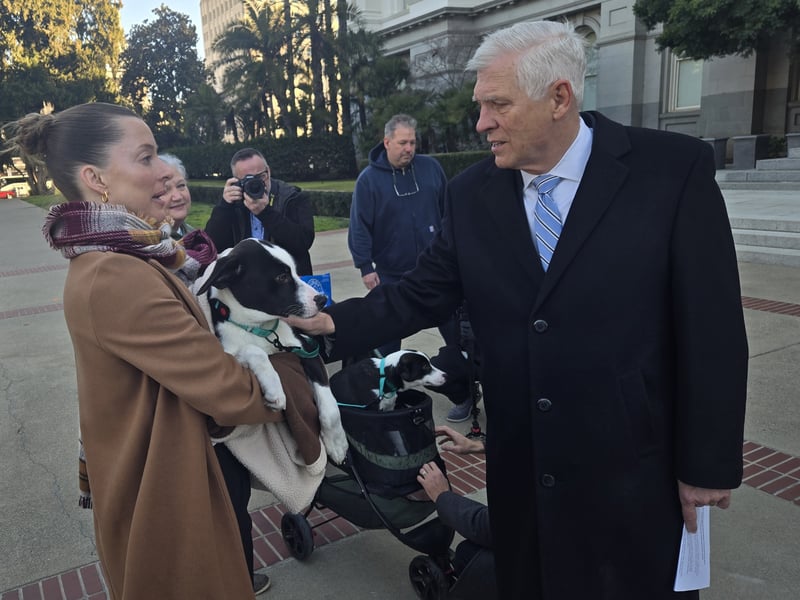
Berman, a Menlo Park Democrat, took time to pet two dogs in the chilly shadow of the state Capitol. One of three lawmakers introducing bills focused on the puppy mill pipeline, Berman explained why he broke his promise.
“We have to shut this down,” he said.
Three bills are an attempt to address issues that have appeared since the Golden State banned the sale of dogs, cats and rabbits in pet stores in 2019, unless they come from organizations like an animal shelter or rescue group.
Since then, problems involving out-of-state and online pet sales have grown.
Berman introduced Assembly Bill 519. It would define “broker,” and prohibit brokers from selling or transferring a dog, cat or rabbit that was bred by someone else for a profit.
While retail pet stores aren’t legal in California, many dogs and cats are sold online by third-party sellers, called brokers. The animals come from large, commercial breeding operations, and their health and welfare suffer because of it. Lacking proper food, water, shelter and space, these animals can have health and behavioral problems.
According to Berman’s office, brokers use virtual storefronts to present dogs from puppy mills. Californians buy these dogs — which come from large, commercial breeders — while the state’s shelters and rescues don’t have the space for all their animals.
“Pets have become much more like family in the United States in the past few decades,” said Assemblymember Steve Bennett, a Ventura Democrat and another author of a puppy mill bill.
Bennett’s legislation — Assembly Bill 506 — is intended to protect people who purchase pets. He said that 36% of pet sales are online, some of which require a nonrefundable deposit.
“They tie your emotional heartstrings to an animal that you see,” he said, adding that the buyer than never receives the pet or gets an animal that was raised in inhumane conditions.
The bill would void a contract if it requires a nonrefundable deposit. It would also void a contract if the seller doesn’t reveal the original source of the animal.
Additionally, sellers must return money to buyers within 30 days if a contract is voided.
State Senator Tom Umberg, a Santa Ana Democrat, has a bill targeting the certification of animals.
Many states have laws requiring someone shipping a dog for sale to send a health certificate to their food and agriculture department. California law has no such requirement, though its agriculture department has received such certificates.
“Sadly, California was getting these certificates and throwing them away,” Umberg said.
Senate Bill 312 will require people who import dogs to transmit the animal’s health certificate to the California Department of Food and Agriculture within 10 days of shipping. The certificates must be available publicly, a move Umberg said would bring transparency to the process.
The lawmakers said the bills — introduced this week and not yet assigned to policy committees — were inspired by a Los Angeles Times investigation into puppy mills. The legislation is sponsored by the American Society for the Prevention of Cruelty to Animals and the San Diego Humane Society.
Brittany Benesi, senior legislative director for the ASPCA’s western division, said puppy mills will keep misleading people about the source of the animals they sell. The legislation announced Tuesday will protect consumers and strengthen California’s animal laws.
“California has long been a leader in animal welfare,” she added.
Asked about potential opposition, Umberg said he anticipates it. However, he added that supporters of the legislation are strong and he believes all three bills will reach the governor.
“It wouldn’t be an important issue without some entity or some institution without pushback,” Umberg said.
Subscribe to our free newsletters
Our weekly newsletter Closing Arguments offers the latest about ongoing trials, major litigation and rulings in courthouses around the U.S. and the world, while the monthly Under the Lights dishes the legal dirt from Hollywood, sports, Big Tech and the arts.