Search Articles


WASHINGTON (CN) — The state of California sued the Trump administration on Monday over its effort to nullify the state’s recent Clean Air Act waivers that allow California to enact stricter emission standards than the federal government.
In a federal lawsuit filed the District of Columbia, California Attorney General Rob Bonta argues the Environmental Protection Agency has reversed its position regarding four waivers in 2009, 2013, 2022 and 2024, which would put them up for congressional review.
“The Trump administration is doubling down on its unlawful attack on California’s long-standing authority to address air pollution and adopt clean vehicle and equipment standards that protect our state and residents,” Bonta said in a statement. “For fifty years, both Democratic and Republican administrations have agreed that EPA Clean Air Act waivers are not rules, and EPA’s unlawful attempt to reclassify them — years after the fact — is an illegal attempt to take down these important tools.”
Bonta warned the move would result in increased pollution, poorer air quality, more market uncertainty and greater health risks for communities dealing with excessive emissions.
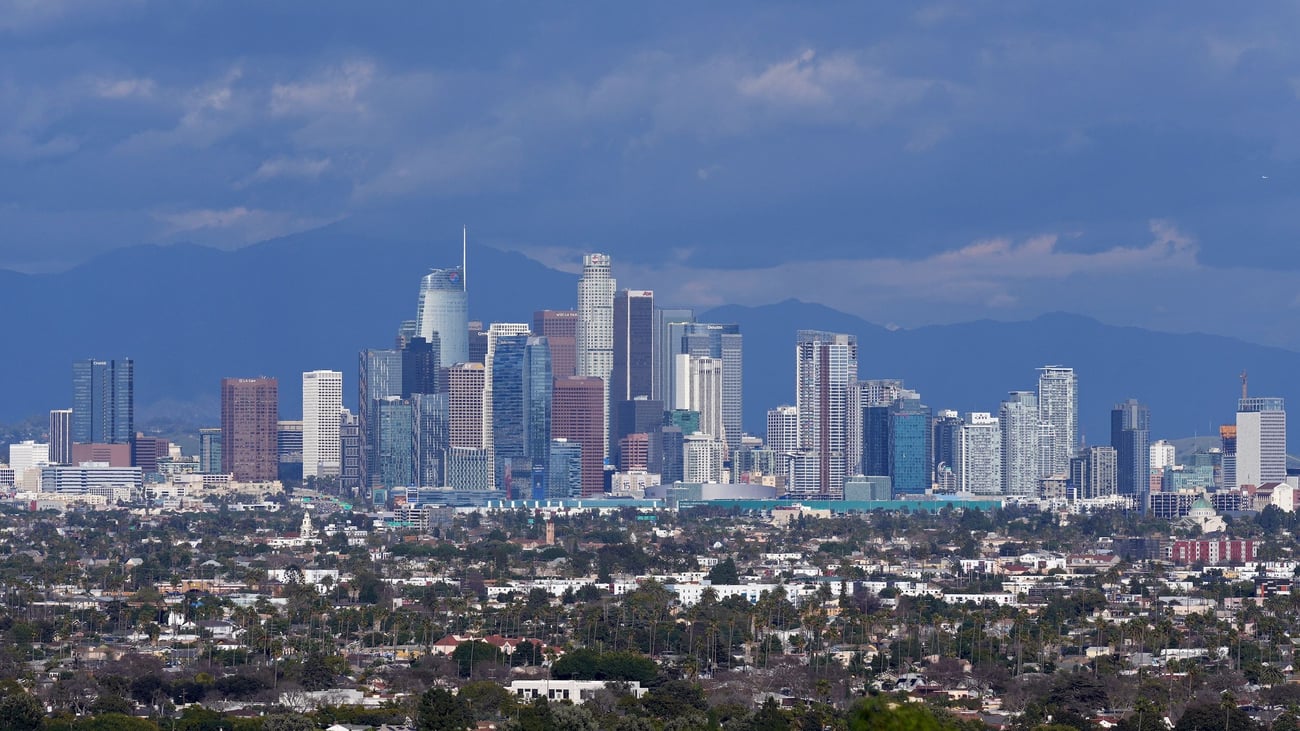
The exception, known as the California waiver, was enacted in 1970s so the state could address smog over Los Angeles. It has since evolved to make the state a “laboratory of innovation” where automakers can test new technology.
When Congress passed the Clean Air Act in 1967, California faced significant air quality and pollution problems that the federal emission standards were unlikely to address. However, at that time, California was the only state with its own vehicle emission standards and its regulations had helped craft federal law.
Taking both California’s unique situation and automobile manufacturers concerns about a patchwork system of emission standards across all 50 states, Congress created the California waiver directly in the Clean Air Act, balancing both issues.
“EPA’s actions continue a campaign of hostility toward these previously granted waivers (and others), during which the Executive branch generally, and EPA specifically, have indicated their intention to nullify these waivers,” Bonta said.
By reclassifying the waivers, Bonta argues the EPA is trying to invoke the Congressional Review Act to invalidate them, which would wrongfully expand the statute to authorize review of state rules like California’s emission regulations. That would undermine all fifty states’ own sovereignty, Bonta added.
If the EPA’s reclassifications are ultimately upheld and the waivers can be considered rules subject to congressional review, the agency will have “eviscerated” the state’s right to contest further revocations, the attorney general says.
“No agency has the power to wave a magic wand and transform an action that was finalized as an adjudicatory order into a rule, and certainly not without a public process in which the agency acknowledges and explains its change in position,” Bonta said. “Yet, that is exactly what EPA has attempted to do here.”
Monday’s lawsuit is the latest case in Washington to center on the California waiver, with the D.C. Circuit rejecting a challenge brought by a coalition of 17 red states and fuel industry groups in April 2024.
The Trump administration revoked the exception in 2019 as part of its wide-reaching rollback of efforts to fight climate change. Then-EPA Administrator Andrew Wheeler said the rule worked against the idea of federalism by allowing a single state dictate standards for the nation.
Former President Joe Biden reinstated the rule in March 2022.
Ohio — joined by Alabama, Arkansas, Georgia, Indiana, Kansas, Kentucky, Louisiana, Mississippi, Missouri, Montana, Nebraska, Oklahoma, South Carolina, Texas, Utah and West Virginia — sued in May 2022. A group of fuel industry groups filed a similar challenge the same day, while automakers sided with the EPA in the case.
In September 2022, California’s powerful Air Resources Board passed a new set of regulations that essentially require all vehicles sold in the state to be either electric, hydrogen-fueled or at least plug-in hybrid by 2035. Soon after, 17 states adopted similar rules.
A three-judge panel, made of U.S. Circuit judges Robert Wilkins, J. Michelle Childs and Bradley Garcia — a Barack Obama appointee and two Joe Biden appointees, respectively — ruled unanimously in favor of the EPA.
In a per curiam opinion, they wrote that so long as California’s emission standards are at least as protective as federal regulations, the Clean Air Act requires the EPA to affirm them, unless they are deemed unnecessary or otherwise problematic.
“In other words, the federal regulations continue to act as the floor for emissions regulations, but California can seek to enact its own more stringent regulatory program above those federal requirements,” the panel wrote.
In December 2024, the Supreme Court rejected the states’ appeal and upheld the D.C. Circuit ruling.
The EPA did not immediately respond to a request for comment.
 Follow @Ryan_Knappy
Subscribe to our free newsletters
Our weekly newsletter Closing Arguments offers the latest about ongoing trials, major litigation and rulings in courthouses around the U.S. and the world, while the monthly Under the Lights dishes the legal dirt from Hollywood, sports, Big Tech and the arts.