Search Articles


(CN) — The California Supreme Court on Wednesday ordered Riverside Sheriff Chad Bianco to stop his investigation into the November special election that redrew the state’s congressional districts.
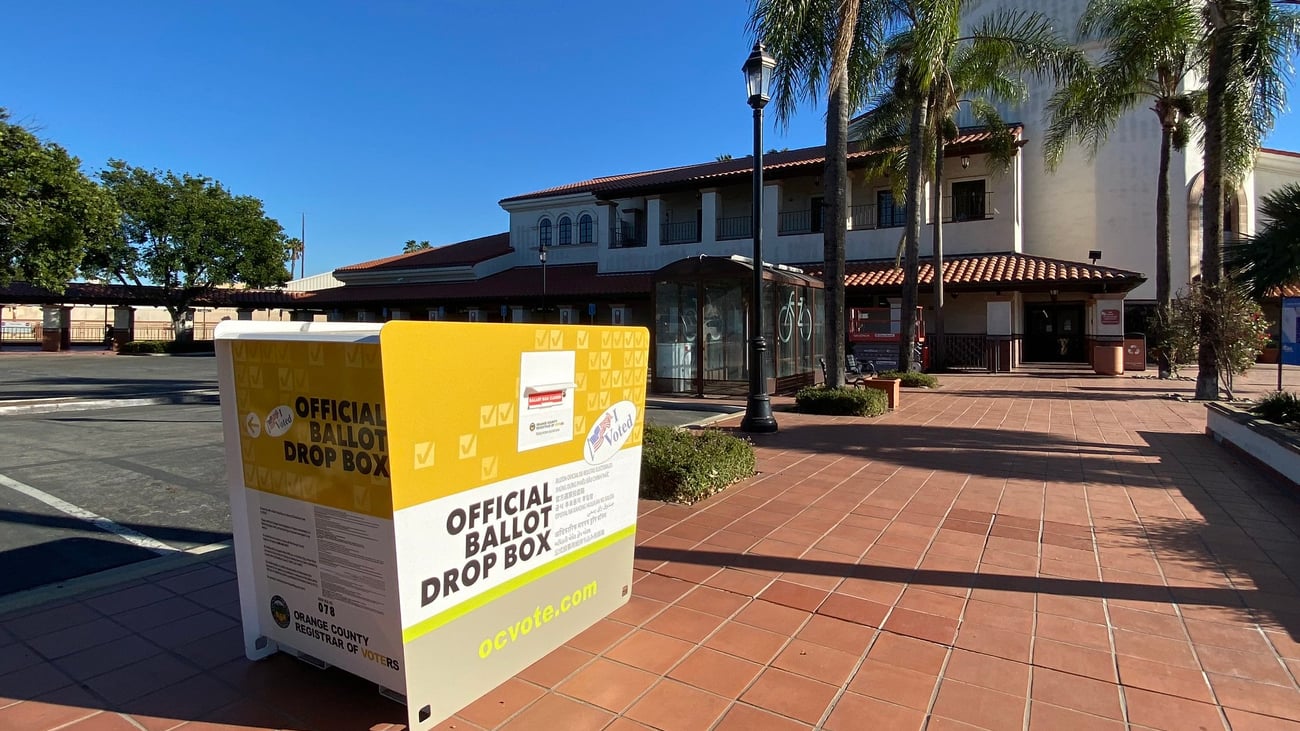
The high court’s decision halts the investigation by Riverside County and its sheriff, who is running as a Republican for governor. All items seized, including some 650,000 ballots, must be preserved pending a review by the Supreme Court.
State Attorney General Rob Bonta praised the decision.
“The Riverside County sheriff willfully defied my direct orders, seized 650,000 ballots, misused criminal investigatory tools and created a constitutional emergency in the process,” Bonta said in a statement. “What the sheriff says and what he does are often two different things. Today’s decision by the California Supreme Court reins in the destabilizing actions of a rogue sheriff, prohibiting him from continuing this investigation while our litigation continues.”
Bianco in a statement to Courthouse News said he was confident his investigation would continue.
“Like all investigations, we abide by the rule of law and the direction and approval of our judicial system,” the sheriff said. “This is a very basic and simple investigation being prevented and convoluted using lawfare orchestrated by political activists.”
Governor Gavin Newsom said Bianco was chasing conspiracy theories.
“Trump and MAGA’s election denialism is a cancer, a danger to our democracy and it must be stopped,” Newsom said in an X post.
Bianco obtained search warrants and seized the ballots after a citizen’s group claimed its audit discovered 46,000 more ballots had been counted than were cast in the Southern California county. The sheriff on March 20 said his office would conduct a manual recount, adding it wasn’t to determine whether votes were for or against the proposition. Instead, he intended to count the ballots and compare that total with the number of votes reported.
Bonta responded with a directive that Bianco pause all work and give his office a copy of the case file, providing a better understanding of the investigation’s basis and a starting point to collaboratively determine next steps.
The attorney general later claimed Bianco violated the directive and continued to abuse the criminal process. Bonta filed a petition March 23 with the Fourth Appellate District seeking to stop the investigation.
The appellate court denied Bonta’s petition on procedural grounds, which led him to the California Supreme Court and Wednesday’s successful ruling for his office.
Bonta now must file his petition with the high court by April 15. Bianco and his office will follow with arguments why the high court shouldn’t side with the attorney general.
“The Supreme Court has also agreed to review this case on the merits — a necessary and appropriate response to what is a clearly an unprecedented situation,” Bonta said. “We look forward to briefing the court.”
Bianco’s investigation focused on ballots cast in an election rife with politics.
It stems in part from President Donald Trump’s call last year for Texas to redraw its congressional districts, giving Republicans five more seats in the U.S. House of Representatives.
Newsom responded in kind, calling for a statewide November election to redraw the Golden State’s districts and give Democrats an edge.
Called Proposition 50, the measure passed overwhelmingly. It’s ballots from that election Bianco sought to examine in his county.
Challenges soon came in both states.
In Texas, a lower court blocked the new maps. However, the U.S. Supreme Court stayed that decision, meaning the Lone Star State will use those maps this November.
The California Republican Party also challenged the new maps after Proposition 50’s passage. It argued the state’s Democratic lawmakers engaged in unlawful racial gerrymandering to benefit Latino voters.
A three-judge panel in January denied the attempt and California will use the new maps in November.
Subscribe to our free newsletters
Our weekly newsletter Closing Arguments offers the latest about ongoing trials, major litigation and rulings in courthouses around the U.S. and the world, while the monthly Under the Lights dishes the legal dirt from Hollywood, sports, Big Tech and the arts.
Additional Reads

 EU lawmakers want to tax Big Tech to fund budget April 9, 2026