
 Search Articles


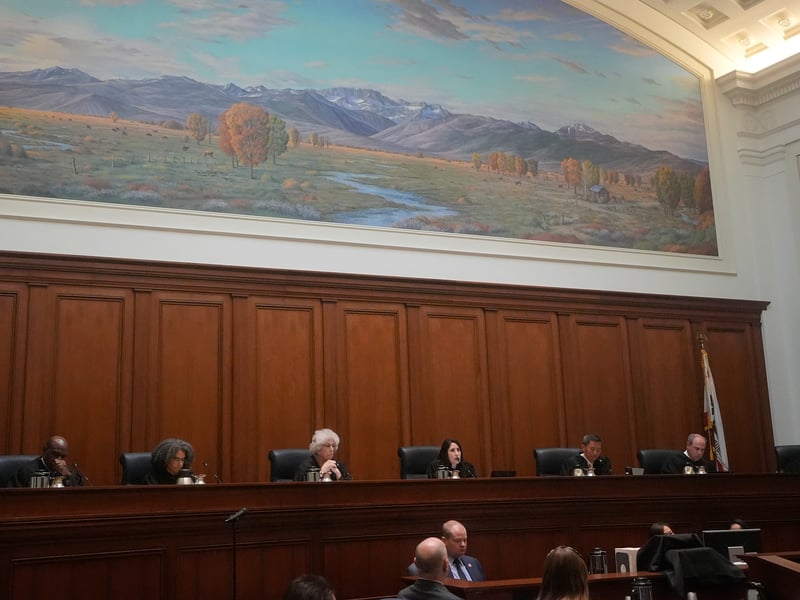
(CN) — The California Supreme Court on Monday affirmed that employers can’t seek attorneys’ fees for forcing an employee to arbitrate their claims under the California Fair Employment and Housing Act against them.
The state’s top court largely upheld an appellate court decision that certain provisions of an arbitration agreement between Charter Communications and a former employee, including the one entitling Charter to its legal costs for compelling arbitration, are “substantively unconscionable” and can’t be enforced.
The court sent the case back for the trial court to analyze further whether the arbitration agreement as a whole can still be enforced if those unconscionable provision are severed.
“The decision whether to sever unconscionable provisions and enforce the balance is a qualitative one, based on the totality of the circumstances,” Associate Justice Carol Corrigan wrote in the unanimous opinion. “The court cannot refuse to enforce an agreement simply by finding that two or more collateral provisions are unconscionable as written and eschewing any further inquiry.”
Under the state’s Fair Employment and Housing Act’s asymmetric rule for legal costs, a defendant, typically the employer, can only seek to recover attorneys’ fees if the employee’s claims are frivolous, unreasonable, or groundless when first filed, or if the plaintiff continues to litigate them after they have clearly become so.
Charter’s arbitration agreement, which a job applicant must sign to get hired, specifies however that an employee resisting arbitration of their grievances will have to pay Charter all costs, fees and expenses the company occurs in compelling arbitration.
This provision, according to the court’s opinion, unambiguously requires an award of attorney fees, even if the moving party is a defendant in a Fair Employment and Housing Act case and the arbitrator has made no finding of frivolity, groundlessness, or continued litigation.
The employee, the court said, could potentially be on the hook for Charter’s legal costs even if they prevailed on challenging some provisions of the arbitration agreement but a judge still concluded that the arbitration could still be enforced.
“Though we take no view here on whether Charter would prevail, the possibility of such an outcome could chill an employee’s right to challenge the enforceability of an arbitration agreement,” Corrigan said.
The California Supreme Court rejected Charter’s argument that the provision isn’t unlawful because in a different challenge to its arbitration agreement, a state appellate court had ruled that the company was entitled to its attorneys’ fees insofar as it wasn’t otherwise prohibited or limited by the Fair Employment and Housing Act.
That decision, the court said, wasn’t correct because it assumed that the provision in question, Section K of the arbitration agreement, was somehow open to interpretation.
“Section K, however, is not ambiguous,” Corrigan wrote. “It clearly requires payment of attorney fees to a party who successfully compels arbitration. The payment obligation is unqualified.”
Charter declined to comment on the opinion.
The court also agreed with the appellate court that two other provisions of the arbitration agreement were unconscionable —one that allowed Charter to sue its employee in open court over more issues than it allowed its workers and one that set strict time limits on when an employee could bring a grievance. The court disagreed that limits on dispositions and other discovery in arbitration were necessarily unconscionable.
 Follow @edpettersson
Subscribe to our free newsletters
Our weekly newsletter Closing Arguments offers the latest about ongoing trials, major litigation and rulings in courthouses around the U.S. and the world, while the monthly Under the Lights dishes the legal dirt from Hollywood, sports, Big Tech and the arts.