
 Search Articles


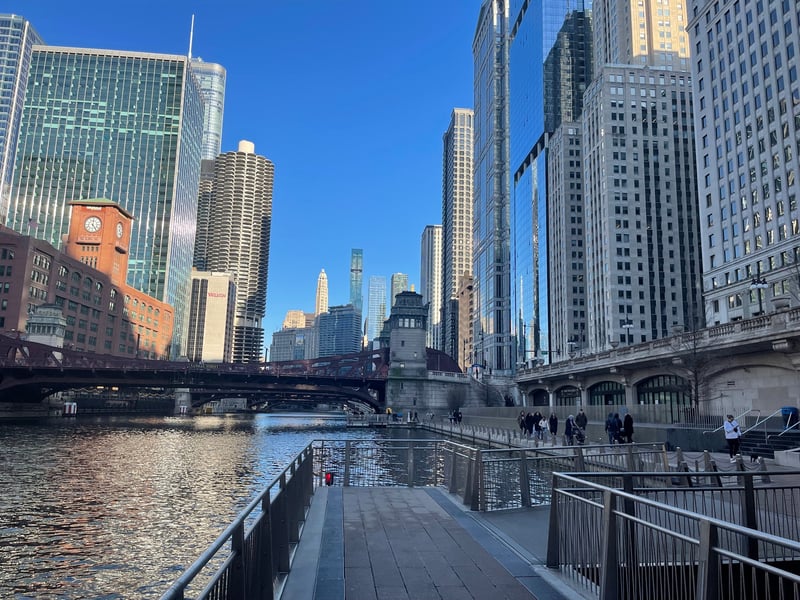
CHICAGO (CN) — The Chicago City Council voted 26-23 Wednesday to approve Mayor Brandon Johnson’s $830 million bond proposal. The borrowing plan targets financing for infrastructure projects across the city, particularly improving and repairing streets, sidewalks, bridges and service lines.
Its passage is also a political win for Johnson, though it didn’t come easy. A vote on the bond plan was scheduled for last week before opponents used a parliamentary maneuver to stall it, and on Wednesday, opponents once again tried to push the issue back to May. That effort deadlocked the City Council, with Mayor Johnson casting a tie-breaking vote to allow the bond proposal vote to go forward.
The bond proposal enjoyed the votes of the city’s progressive councilors and most of the City Council Black Caucus, but was opposed by conservative councilors and those who objected to its financial structuring.
That structure allows the city to put off paying down the principal of the bond debt until 2045, and critics voiced the concern Wednesday that Chicagoans would still be paying down the debt decades from now. The city’s chief financial officer Jill Jaworski said Tuesday evening that the “illustrative structure” shown to city councilors “had about $1.2 billion in interest.”
Chicago faces over $29 billion in outstanding debt as of 2023, according to an estimate by the nonpartisan research group The Civic Federation. Johnson’s office also announced last month that credit ratings agency S&P Global had downgraded Chicago’s general obligation bond rating from “BBB+” to “BBB.”
“If you find yourself in a hole, the first thing to do is to stop digging,” City Councilor Bill Conway argued during a Wednesday floor debate on the bond plan.
Proponents of the measure rebutted that Chicagoans couldn’t wait for needed infrastructure repairs, and pointed out that repayment of infrastructure bonds can be spread out if need be.
“A general obligation bond does actually let you amortize, or spread out, the cost of infrastructure, over the life of that infrastructure,” City Councilor Daniel La Spata said in a public statement following Wednesday’s meeting.
La Spata, who voted in favor of the bond plan, argued the real risk to future generations of Chicagoans would not be investing in needed infrastructure improvements now.
“What would be kicking the can down the road is if we failed to make those costs now. Because we know when infrastructure deteriorates, the cost of that repair and replacement only becomes more costly,” La Spata said.
City Councilor Walter Burnett, another supporter of the bond plan, also voiced the concern that Chicago may see its federal funding endangered by the Trump administration. He urged support of funding infrastructure improvements now, in light of the uncertainty the administration presents.
“Who knows if we’re going to get any money from Washington D.C.? Matter of fact, Washington D.C. is threatening to take money from us right now,” Burnett said.
On Tuesday, Illinois Governor J.B. Pritzker publicly released a memo claiming the federal government was withholding some $1.88 billion from the state.
“We need to become self-sufficient,” Burnett added. “I think this is very wise and very smart and very beneficial, to make sure that we can self-sustain ourselves for the future for the infrastructure that we need.”
 Follow @djbyrnes1
Subscribe to our free newsletters
Our weekly newsletter Closing Arguments offers the latest about ongoing trials, major litigation and rulings in courthouses around the U.S. and the world, while the monthly Under the Lights dishes the legal dirt from Hollywood, sports, Big Tech and the arts.