
 Search Articles


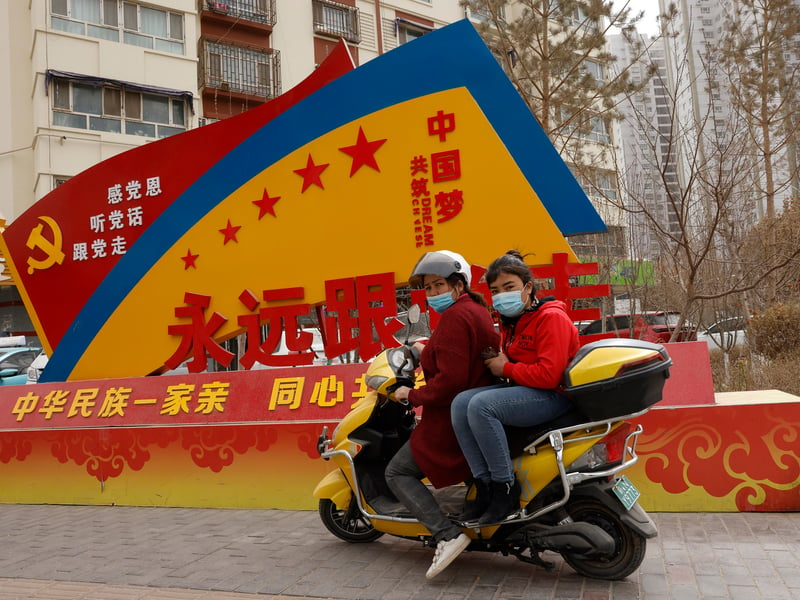
GENEVA (AFP) — A civil liberties crackdown, repression in Xinjiang and Hong Kong’s draconian national security law are among concerns expected to be raised during a U.N. review of China’s rights record on Tuesday.
Beijing is likely to face intense scrutiny, especially from Western countries, during its regular Universal Periodic Review, an examination of all 193 U.N. member states must undergo every four to five years to assess their human rights record.
“It is very important to hold China to account,” a Western diplomat said.
The array of issues likely to be raised is vast, from the sweeping national security law imposed on Hong Kong in 2020 to quash dissent after pro-democracy protests, to alleged efforts to erase cultural and religious identity in Tibet.
Much focus is expected to remain on the situation in the northwestern Xinjiang region, where China is accused of incarcerating more than a million Uyghurs and other Muslim minorities.
Beijing vehemently rejects the charges, which were already put forward during its last review in 2018.
Since then, more U.N. documentation has been provided, including a report released by U.N. rights chief Michelle Bachelet just minutes before her term ended in 2022.
‘Crimes against humanity’
That report, flatly rejected by China, cites possible “crimes against humanity.”
But amid intense Chinese pressure, U.N. Human Rights Council members narrowly voted in October 2022 against even debating the report’s contents.
“We haven’t seen a really substantive discussion about the report,” said Sarah Brooks, Amnesty International’s deputy director for China.
Rights advocates voiced hope the review could provide a chance for countries to back the findings and demand action from Beijing.
“This is the perfect opportunity for countries to raise the issue and demand tangible action to stop the ongoing genocide,” Dolkun Isa, a Uyghur activist based in Germany and president of the World Uyghur Congress, told AFP.
Sophie Richardson, the former China director at Human Rights Watch, said Beijing should face pointed questions on the “substantiated concerns about crimes against humanity.”
Questions are also expected to be raised on Beijing’s crackdown on civil society, which is sometimes felt as far away as Geneva.
This year marks the 10th anniversary of the death of activist Cao Shunli, who was detained as she attempted to travel to Geneva ahead of China’s 2013 review.
After being held for several months without charge, she fell gravely ill and died in March 2014.
Richardson urged the diplomats coming to the review to delve into such concerns.
“They must take the process seriously,” she said.
‘Politicization’
A large Chinese delegation, headed by Beijing’s ambassador to the U.N. in Geneva, Chen Xu, will take part in the event and attempt to present its rights situation in a far more positive light.
“We uphold respect for and protection of human rights as a task of importance in state governance,” Yuyun Liu, spokesperson at the Chinese mission in Geneva, told AFP in an email.
The spokesperson stressed that China “firmly opposes the politicization of human rights and double standards.”
In a bid to control the narrative, Beijing has reportedly requested the U.N. ensure “anti-China separatists” are not granted access to the session, and that any “anti-China” slogans are excluded.
Observers also warn that China has been pressuring countries to express positive feedback and working to ensure more critical nations have little time to speak.
Advanced questions submitted by some countries hint at pandering.
Belarus, for instance, states that “China upholds that all ethnic groups are equal,” and asks Beijing to “share the efforts and practices by the Chinese government in protecting the rights of ethnic minorities.”
China’s critics accuse Beijing of pushing supporters to fill the allotted speaking time with praise.
In total, 163 states have registered to speak during the half-day session, leaving each country with just 45 seconds on the clock.
“How do we encapsulate our concerns regarding China in 45 seconds?” the Western diplomat said.
U.S. Ambassador Michele Taylor agreed, telling an event at the U.N. in Geneva on Monday she had been “practicing my speed-reading” ahead of the review.
“I will get all of my points across.”
—
by NINA LARSON Agence France-Presse
Subscribe to our free newsletters
Our weekly newsletter Closing Arguments offers the latest about ongoing trials, major litigation and rulings in courthouses around the U.S. and the world, while the monthly Under the Lights dishes the legal dirt from Hollywood, sports, Big Tech and the arts.