Search Articles


DENVER (CN) — Victims of the 2022 Club Q attack in Colorado Springs, Colorado, on Tuesday asked the 10th Circuit to revive their claims against El Paso County after the local sheriff shirked enforcement of a state red flag law that they say could have helped prevent the mass shooting.
In 2019, as the Colorado General Assembly prepared to pass a bill limiting gun ownership for people at risk of harming themselves or others, El Paso County commissioners passed their own resolution. It declared the county a “Second Amendment sanctuary” and disavowed use of the Extreme Risk Protection Orders bill, which allows law enforcement to confiscate weapons from at-risk individuals.
Then-El Paso County Sheriff Bill Elder likewise instructed deputies to only file for red flag orders in cases where there was probable cause of a crime being committed.
With the law on the books but unenforced in the county, Anderson Aldrich was free to purchase firearms despite recent charges for felony menacing and kidnapping — and despite the fact that law enforcement had been warned a year earlier that Aldrich intended to carry out a mass shooting.
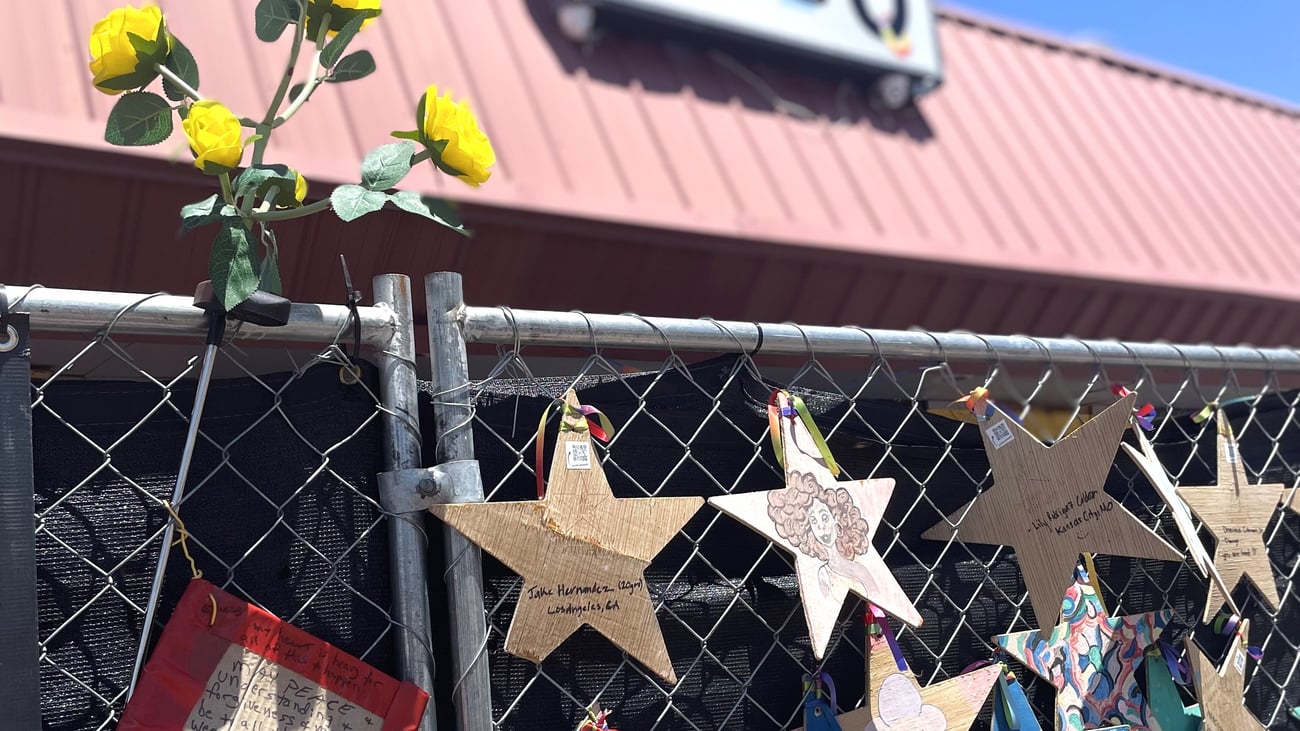
On Nov. 19, 2022, Aldrich used those weapons to murder five people at Club Q during a Transgender Day of Remembrance celebration. The victims were Derrick Rump, 38; Kelly Loving, 40; Daniel Aston, 28; Ashley Paugh, 35; and Raymond Green Vance, 22.
After pleading guilty, Aldrich was sentenced to five concurrent life sentences in June 2023. They received 55 subsequent life sentences in federal court.
A local judge dismissed a protective order in Aldrich’s felony menacing and kidnapping case in July 2022. At that point, per state law, “a red flag order would have prevented [them] from obtaining firearms for 364 days,” Patrick Huber, an attorney for the victims, said in court on Tuesday.
That isn’t what happened. Instead, because of El Paso County’s policies, Aldrich was able to obtain new firearms without restriction after the dismissal.
In a 2024 lawsuit against the sheriff and county commission, families who lost loved ones joined survivors of the attack to condemn the county’s refusal to pursue an extreme risk protection order against Aldrich.
In a July 2025 order dismissing the claims, Senior U.S. District Judge William Martinez, a Barack Obama appointee, said the county’s actions were immoral but ultimately legal. Separately, the judge granted default judgment against Aldrich. He allowed wrongful death claims against the club and its landlord to proceed but dismissed premises liability claims.
Following the dismissals, the families in September filed a new suit against the club owner and El Paso County sheriff in state court. They also appealed the dismissal of their claims against El Paso County, setting the stage for a 10th Circuit panel to hear arguments on Tuesday.
In court Tuesday, County Attorney Nathan Whitney called the case tragic but asked the appeals court to affirm the dismissal. Huber, who practices with the Chicago firm Romanucci & Blandin, conversely argued the county was liable.
U.S. Circuit Judge Carolyn McHugh, a Barack Obama appointee, asked about the pool of people put at risk by the county’s resolution. How was law enforcement supposed to know, she asked, that Aldrich would target patrons at the club?
“You also say Aldrich visited this club seven times," McHugh said. “Is there any requirement that the county knew [they were] visiting Club Q?”
Huber said law enforcement could have found out, since Aldrich frequented the club during his first criminal proceedings and leading up to the 2022 attack.
Whitney argued that to hold the county liable, plaintiffs had to show that specific government actions — not just inaction — led directly from county policy to the Club Q tragedy.
“The state-created danger theory requires them to show immediate conduct,” he argued. “Plaintiffs argue the Club Q shooting would not have occurred if they had obtained an extreme risk order against the defendant after his arrest in a separate criminal case. This is a classic case of inaction.”
Even so, U.S. Circuit Judge Gregory Phillips, another Obama appointee, pressed Whitney on the county’s apparent disregard for state law.
“Whether it’s an affirmative act or not, the resolution to actively resist a law seems ill-advised,” he observed.
Phillips also wondered aloud whether voters had the ability to change the county commissioners if they disagreed with the anti-red flag policy — a suggestion Whitney agreed with.
U.S. Circuit Judge Allison Eid, a Donald Trump appointee, rounded out the panel. The judges did not indicate when or how they might rule.
 Follow @bright_lamp
Subscribe to our free newsletters
Our weekly newsletter Closing Arguments offers the latest about ongoing trials, major litigation and rulings in courthouses around the U.S. and the world, while the monthly Under the Lights dishes the legal dirt from Hollywood, sports, Big Tech and the arts.