
 Search Articles


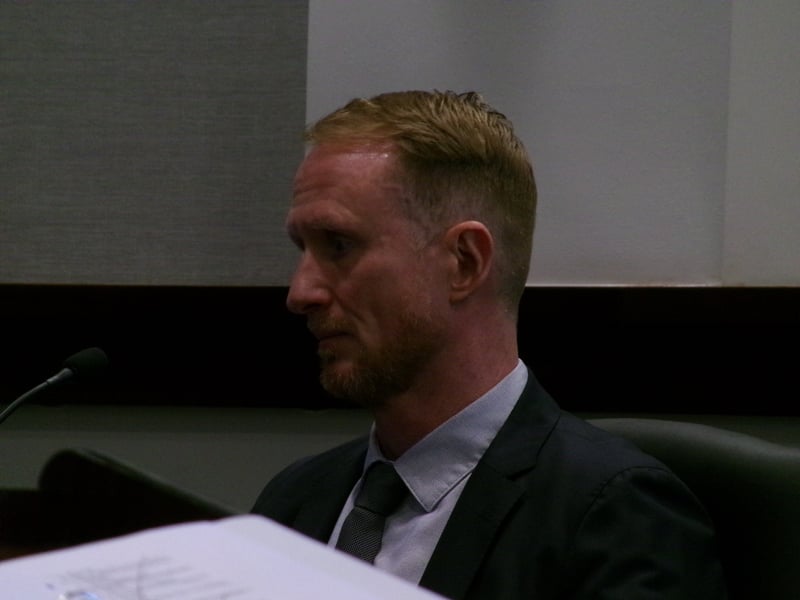
PANAMA CITY, Fla. (CN) — CNN’s attorneys dropped a bombshell on a Florida court Thursday that could potentially upend the defamation case against the network brought by a security consultant named in a 2021 story on private contractors charging Afghans fleeing a Taliban takeover during the U.S.’s hasty withdrawal from Afghanistan.
Zachary Young — a U.S. Navy veteran who had previously worked for military contractors Blackwater and Dyncorp International — sued the network over a segment aired on Nov. 11, 2021, that included interviews with Afghans claiming some private contractors were charging up to $14,000 for “black market” evacuations.
Young was the only private contractor named in the story, prompting his lawsuit accusing the network of ruining his reputation and business, Nemex Enterprises. The story, Young claims, made him an “international pariah.”
During the cross-examination of Young on Thursday, CNN attorney David Axelrod produced a security consulting agreement from government contractor Helios Global signed by Young on Dec. 8 — nearly a month after the CNN story aired that Young claims destroyed his career.
Documents produced by CNN also show Young renewed his security clearance that same month and renewed it the next year, months after he filed his defamation lawsuit in April 2022.
“So just to make sure I understand you completely, your assertion is that since the CNN publications on Nov. 11 nobody will work with you?” Axelrod asked Young.
“Correct,” he replied.
Axelrod then handed out copies of the Helios contract, prompting an objection from Young’s attorney Devin Freedman and an order by 14th Judicial Circuit Court Judge William Henry to clear the jury out of the room.
“We’ve never seen this document before,” Freedman told the judge, calling it “trial by ambush.”
Visibly incensed, Axelrod shot back.
“Plaintiff’s entire case, sitting right there, is that after the CNN publications, he couldn’t get any work,” Axelrod said. “Mr. Young knew when he filed this lawsuit that he had entered into a new consulting agreement with a government contractor one month after CNN publications. This entire lawsuit was a fraud on the court, a fraud on CNN and this man knew it.”
Axelrod said their legal team would file a motion for fraud on the court and gross discovery abuses.
“But for now, the idea that I cannot use this to impeach the fundamental concept of their case, which is that Mr. Young’s livelihood was destroyed by CNN, with the single most crucial document of this case would be a travesty of justice,” he said.
Following a recess, Henry ruled the document admissible.
“I’m not here, at this point and time, in a position to make a call as whether I believe sanctions are warranted or whether Mr. Young had this in his possession, custody or control at the discovery request,” Henry said. “The fact that Mr. Young sat there on Dec. 8, 2021 and signed the document, the knowledge of that is clearly within the possession, custody and control of his brain … He knew about it, it’s not a surprise to him."
The exasperated judge also warned the attorneys in the chamber.
“Hey, you only have eight more days of discovery, so you have a bunch more documents show up, defense is up to 589, why not get a few more,” he said. “See what else you all can uncover in the next week.”
“I say that sarcastically … But I’m going to be pissed off," Henry added taking his glasses off.
The exchange on the trial’s third day was the climax of an already tense cross-examination of Young, who ended testimony on Wednesday tearfully, lamenting his ability to put food on the table for his wife.
Young, 49, has maintained he never accepted money from individual Afghans and instead relied on sponsorships from corporations and nongovernmental organizations to help rescue those fleeing the war-torn country. He advertised his services on the career networking site LinkedIn, offering to procure evacuations from Afghanistan, court records show. Earlier in the case, Henry ruled that there is no evidence that Young did anything illegal.
Earlier in Thursday’s questioning, CNN’s attorney Axelrod pushed back against Young’s earlier testimony characterizing his work as altruistic, displaying invoices from his corporate clients to the jury.
Young’s first client, Audible, sent $54,000 to his Bank of America account for the evacuation of three young women, court records show. Media giant Bloomberg also hired him to aid the evacuation of four women and a child for $141,500. Civil Fleet, an NGO, also used Young’s services as well as H.E.R.O Inc., an NGO helping Afghan Christians, who paid him $188,000 for three separate evacuations.
In all these operations, Axelrod noted, Young never set foot in Afghanistan himself — a reality Young admitted would be “silly” — but relied on a colleague, Iurii Lavrenilk, to find operatives on the ground to move at-risk Afghans from safehouse to safehouse until they reached the border of Pakistan. Lavrenilk received $30,000 from Young for each evacuation, bank records show.
Young said that when CNN senior reporter Katie Bo Lillis questioned Young about his for-profit model before the network’s 2021 Afghan story, he declined to share specifics on pricing.
“She seemed to be criticizing the private markets that maybe she felt should be free even though the world doesn’t work that way,” he said.
“It’s okay to be criticized in America, right?” Axelrod asked.
“Not if it’s damaging and it’s false,” Young responded.
Axelrod then focused on questions sent by CNN national security correspondent Alex Marquardt hours before CNN aired his Afghan story, including asking if Young is “making money” and how he justifies “profiting from Afghans desperate to get out.”
“That’s a false statement he is making and would want time to correct him on reality,” Young said.
Axelrod kept pressing on if Young profited off of the evacuations, rephrasing several times to ask if he saw a profit from the evacuations.
“So, when corporations were paying you to get desperate people out of Afghanistan, that wasn’t profiting you?” Axelrod asked.
“I was profiting from it," Young said.
 Follow @alexbpickett
Subscribe to our free newsletters
Our weekly newsletter Closing Arguments offers the latest about ongoing trials, major litigation and rulings in courthouses around the U.S. and the world, while the monthly Under the Lights dishes the legal dirt from Hollywood, sports, Big Tech and the arts.