
 Search Articles


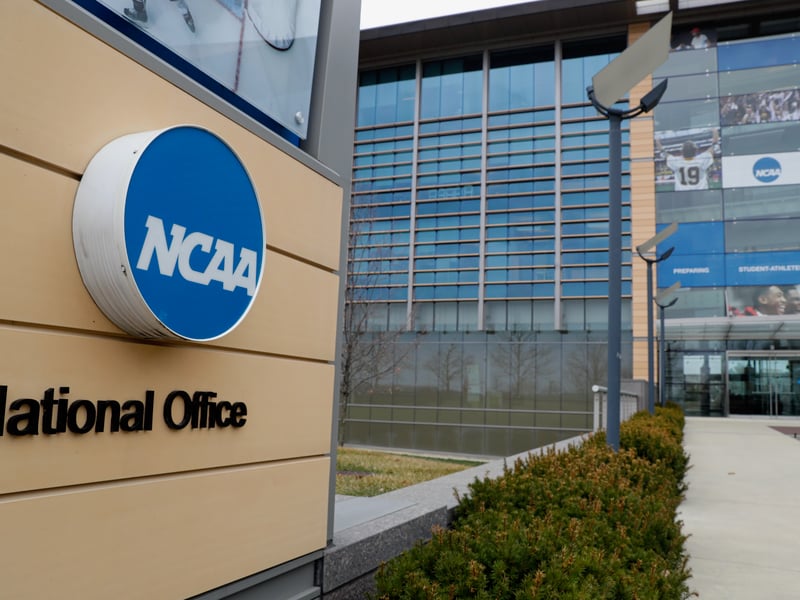
(CN) — A University of California football player sued the NCAA Thursday, claiming the association’s rules governing college athlete eligibility violate federal antitrust law.
Aidan Keanaaina, a senior at University of California, Berkeley, says the NCAA’s Five Year Rule places unreasonable restrictions on which college athletes can play and grants the association monopolistic power over potential revenue opportunities involving name, image and likeness (NIL) rights.
“Far from promoting competition or benefiting student-athletes, the Five Year Rule actively suppresses it, distorting the labor market for college football players, diminishing athlete welfare and weakening the quality of play available to the public,” Keanaaina says in his complaint, filed Thursday in federal court in Colorado.
Just five years after the Supreme Court in Alston v. NCAA unanimously rejected the concept of amateurism and led to the NCAA allowing college athletes to profit off their publicity rights, Keanaaina says the legal landscape surrounding eligibility requirements has dramatically shifted.
Now that college athletes stand to make money, Keanaaina says the Five Year Rule is commercial in nature and therefore subject to antitrust laws.
Keanaaina enrolled at Notre Dame in 2020 and played in just one game during his freshman season. The NCAA issued a blanket waiver to all players in 2020 because of the Covid-19 pandemic.
He appeared in three games his sophomore year, then missed his junior season in 2022 thanks to a preseason ACL tear. He played in six games in 2023 before transferring to California to play in the 2024 and 2025 seasons.
The NCAA’s Five Year Rule requires that college athletes engage in no more than four seasons in a given sport. Per the rule, they must also complete those four seasons within five calendar years of the student’s initial college enrollment.
If a college athlete competes in less than four games in a season, those seasons aren’t counted toward eligibility.
Additional years of eligibility may be granted if a college athlete presents objective evidence of circumstances outside of their control, like a season-ending injury.
“In other words, what is considered and determined to be objective evidence and the NCAA’s decision on whether the evidence is sufficient to grant eligibility is in the complete control of the monopsony [single-buyer] power of the NCAA,” Keannaaina argues.
The NCAA rejected Keanaaina’s application for a medical waiver in 2022 and consequently counted 2025 as his final year of eligibility.
But Keanaaina insists that he still has one year left. In his complaint, he challenges the NCAA’s denial of his 2022 medical waiver as well as the Five Year Rule itself, arguing the latter violates the Sherman Antitrust Act of 1890.
An NIL agreement is a commercial transaction, he says. Thus, he says the NCAA’s limiting of who is and isn’t eligible to play is inherently a business decision. Depriving players of their eligibility could in turn deprive them of millions of dollars in NIL revenue.
“Aidan and other football players who are harmed by these illegal restraints have a small window of time to compete in Division I football,” his attorneys write on his behalf. “Unfortunately, Aidan cannot relive his shortened college career.”
The NCAA denied Keanaaina’s medical waiver request on Jan. 14. It also denied his appeal on Feb. 20 — leaving him with recourse aside from a federal lawsuit.
Keanaaina wasn’t allowed to file his own waiver request and instead needed the university to file it on his behalf, highlighting another example of what he says are improper procedural barriers that disproportionately grant power to the NCAA.
Keanaaina was never medically cleared to play, but he did participate in the last few minutes of a 44-0 blowout against Boston College in November of 2022. The decision to play was not Keanaaina’s, but rather his coaches’.
In denying the waiver, the NCAA pointed to a 2025 directive from the D1 Committee on Student-Athlete Reinstatement, which sought to bypass the four-game participation rule. Because he appeared in one game, he could not receive a waiver.
Keanaaina argues that it’s unfair for the NCAA to apply the directive retroactively.
“Counting the handful of plays that Aidan was on the field for in one game in 2022 as a full season of activity is a punitive decision to circumvent the NCAA rules that cannot be supported or justified,” his attorneys write.
Keanaaina brings three counts against the NCAA: violation of the Sherman Act, breach of contract and tortious interference with prospective economic advantage. He asks that a federal judge require that the NCAA accept his waiver application and allow him to participate in the 2026-2027 football season.
The NCAA has not responded to a request for comment.
 Follow @JournalistJoeAZ
Subscribe to our free newsletters
Our weekly newsletter Closing Arguments offers the latest about ongoing trials, major litigation and rulings in courthouses around the U.S. and the world, while the monthly Under the Lights dishes the legal dirt from Hollywood, sports, Big Tech and the arts.