Search Articles


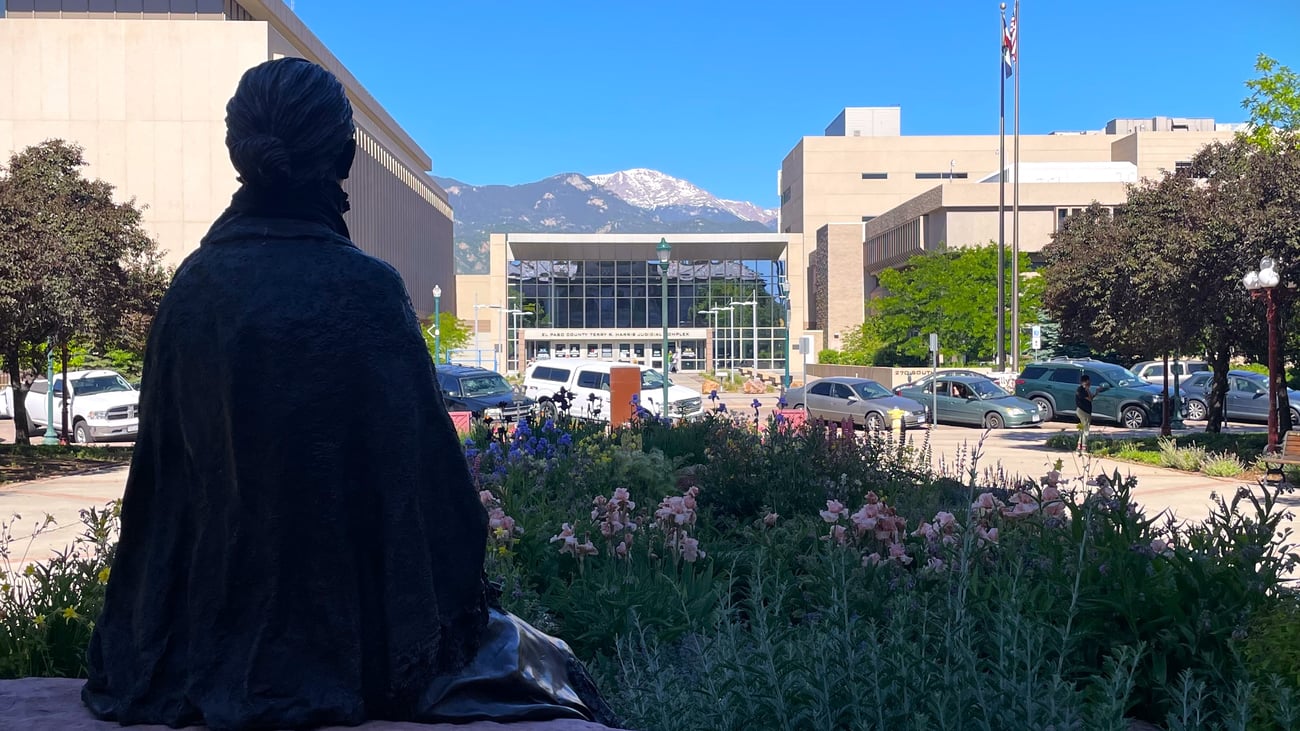
COLORADO SPRINGS, Colo. (CN) — A Colorado Springs judge found prosecutors withheld evidence contradicting the government’s narrative of arson that led to a Colorado mother’s triple murder conviction for her three young children in 2007.
“The suppressed exculpatory evidence in this case undermines the core foundation of the prosecution’s case — whether by neutralizing key witnesses or by demonstrating a lack of reliable laboratory confirmation — and thus meets the materiality standard,” El Paso County District Judge R. Michael Mullins wrote in a 19-page opinion.
“Accordingly, there exists a reasonable probability that the outcome would have been different had the evidence been disclosed, satisfying the prejudice element under Brady,” he added.
On March 7, 2003, Deborah Nicholls’ children — 11-year-old Jay, 5-year-old Sophia and 3-year-old Sierra — tragically perished in a house fire.
Earlier that day, Nicholls had cleaned the house and lit candles before going to work at her karaoke bar. She maintains her innocence, saying the fire was an accident.
Prosecutors, however, countered that Nicholls and her husband Tim Nicholls conspired to douse the furniture in chemical cleaners and torch the house to collect insurance proceeds to pay off drug debt — a story corroborated by a jailhouse informant who testified to hearing Tim Nicholls confess.
Convinced by prosecutors’ evidence of arson, a jury convicted Nicholls of her children’s murder in 2008. Her husband was similarly convicted in 2007. They are both serving life sentences and lost their initial appeals.
The 2023 revelation of a 2007 report from a Colorado Bureau of Investigation analyst, however, prompted Mullins to hold a weeklong *Brady *hearing last July to determine whether to grant Nicholls’ motion for a new trial.
Under the 1963 U.S. Supreme Court case Brady v. Maryland, prosecutors are required to turn over all evidence that may help prove a defendant’s innocence.
Following the 2003 fire, investigators collected materials identified by a police dog looking for evidence of arson. In 2003, two analysts, one state and one private, issued reports identifying flammable xylenes, which prosecutors postulated came from Goof Off cleaner sprayed on the furniture.
In 2006, Nicholls’ defense consulted with a third expert, John Lentini, who found no evidence of ignitable liquids and argued that the state’s evidence had been contaminated.
The Lentini report in hand, prosecutors consulted with a fourth expert at the Colorado Bureau of Investigation, Tom Griffin, whose findings corroborated the Lentini report, developing exculpatory materials that were never disclosed to Nicholls’ trial team.
The notes were ultimately uncovered by a CBI fire analyst who conducted a fifth analysis in 2023 based on modern standards, issuing a new report that aligned with both Lentini and Griffin in finding indications of contamination but not fire fuel.
Mullins saw Nicholls’ conviction as based on three categories of evidence: her husband’s purported confession to another inmate, Nicholls’ lack of outward mourning for her children and indicators of arson.
“Similar to a three-legged stool, the evidence within these categories mutually reinforces each other’s credibility,” the judge wrote in the opinion published April 28. “A three-legged stool is inherently balanced; however if one leg is absent, diminished or compromised, the entire structure becomes unstable and may collapse.”
While Mullins determined the newly discovered evidence satisfies the materiality prong under Brady, he stopped short of vacating Nicholls’ conviction. Instead, the judge ordered parties to prepare for a new evidentiary hearing to resolve “remaining issues.”
Still, Nicholls’ attorney, Janene McCabe, considers the judge’s order progress.
“This ruling confirms what we have argued for years: there was no reliable scientific evidence of arson,” McCabe said in a statement. “The jury that convicted Deborah Nicholls never heard from the government’s own analyst, who agreed with our expert that no ignitable liquid was ever confirmed in this case. That is a fundamental denial of justice.”
The Korey Wise Innocence Project at the University of Colorado Boulder also represents Nicholls.
Representatives from the Fourth Judicial District Attorney’s Office did not immediately respond to a request for comment.
 Follow @bright_lamp
Subscribe to our free newsletters
Our weekly newsletter Closing Arguments offers the latest about ongoing trials, major litigation and rulings in courthouses around the U.S. and the world, while the monthly Under the Lights dishes the legal dirt from Hollywood, sports, Big Tech and the arts.