Search Articles


EUGENE, Ore. (CN) — Two conservation groups seeking to halt a southern Oregon logging project argued Thursday that the U.S. Bureau of Land Management expanded the scope of the project without conducting the environmental review required under federal law.
“It’s definitely a complex problem here, when you have so many things going on ecologically and in the community,” said Meriel Darzen, attorney with Crag Law Center representing the plaintiffs. “Now BLM is doing this project, which is larger than the categorical exclusion and now has an even larger project in the pipeline.”
Applegate Siskiyou Alliance and Klamath Forest Alliance sued the Bureau of Land Management in March, accusing the agency of violating environmental law by authorizing logging activities that conflicted with its original plan.
The conservation groups claim the agency initially said the project would preserve hardwood trees, have limited impacts on riparian buffers and require minimal road construction. Instead, the agency is implementing the project in a “materially different manner which has different and unanalyzed effects,” the groups contended in their complaint.
“BLM was intending to target only the conifers here, but that did not work out as planned, or maybe they didn’t plan it,” Darzen said.
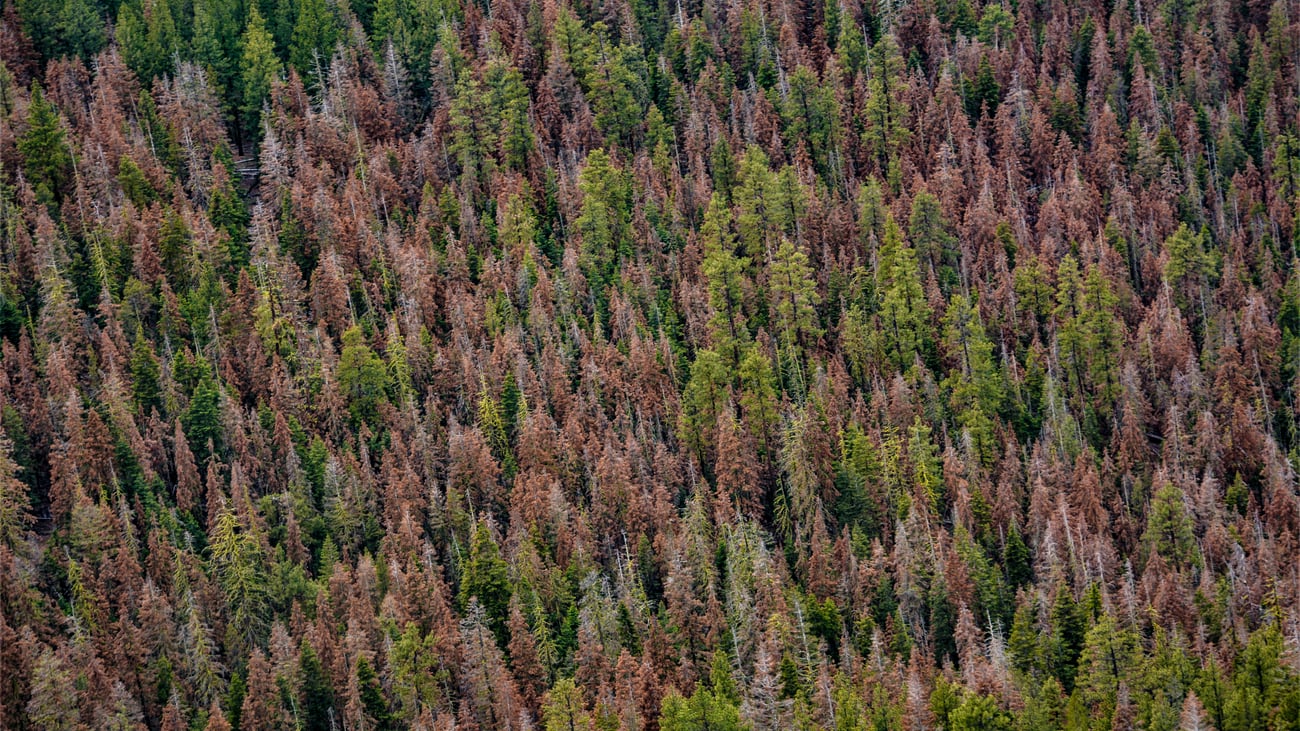
The agency says the Ashland SOS Project is intended to address safety risks posed by dead and dying conifers near populated areas. Southern Oregon has seen increasing numbers of such trees due to wildfire and past vegetation management practices that produced dense forests.
To offset some of the cost of removing those conifers, the Bureau of Land Management approved timber sales. The conservation groups argue the agency expanded the project without properly evaluating its environmental impacts or responding to concerns they raised during implementation.
“As we saw more of what was going on here, it became clear that the agency actually knew it was probably actually going to have to cut all of these hardwoods,” Darzen said.
U.S. District Judge Michael McShane, a Barack Obama appointee, questioned whether the record supported the plaintiffs’ claims about the extent of hardwood removal.
“My question is how do I know, sitting here from this record, that there’s such a taking — whether it’s massive, slight, reasonable — to cause irreparable harm when weighed against the public interest, perhaps, of fire suppression?” McShane asked.
The conservation groups said they monitored multiple days of logging and observed hardwood trees being removed despite the agency’s assurances that impacts would be minimized.
“But that did not bear itself out," Darzen said. “As plaintiffs continued to visit the units, they continued to see the trucks going by.”
The groups argued a preliminary injunction would allow the agency to take a harder look at the project’s environmental impacts.
The agency disagreed.
“The record shows BLM is actively monitoring,” argued Luther Hajek, a Justice Department attorney.
“That does tell me it was foreseeable at the time the [environmental assessment] was created that there was going to be some taking of hardwood," McShane interjected. “Where in the record do I find there was any evaluation of that impact on the environment?”
Hajek argued the project always contemplated removing some hardwood trees when operationally necessary.
“That is exactly what is described in the environmental assessment,” Hajek said.
The agency also argued an injunction would significantly affect contractors carrying out the project and prevent BLM from meeting objectives under the 2016 Southwest Oregon Resource Management Plan.
Hajek said there is little economic incentive to remove hardwood trees. The government also emphasized that the project is intended to reduce wildfire risk.
McShane did not indicate when he would rule.
Subscribe to our free newsletters
Our weekly newsletter Closing Arguments offers the latest about ongoing trials, major litigation and rulings in courthouses around the U.S. and the world, while the monthly Under the Lights dishes the legal dirt from Hollywood, sports, Big Tech and the arts.
Additional Reads

 Florida governor shutters ‘Alligator Alcatraz’ June 25, 2026