Search Articles



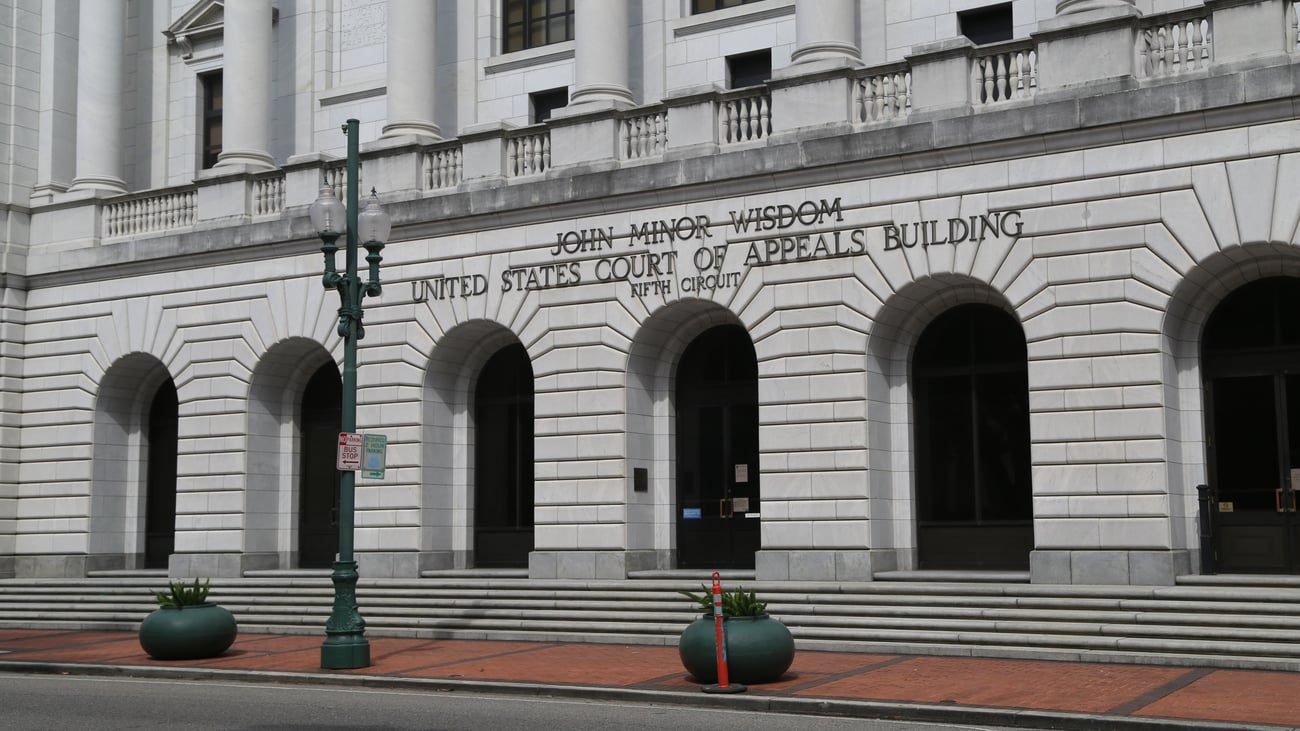
(CN) — Two physicians and a conservative medical group told a Fifth Circuit panel Monday that major medical boards are threatening the certifications of physicians whose opinions they disagree with, which they argue violates the First Amendment and antitrust laws.
They asked the panel to revive their claims against the American Board of Internal Medicine and the American Board of Obstetrics and Gynecology, which a Texas federal judge dismissed last year, finding the First Amendment doesn’t apply to the boards because they aren’t state actors and that the plaintiffs hadn’t adequately claimed an antitrust injury.
In August 2024, ABIM removed board certifications for Drs. Pierre Kory and Paul Marik. The pair are known for espousing controversial medical opinions, such as promoting the use of the antimalarial drug Ivermectin to treat Covid-19, which the medical community has widely deemed ineffective.
Together with the Association of American Physicians and Surgeons Educational Foundation, an organization that sponsors medical education conferences, Kory and Marik sued ABIM and ABOG. The foundation is affiliated with the Association of American Physicians and Surgeons, a conservative medical organization known for supporting unscientific positions like AIDS denialism.
The plaintiffs claim ABIM and ABOG have stripped or threatened the board certifications of physicians based on protected speech. In addition to Kory and Marik’s decertification by ABIM, the plaintiffs point to a statement ABOG issued after the U.S. Supreme Court overturned Roe v. Wade saying physicians could lose their ABOG certifications for spreading “false or misleading information.”
The plaintiffs’ attorney, Andrew Schlafly, told the Fifth Circuit panel Monday that ABOG considers “almost any statement in opposition to abortion” to be false or misleading, which he said has had a chilling effect on anti-abortion physicians’ willingness to share their views.
“There are no pro-life physicians who speak out anymore,” Schlafly said.
But David Hatchett, an attorney representing ABOG, told the panel that ABOG is not a pro-life or pro-choice organization and that it certifies physicians “that fall at every conceivable point on the continuum of beliefs about abortion.”
Asked by Chief U.S. Circuit Judge Jennifer Walker Elrod about what sort of statement could get a physician decertified by ABOG, Hatchett posed a hypothetical of a physician going on CNN and saying pregnant women should smoke cigarettes.
“We all know that that’s not true, and if that physician is a ABOG-certified diplomate and ABOG is concerned that they’re out there encouraging pregnant women to smoke cigarettes because it will help their babies, they may want to take action because that is bad for public health,” Hatchett said.
ABIM and ABOG are non-profit organizations that certify physicians they deem to meet their standards of education and professionalism. Although they are private entities and do not control a physician’s license to practice medicine, the plaintiffs argue the groups’ decertification decisions amount to a state function because many hospitals won’t hire doctors who aren’t board certified and many insurance networks require board certification for reimbursement.
They also argue the boards have a monopoly on board certification that they use to hamper the ability of physicians whose opinions they disagree with to practice medicine in violation of antitrust laws.
“When these board defendants take away that board certification, or threaten to take away that board certification, that has the effect of ending the medical career of these physicians,” Schlafly said.
Elrod brought up a lawsuit in which Elon Musk’s social media platform X claimed major advertisers violated antitrust laws by conspiring to boycott the platform after Musk purchased it. A federal judge dismissed that lawsuit last month, finding that the conduct X complained of did not amount to an antitrust violation.
Elrod suggested society may be entering a new era where business decisions are made based on politics rather than just economic benefit.
“I think people just didn’t conceptualize that people would decertify doctors based upon views about politics,” the George W. Bush appointee said.
But Hatchett said antitrust laws aren’t the solution to those issues.
“The antitrust laws are not the place to decide public policy,” Hatchett said. “That’s why there are no cases involving something that’s at all similar to what’s being alleged here. If Congress wants to amend the antitrust laws to cover public policy, then it can amend the antitrust laws.”
U.S. Circuit Judge James Ho, a Donald Trump appointee, and Irma Carrillo Ramirez, a Joe Biden appointee, joined Elrod on the panel.
Subscribe to our free newsletters
Our weekly newsletter Closing Arguments offers the latest about ongoing trials, major litigation and rulings in courthouses around the U.S. and the world, while the monthly Under the Lights dishes the legal dirt from Hollywood, sports, Big Tech and the arts.