
 Search Articles


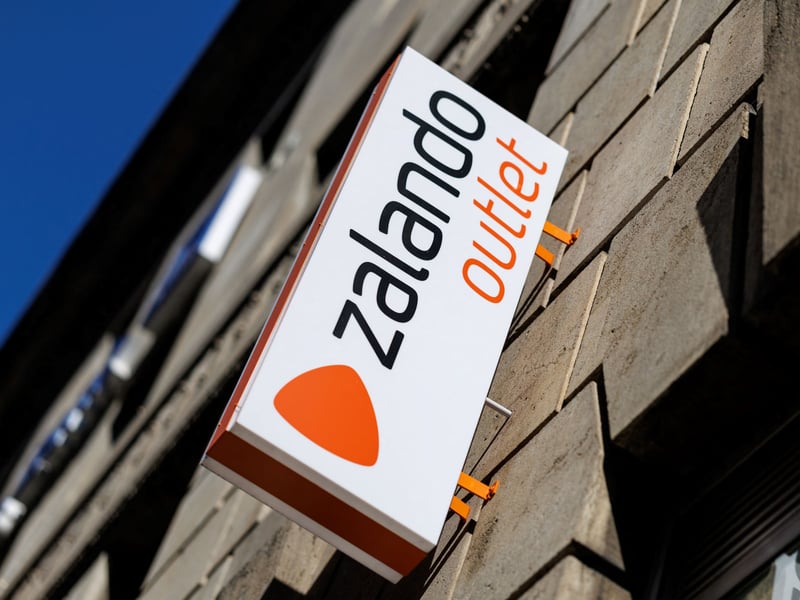
THE HAGUE, Netherlands (CN) — Zalando lost its bid Wednesday to escape the European Union’s most rigorous online rules, after the General Court backed Brussels’ decision to brand the Berlin fashion retailer a “very large online platform” under the Digital Services Act — a sweeping law that forces tech giants and online marketplaces to take more responsibility for content and products on their sites.
The ruling confirmed that Zalando crosses the 45-million-user threshold that triggers extra obligations. Judges dismissed the company’s plea to overturn the European Commission’s 2023 decision, rejecting its claim that Brussels had stretched the law and leaned on a vague definition of “active recipient” — a term the DSA uses for anyone who comes into contact with content on a platform, not just those who make a purchase.
At the heart of the case was how Zalando’s store actually works. The German online mail order company for shoes, clothing, cosmetics and accessories is active in several business areas, from online stores, own brands and stationary outlets to logistics and marketing services for retailers. Customers can either buy items that Zalando sells directly, called “Zalando Retail,” or shop from outside sellers through what the company calls its “Partner Program.”
In early 2023, Zalando reported that around 83.3 million people use its site each month. But it insisted that far fewer should count under the DSA, since much of its business comes from its own retail sales rather than outside sellers.
The commission saw it differently. Because Zalando’s site shows its own products next to those from outside sellers, officials said shoppers are exposed to third-party offers no matter what they buy. That pushed Zalando well over the 45-million-user line, and in the commission’s view that made it a “very large online platform” — a label that brings tougher rules on transparency, risk checks and oversight.
Annabelle Gawer, a professor in Digital Economy and director of the Centre of Digital Economy at the University of Surrey, said the case exposes a gray area in how the DSA applies to hybrid businesses that combine retail and platform models.
“Many companies have such a business model, including Amazon," she said. “A key dispute here was how to count users: Since buyers cannot tell whether they used Zalando as a reseller or as a platform, the EU treated the total number of users as the benchmark. The court’s decision will have important implications not only for Zalando but also for other firms with similar models.”
U.S. President Donald Trump has threatened tariffs and other penalties on countries with digital regulation and taxes.
Zalando took its fight to the EU court in Luxembourg with three main points. First, it said its own retail shop shouldn’t even count as an online platform. Second, it argued that the real number of active users was under the legal threshold. And third, it claimed the rules were too unclear and unfair, making it impossible to know exactly how they were supposed to apply.
The judges rejected each line of attack.
First, the court said the Partner Program clearly counts as an online platform under the DSA because it “stores and shares with the public the information that users themselves provide when they ask for it to be published.” Zalando’s habit of checking or tweaking product descriptions didn’t change the fact that the content came from outside sellers. As the judges put it, “the product offered from third-party sellers in the Partner Program must be regarded as information provided by the users of the service.”
Second, the court sided with the commission on the headcount. It ruled that all 83.3 million users should be included, since just seeing a product page makes someone an active recipient. And because shoppers often cannot tell whether an item comes from Zalando or from an outside seller until the checkout stage, the judges said the numbers cannot be trimmed to match sales value. In the end, the commission was right to stick with the bigger figure, they found.
Third, the judges brushed aside Zalando’s claim that the rules were too vague to be valid. They noted that the idea of an active recipient has to work for many types of platforms, from social networks to online shops, so a bit of uncertainty is built in. But that does not make the law unclear or unlawful. The court also threw out arguments about unfair treatment and disproportionality, saying it was reasonable to rely on a simple user threshold given the potential risks that very large platforms can create.
Finally, the judges said there was nothing wrong with the commission’s reasoning. As they put it, “The commission made sufficiently clear and unambiguous the reason why it considered the Zalando platform to be an online platform.”
In the end, the court backed the commission all the way. It flatly rejected Zalando’s appeal and ordered the company to cover not only its own legal bills but also those of the commission.
Zalando said it was disappointed by the outcome. In a statement, the company argued that its carefully curated shop should not be treated the same as other very large platforms and also criticized the lack of a clear way to count active users.
“Our highly curated business model does not present a ‘systemic risk’ of disseminating harmful or illegal content from third parties,” the company said, adding that it will appeal. “We will continue to advocate for clearer, less ambiguous definitions and legal certainty to ensure a fair level playing field in Europe.”
The ruling is one of the first real tests of the EU’s new Digital Services Act in court. Zalando now has to follow tougher rules on transparency, risk checks and oversight, just like Amazon, Google and Meta. And for Brussels, the victory is a clear signal that its push to hold big online platforms legally accountable is holding up.
Points of law in the judgment may be appealed to the European Court of Justice within two months and 10 days.
Courthouse News reporter Eunseo Hong is based in the Netherlands.
Subscribe to our free newsletters
Our weekly newsletter Closing Arguments offers the latest about ongoing trials, major litigation and rulings in courthouses around the U.S. and the world, while the monthly Under the Lights dishes the legal dirt from Hollywood, sports, Big Tech and the arts.